Do this now
Follow these steps in order.
- 01
Choose October 14 for the shrine-entry sequence and decorated yatai, or October 15 for the more intense mikoshi ritual and Otabiyama climax.
- 02
Base the journey on Sanyo Railway Shirahama-no-miya Station, not JR Nada Station in Kobe; confirm that your train stops there before boarding.
- 03
Do not buy a seat or tour on the assumption that it is an official festival ticket: no current public 2026 paid-seat sale or allocation was published in the reviewed official sources.
- 04
Recheck the shrine, Himeji tourism and Sanyo Railway shortly before travel for the final timetable, weather decision, special stops and crowd controls.
What to know
What the formal festival name means
The event is the autumn festival of Matsubara Hachiman Shrine in Himeji's Shirahama district. English visitor sources call it the Nada Fighting Festival, while the familiar Japanese name is Nada no Kenka Matsuri. The word fighting refers to the forceful ritual contest between portable shrines and the competitive lifting of festival floats; it is not an invitation for spectators to enter the action.
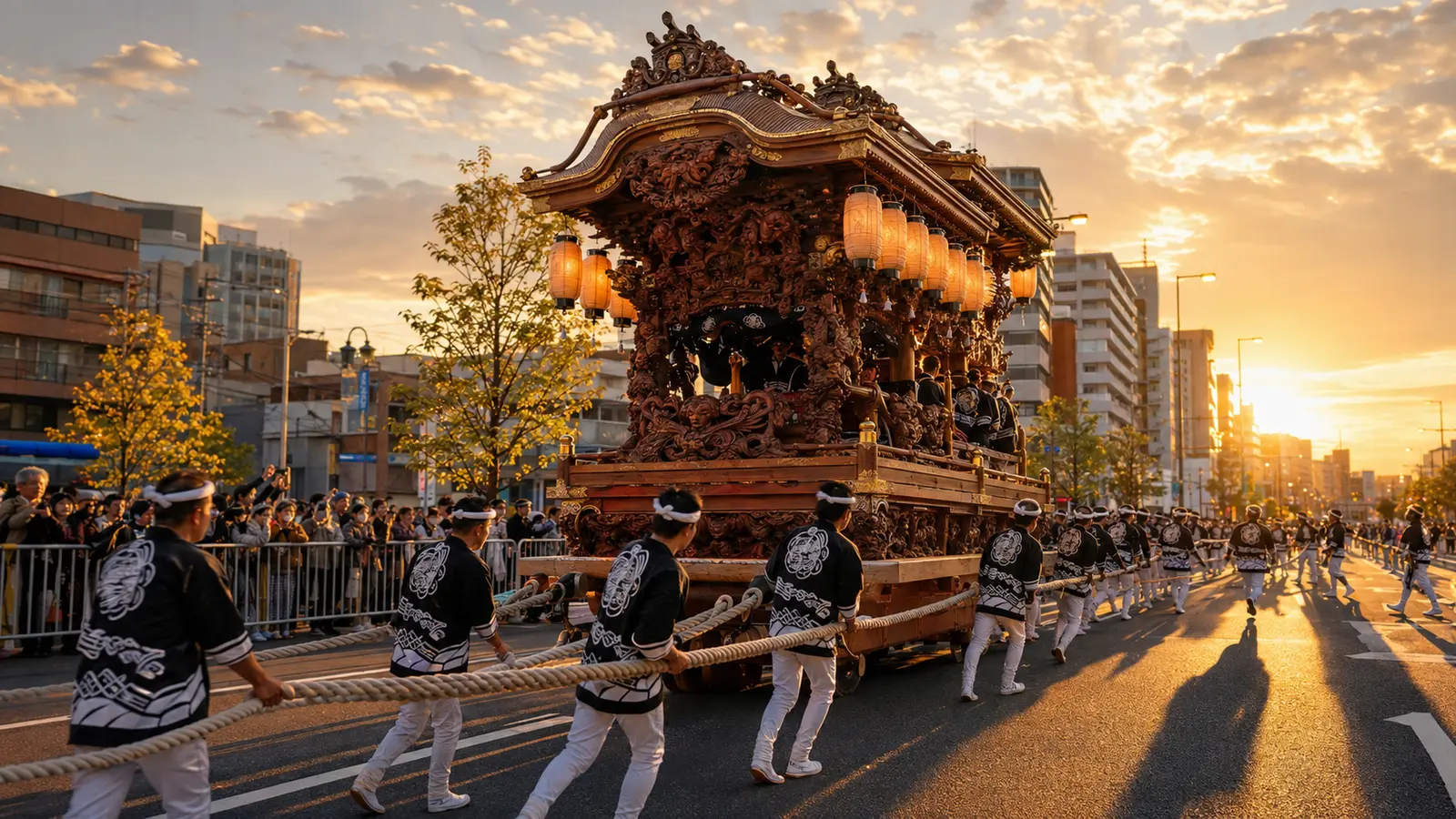
Himeji City describes a two-day sequence rooted in neighborhood worship and a fixed historical order. On October 14, local yatai circle their districts, visit their tutelary shrines and enter Matsubara Hachiman Shrine. On October 15, bearers purify themselves, bring out three mikoshi, perform the shrine ritual and move with the yatai toward Otabiyama.
What to know
Confirmed 2026 dates, times and places
The 2026 dates are Wednesday, October 14 and Thursday, October 15. Himeji City confirms these fixed festival dates, and the 2026 national tourism-association listing names the same two weekdays. Matsubara Hachiman Shrine is at 399 Shirahamacho, Himeji, Hyogo; the broader event extends from neighborhood streets and the shrine to the Otabiyama festival ground.
JNTO's standing visitor guide places the main day-one shrine activity at roughly 11:00–14:00, and Hyogo's tourism listing gives 10:00–15:00 as a general event window. These are useful planning references, not a complete 2026 minute-by-minute program. The exact 2026 district entry order, mikoshi departure, Otabiyama arrival and finish times were not published in the official sources reviewed September 5.
On October 14, seven neighborhood teams are normally represented by decorated yatai at the shrine. On October 15, the three mikoshi are brought together before the procession reaches the Otabiyama ground; Himeji City says six yatai appear there because the district assigned to the mikoshi does not send its yatai that day.
What to know
Nearest station and access from Himeji
The correct rail stop is Shirahama-no-miya Station on Sanyo Electric Railway. The operator lists Matsubara Hachiman Shrine as about a three-minute normal walk away, while Visit Himeji gives about three minutes and JNTO about five. Allow much longer on festival days because exits, approaches and crossings can be controlled.
From central Himeji, walk from JR Himeji to the adjoining Sanyo Himeji terminal and take a Sanyo Railway train that stops at Shirahama-no-miya. Do not navigate to JR Nada Station in Kobe: the festival's Nada name refers to this Himeji-area tradition, not that station.
The final 2026 special-stop pattern, extra trains, platform controls and last-train crowd plan were not published when checked. Use the current Sanyo Railway notice and station display on the day, keep your return route offline, and avoid driving into the festival district unless a dated official traffic plan explicitly supports it.
What to know
Admission, tickets, reservations and sellouts
The reviewed city, prefectural tourism, JNTO, Visit Himeji and railway pages do not announce a festival-wide admission gate or general reservation requirement. They also do not publish a current 2026 public paid-seat product, price, application deadline, capacity, same-day sale or official resale channel.
That absence is not proof that every viewing position is free or unrestricted. Some seats may be locally allocated, invited or packaged by third parties. Treat any commercial tour as a separate product, verify exactly what space and transport it includes, and do not describe it as an official reserved seat unless the shrine or local organizer does so.
Because no official public inventory or sales deadline was published, there is no verified 2026 sellout condition to report. Travelers who need a guaranteed chair, step-free position or fixed sightline should not book transport on an assumption; wait for a dated organizer or tourism notice and keep a flexible public-viewing plan.
What to know
Rain, severe weather and transport disruption
A final 2026 rain rule, postponement date, cancellation threshold and decision time were not published in the official sources reviewed September 5. A Sanyo Railway article about the 2025 autumn festivals said the October 14 program would proceed in rain and the October 15 program could move to October 16 in bad weather, but that is historical context only and must not be treated as the 2026 rule.
Check a newly dated shrine, Himeji tourism or Sanyo Railway notice before leaving. If there is no clear official decision, take rain gear but do not use a large umbrella in a dense crowd or near moving yatai and mikoshi. A train cancellation, festival postponement and tour refund are separate decisions with separate terms.
What to know
Crowds, safety, photography and traffic controls
October 15 is the more physically intense day. The mikoshi and yatai are extremely heavy, change direction in confined spaces and can draw tightly packed crowds. Stay behind barriers and staff, never enter a bearer route or turning area, and do not reach toward a float even if a photograph appears possible. Leave children and anyone needing more personal space well back from the front edge.
The final 2026 road-closure map, pedestrian one-way plan, bicycle restrictions and bus diversions were not published in the reviewed official pages. Expect controls around Shirahama-no-miya, Matsubara Hachiman Shrine and the route toward Otabiyama. Rail plus walking is the more predictable default, but a station exit may still be metered when platforms are crowded.
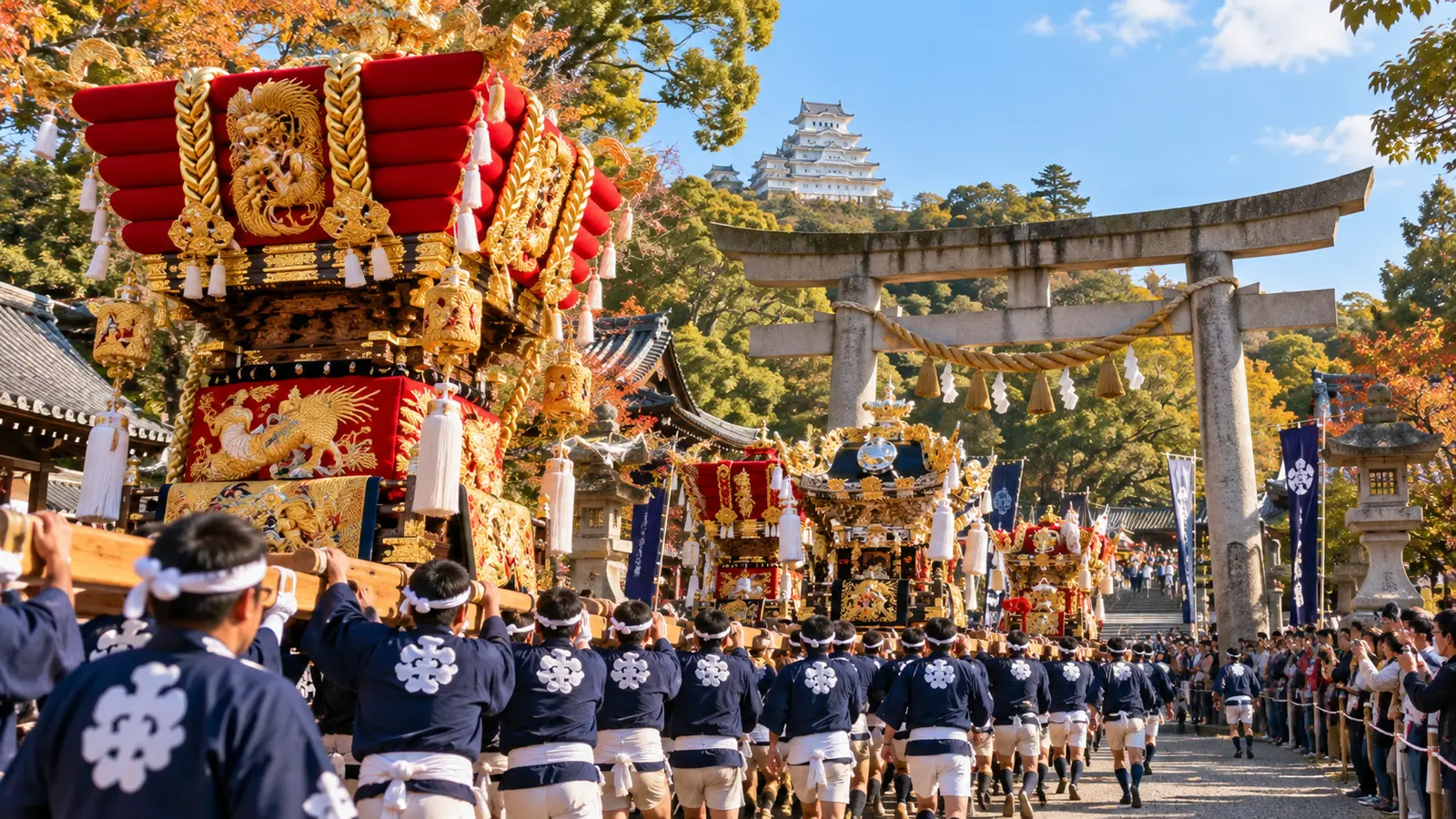
No blanket 2026 public photography, tripod or drone policy was found in the official sources. Keep equipment compact, do not block residents or emergency access, never use a drone over the crowd, and follow every current sign and staff instruction. The article thumbnail is an editorial illustration created to evoke the festival and is not documentary photography of the 2026 event or evidence of its exact floats, participants, weather or crowd level.
What to know
What to verify before you go
Within 48 hours of travel, confirm the exact 2026 program for your chosen day, the organizer's weather decision, Sanyo Railway service and special stops, the walking route being kept open, and the latest road or pedestrian controls. Save the Japanese event name, 灘のけんか祭り, for local searches and station staff.
Bring water, a charged phone, compact rainwear and only the bag you can keep close to your body. Mobile networks may slow in a concentrated crowd, so save the station map and return train options in advance. If an official instruction conflicts with this guide, the newly dated on-site or operator notice takes priority.
If that does not work
Use the fallback.
- The shrine approach is full: remain outside the controlled zone and follow staff to a lawful public area rather than pushing toward the route.
- No public paid seats are announced: use flexible public viewing and do not rely on an unofficial listing for access to restricted space.
- Rain or strong wind is forecast: wait for the dated organizer decision; do not infer the 2026 rule from the prior-year railway article.
- Shirahama-no-miya platforms are controlled: obey the operator queue and consider a later return rather than forcing entry onto a full train.
- A road or bus route closes: use Sanyo Railway and the signed pedestrian approach; ignore ordinary-day map routing through a barrier.
Before you need it
Save this offline.
- October 14 or October 15 plan and the latest official timetable
- Sanyo Railway route to Shirahama-no-miya and two return train options
- Walking map between the station and Matsubara Hachiman Shrine
- Latest weather decision and 2026 traffic-control notice when released
- Any tour or seat confirmation with the actual provider and refund terms
- Water, compact rainwear, portable battery and a small close-fitting bag
Frequently asked questions
Nada Fighting Festival 2026: Dates, Access and Safety FAQ
When is the Nada Fighting Festival in 2026?
It is scheduled for Wednesday, October 14 and Thursday, October 15, 2026.
Where is Nada no Kenka Matsuri held?
At Matsubara Hachiman Shrine, neighborhood streets and the Otabiyama festival ground in Himeji's Shirahama district.
What is the nearest station?
Shirahama-no-miya Station on Sanyo Electric Railway, about a three-to-five-minute normal walk from Matsubara Hachiman Shrine.
What time does the festival start?
Standing official visitor pages give a broad 10:00–15:00 window and put the main day-one shrine activity around 11:00–14:00, but the final 2026 minute-by-minute schedule was not published as of September 5.
Do I need a ticket or reservation?
No festival-wide gate or general reservation requirement is announced in the reviewed official sources. A current public 2026 paid-seat sale, price and deadline were also not published.
Can official seats sell out?
No public 2026 seat inventory or official sellout rule was published, so do not assume a third-party listing is an official festival seat.
What happens if it rains?
The final 2026 weather rule and decision time are unannounced. A 2025 railway article is historical context only; check a newly dated organizer or Himeji notice.
Which day should I choose?
October 14 emphasizes yatai entering and performing at the shrine. October 15 has the three-mikoshi ritual and the more intense Otabiyama climax.
Are 2026 traffic restrictions published?
The final road, pedestrian, bicycle and bus-control plan was not published in the official sources reviewed September 5.
Primary evidence
Official sources used
Open these pages again before travel. External links lead to the responsible Japanese authority or transport organization.