Do this now
Follow these steps in order.
- 01
Confirm the operator and line—not only the station name.
- 02
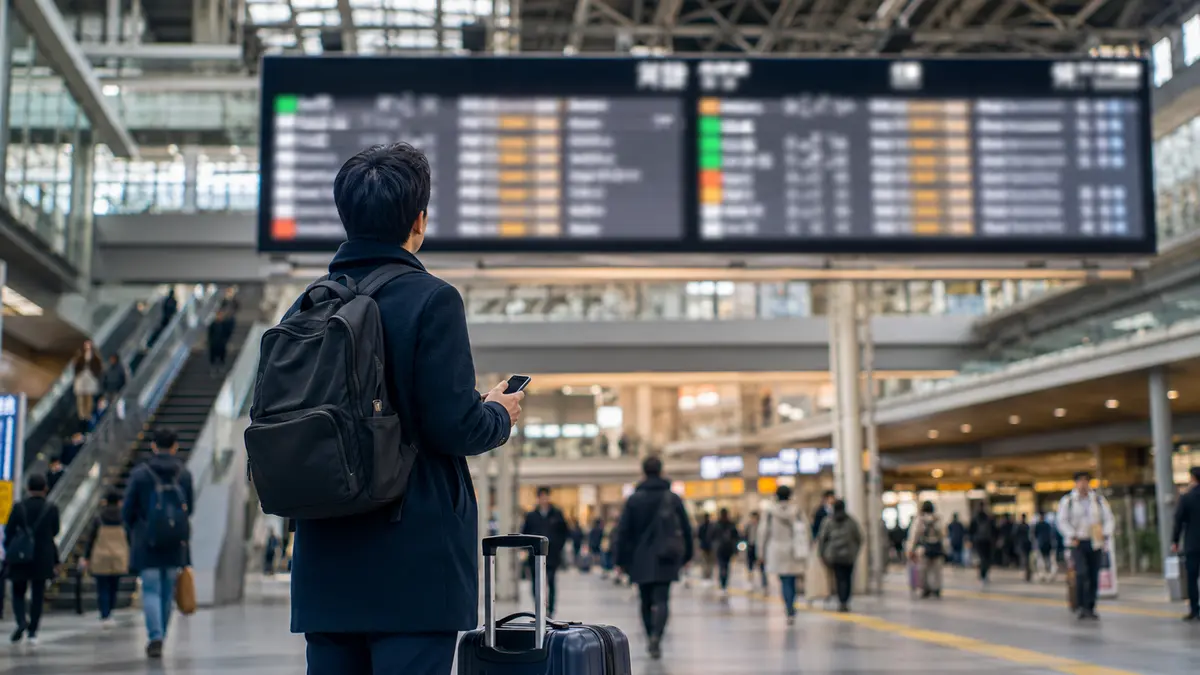
Use the destination or direction shown on official signs to identify the correct platform.
- 03
For transfers, follow the named line signs before following a generic exit.
- 04
Check the numbered or named exit closest to your destination before leaving the paid area.
What to know
One station can contain several operators
Tokyo, Osaka and Kyoto hubs can connect JR, subway and private railways. The same area may also contain similarly named stations that are not the same gate. Keep the operator and line name visible.
What to know
A gate can change your fare path
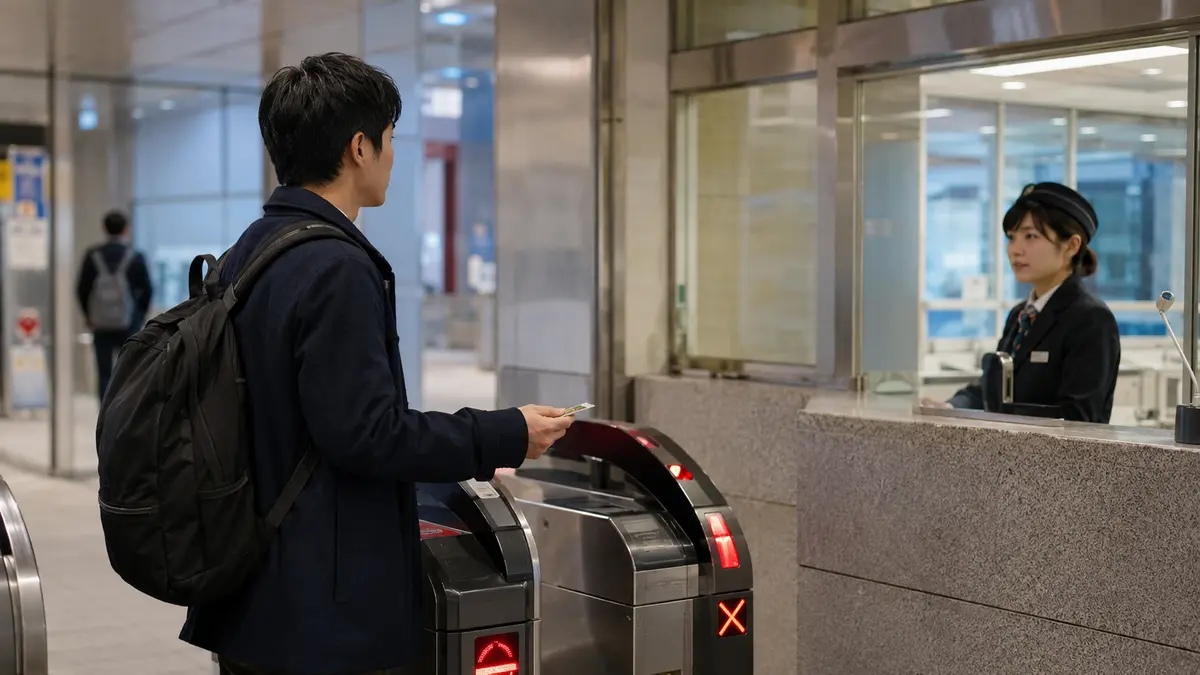
Some transfers remain inside the paid area; others require an exit or a new ticket. If your ticket or IC card does not open the gate, use the staffed gate instead of repeatedly tapping or buying another ticket.
What to know
The exit is part of the route
Large stations may place different exits far apart. Save the exit number or landmark before arrival and check a station map while still inside.
If that does not work
Use the fallback.
- Show staff the destination in writing and ask which gate or platform to use.
- If the route becomes confusing, step away from passenger flow before checking your phone.
- Use an accessible route if stairs or long transfers are not suitable.
Before you need it
Save this offline.
- Operator and line name
- Destination station in Japanese
- Platform or direction
- Transfer station
- Final exit number
Primary evidence
Official sources used
Open these pages again before travel. External links lead to the responsible Japanese authority or transport organization.