
Do this now
Follow these steps in order.
- 01
October 7 is the final festival day. Choose one district rather than trying to chase the citywide festival: Dogo Onsen Station is the clearest first-time visitor base, while Isaniwa Shrine adds a steep-stair ritual with more difficult viewing conditions.
- 02
Use Iyotetsu's current city-tram route and timetable to reach Dogo Onsen, then walk within the district; do not build the morning around an unconfirmed road or parking route.
- 03
Recheck the Dogo area guide and the responsible shrine before moving because the official pages confirm only an early-morning October 7 Dogo ritual, not a final minute-by-minute timetable.
- 04
Treat hachiawase as a controlled participant ritual: remain behind staff lines, never enter the mikoshi path and keep children or anyone needing extra space away from the front edge.
- 05
Carry compact rainwear and a flexible return because weather can change or cancel individual events, and no citywide decision time or postponement rule is published.
What to know
Formal name, dates and the citywide format
The formal event is Matsuyama Autumn Festival, with the Dogo-area gathering described as Dogo Onsen Omikoshi Soren. The Dogo Onsen official area guide confirms the 2026 period as Monday, October 5 through Wednesday, October 7. Matsuyama City's tourism page says festival rites take place across the city at the same time, so there is no single gate, arena or complete all-city show.
The Dogo guide places the best-known gathering at Dogo Onsen Station and other city locations. It confirms that the hachiawase ritual occurs early on October 7, but it does not publish an exact 2026 start or finish time. Do not copy a previous year's dawn schedule into a fixed train, hotel or taxi booking.
What to know
What visitors can see at Dogo and Isaniwa Shrine
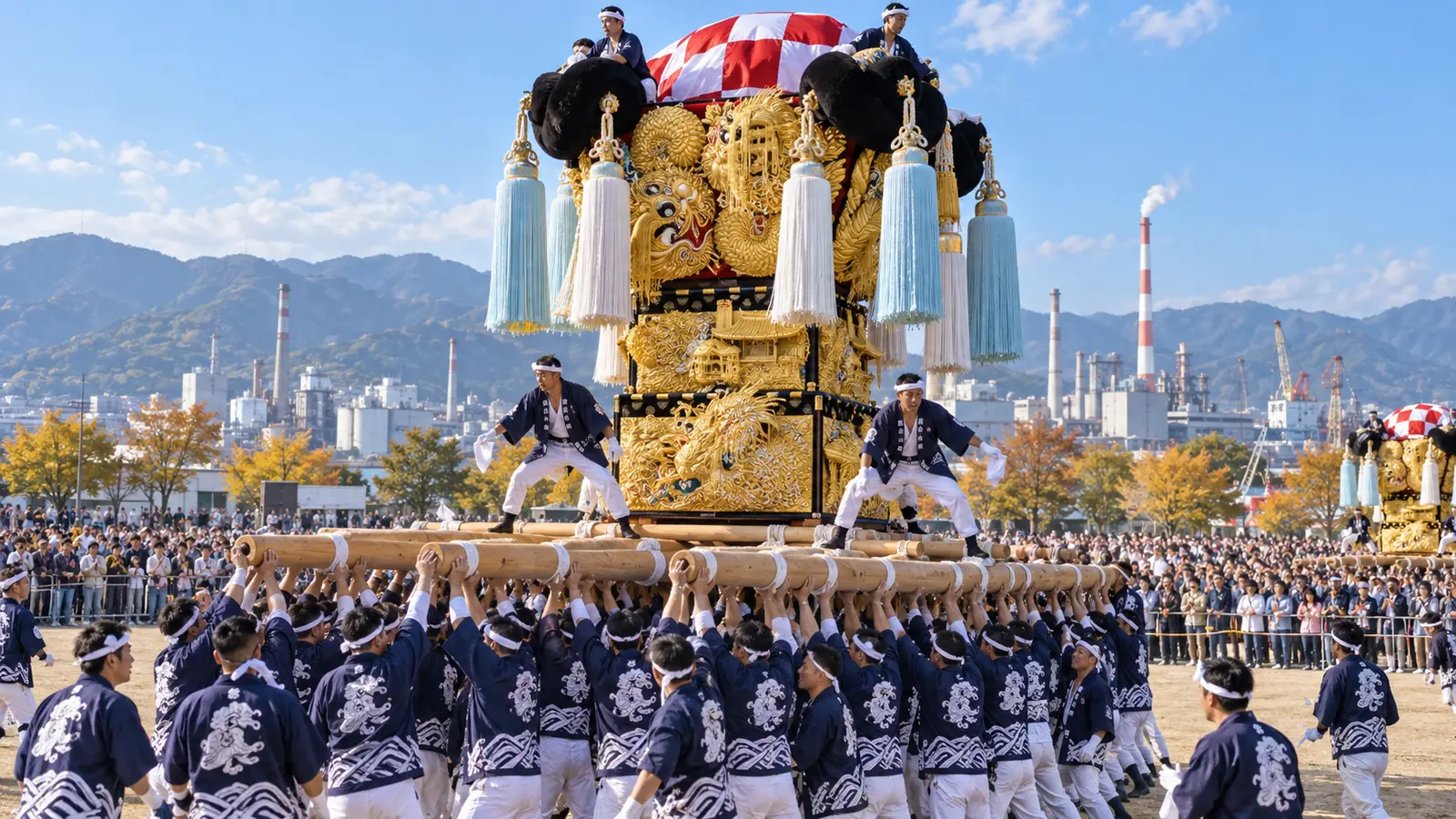
At Dogo Onsen Station, multiple mikoshi meet for hachiawase. Matsuyama City describes young mikoshi guards pushing with full force around the portable shrines while participants call 'motekoi.' This is a living local ritual rather than a staged attraction, and spectators do not join the impact or carrying formation.
The city also identifies Isaniwa Shrine as a major sight: large mikoshi move up and down 135 steep stone steps. The slope, narrow approach, heavy equipment and crowd make the front of the stair route unsuitable for visitors who cannot move quickly or stand for a long period. Follow any one-way flow or closure even if it blocks the photograph you planned.
Itsukushima Shrine is another location associated with hachiawase, but the reviewed official pages do not publish one 2026 route or time linking all three areas. Choose one priority and avoid chasing moving mikoshi by taxi or car through controlled streets.
What to know
Times that are confirmed — and those still unannounced
The confirmed public information is the October 5–7 festival period and an early-morning Dogo Onsen Station hachiawase on October 7. The exact Dogo assembly time, first movement, collision sequence, finish, shrine-by-shrine timetable and Isaniwa stair time are not published in the official sources reviewed October 7.
Because the festival is decentralized, one shrine's notice may not govern another district. Recheck the responsible shrine or local official page before moving, then save the Japanese event name 松山秋祭り and your chosen venue offline. If no exact time appears, ask accommodation or the Dogo tourist information source rather than relying on an undated social video.
What to know
Admission, tickets, reservations and sellout conditions
Matsuyama City's official tourism page lists the festival as free and outdoors. The reviewed official pages do not announce a general admission gate, spectator ticket, advance reservation, application deadline, reserved viewing stand, capacity allocation or same-day ticket sale.
There is therefore no verified public sellout condition for ordinary viewing. Free access does not guarantee a place beside the ritual, an unobstructed sightline or entry to a temporarily controlled zone. Police and festival staff can close an approach when the operating space is full.
A commercial tour, hotel package or locally allocated seat would be a separate product. Verify the provider, exact viewing entitlement, meeting time and cancellation terms before paying, and do not describe it as an official festival reservation unless the relevant shrine or organizer does so.
What to know
Nearest station and access from central Matsuyama
Dogo Onsen Station is the practical rail stop for the Dogo gathering. The Dogo official area guide describes the event as within walking distance of Dogo Onsen. Iyotetsu publishes the current city-tram route map, timetables, fares and real-time approach information; use those live operator tools instead of preserving a departure from this article.
From JR Matsuyama Station or Matsuyama City Station, follow the current Iyotetsu city-tram route to Dogo Onsen and allow a larger margin than an ordinary sightseeing visit. Early-morning service, platform access and crowd controls can differ from daytime. Confirm the first practical tram for October 7 and keep a licensed-taxi fallback arranged through accommodation if the tram does not reach the venue before the eventual start time.
The reviewed 2026 pages do not publish a festival shuttle, event car park or final road-control map. Do not drive into narrow shrine streets or assume that ordinary taxi pickup remains available beside Dogo Onsen Station during the ritual.
What to know
Weather, postponement and same-day decisions
Matsuyama City's page warns that content may change or be cancelled because of weather and directs visitors to contact the individual shrine for the latest information. It does not publish one citywide rain threshold, wind rule, postponement date, decision deadline or notification channel for 2026.
A light-rain forecast is not proof that every ritual will be cancelled, and a Dogo decision does not prove that another shrine will operate. Carry a compact raincoat, check JMA warnings and the responsible shrine before leaving, and keep the rest of the morning flexible. Umbrellas can obstruct sightlines and become dangerous beside heavy moving mikoshi.
What to know
Crowd safety, photography and final checks
Hachiawase involves deliberate force between heavy mikoshi and coordinated teams. Stay behind barriers and staff, never step between shrines, carrying beams or teams, and do not lean into the route for a photograph. Use a more distant position for children, older travelers, strollers and anyone who may struggle on the steep Isaniwa approach.
No single 2026 public rule for tripods, flash, close portraits, livestreaming or personal drones is published on the reviewed pages. Keep equipment handheld and within your body line, ask before making close identifiable portraits, and stop whenever shrine or event staff direct. The absence of a posted drone rule is not permission to fly over a crowd or shrine ritual.
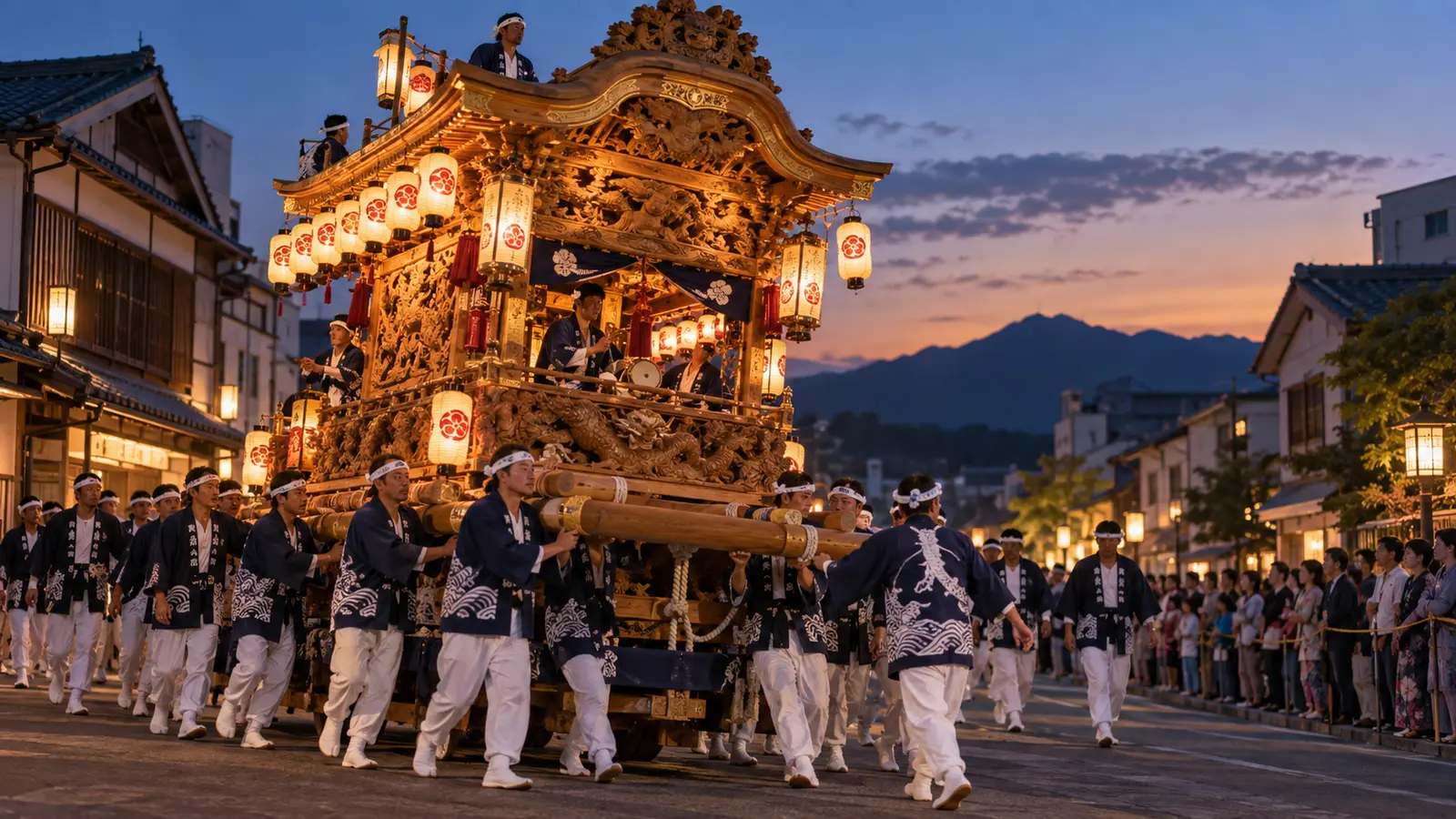
Before travel, confirm the exact venue, start time, weather decision, tram service, road and pedestrian controls, toilet access and return plan. The thumbnail on this page is a generated editorial image inspired by an early-morning Dogo mikoshi gathering. It is not documentary photography of the 2026 festival and must not be used as evidence of the actual station, shrine, floats, route, barriers, weather or crowd layout.
If that does not work
Use the fallback.
- The Dogo approach is full: follow staff to a lawful outer position or leave the immediate route; free viewing does not guarantee front access.
- The exact start time is still unannounced: ask the responsible shrine or Dogo information source and avoid booking a non-refundable early transfer around a guessed time.
- Weather changes or cancels one program: follow that shrine's current notice and do not assume another location uses the same decision.
- The first tram is too late: use only a confirmed licensed taxi or accommodation-arranged transfer, and set the drop-off outside any controlled street.
- Isaniwa Shrine's stairs are unsafe for your party: choose the wider Dogo station area and remain away from the mikoshi operating zone.
Before you need it
Save this offline.
- October 5–7 dates and chosen shrine or Dogo venue
- Newly published October 7 start time when available
- Iyotetsu route to Dogo Onsen and two return options
- Latest shrine weather and cancellation notice
- Any traffic-control map or pedestrian instruction released after October 1
- Compact rainwear, water, walking shoes and portable battery
- Accommodation address and licensed-taxi contact for the early morning
Frequently asked questions
Matsuyama Autumn Festival 2026: Dogo Mikoshi and Access FAQ
When is Matsuyama Autumn Festival in 2026?
Monday, October 5 through Wednesday, October 7, 2026. Festival rites take place at shrines and streets across Matsuyama.
When is the Dogo Onsen hachiawase?
The official Dogo guide confirms early morning on October 7, but the exact 2026 start and finish times were still unannounced when reviewed October 6.
Where should a first-time visitor go?
Dogo Onsen Station is the clearest public-transport base for the famous hachiawase. Isaniwa Shrine adds the dramatic 135-step mikoshi route but has steeper, more constrained viewing conditions.
Do I need a ticket or reservation?
The city lists public viewing as free and outdoors. No general spectator ticket, reservation deadline or public paid-seat allocation is announced.
Can the viewing area sell out?
No ticket sellout system is published, but staff can restrict a crowded ritual zone. Free admission does not guarantee a front position or continued access.
What is the nearest station?
Dogo Onsen Station on the Iyotetsu city-tram network. Check the operator's live timetable, especially for an early-morning October 7 arrival.
What happens if it rains?
Individual events may change or be cancelled because of weather. No unified 2026 rain threshold, postponement date or citywide decision time is published; contact the responsible shrine.
Are traffic restrictions and parking published?
A final 2026 road-control map, event parking plan and festival shuttle were not published on the reviewed official pages as of October 6.
Primary evidence
Official sources used
Open these pages again before travel. External links lead to the responsible Japanese authority or transport organization.