Do this now
Follow these steps in order.
- 01
Treat arrival and exit as the main booking decision: reach Kurama well before 18:00, expect controlled walking routes and never rely on the final train as your only workable return.
- 02
Use Eizan Railway from Demachiyanagi. Save the October 22 special timetable and check live crowd instructions because police can halt transport toward Kurama when the venue is full.
- 03
Do not drive. General vehicles are restricted from 15:00 between Kibuneguchi and Kurama Onsen, and all parking in the Kurama area is closed.
- 04
Watch from the public area assigned by staff. Keep clear of burning torches, sparks, ropes, mikoshi bearers, shrine paths, homes and emergency lanes.
- 05
Before departure, recheck Eizan Railway, Kyoto's event notice, JMA warnings and the shrine site for same-day operation, weather changes and any newly announced visitor rule.
What to know
Formal name, date, place and ritual sequence
The formal event is Kurama no Hi-matsuri, usually translated as the Kurama Fire Festival. It is the annual festival of Yuki Shrine in Kurama, Kyoto, held on October 22. The shrine's official account begins with a formal rite at 09:00 and a relocation ceremony before the public evening fire procession.
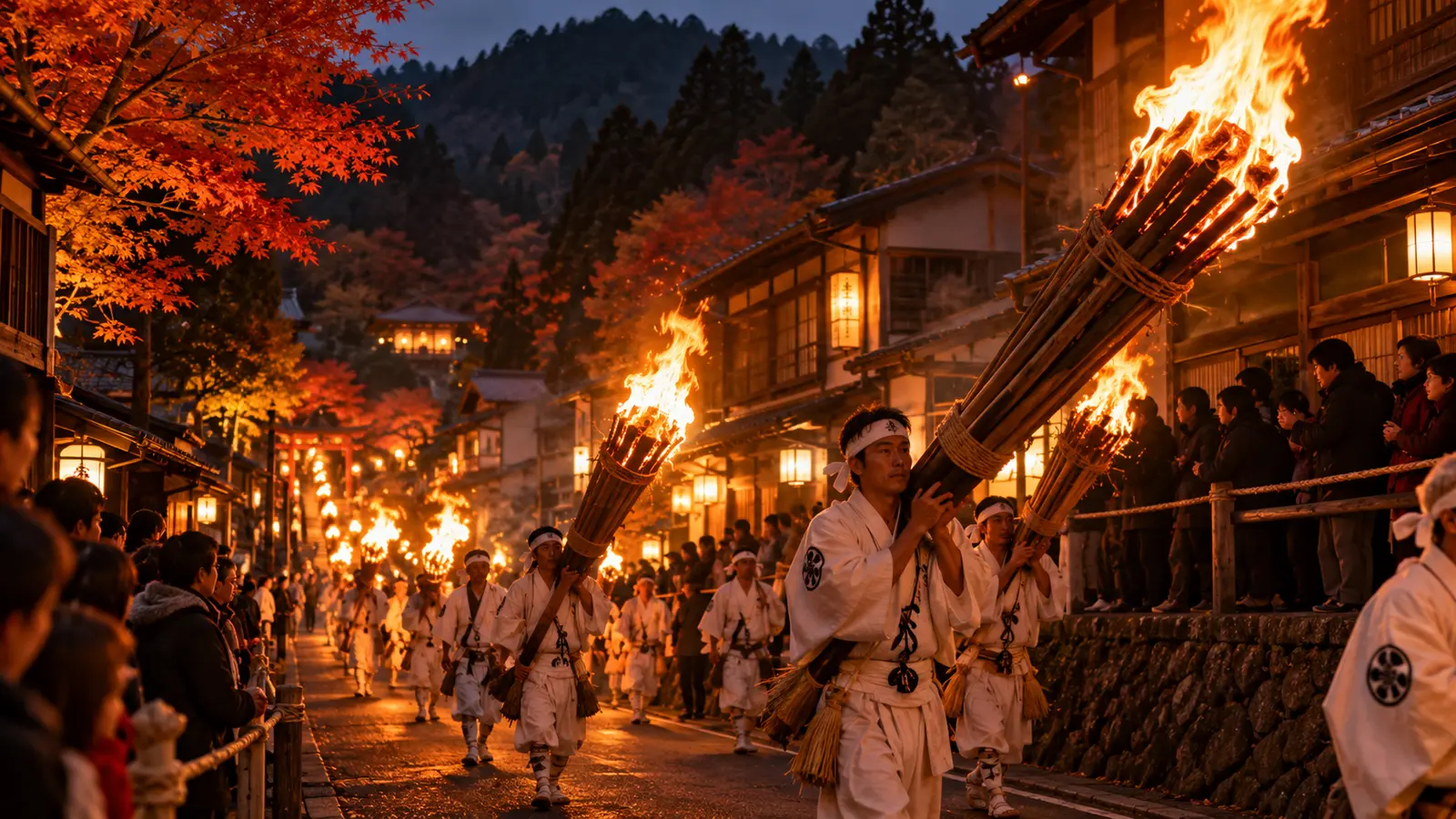
From 18:00, fires are lit in front of homes along the village street. Children first carry small torches, followed by larger torches and groups of adults carrying very large pine torches. The procession gathers toward the shrine approach, after which the shimenawa is cut and mikoshi rites continue into the night. The shrine says the festival continues after midnight, with a return rite the following morning.
This is an active neighborhood and shrine observance, not a staged torch show. Visitors should not pick up, touch or cross in front of a torch, join a resident group, enter a home frontage or assume that a camera position remains open when staff change the crowd route.
What to know
Confirmed 2026 time anchors and what remains unannounced
Kyoto City's current 2026 notice confirms Thursday, October 22, with the main fire festival from 18:00 until after midnight. The shrine's shop plans to open around 11:00 after the morning rite and close around 16:30 because access on the upper shrine approach becomes restricted before the evening crowd.
The official pages do not publish one minute-by-minute visitor timetable for every torch, the exact time each mikoshi reaches a given point, a maximum spectator capacity or a guaranteed viewing window. They also do not publish a universal rain-or-shine rule, a typhoon decision time or a postponement date. Treat those items as unannounced and check same-day notices instead of copying a previous year's sequence.
What to know
Train access from Kyoto and the capacity cutoff
From Kyoto Station, JNTO's official route uses the JR Nara Line to Tofukuji, the Keihan Main Line to Demachiyanagi and the Eizan Kurama Line to Kurama. Yuki Shrine is about a six-minute walk from Kurama Station in ordinary conditions, but festival crowd controls can make the final approach substantially slower. Allow transfer margin and arrive before the evening surge.
Eizan Railway's October 9 notice confirms a special Fire Festival timetable on October 22. Some Demachiyanagi–Kurama trips will take longer than usual. The operator warns of platform and boarding restrictions, long waits and the possibility that passengers cannot board their intended train. If police decide the village is too crowded, transport toward the festival can be stopped entirely.
A ticket or IC card is not a promise of admission to Kurama. Keep a fallback evening in central Kyoto and follow railway staff immediately if access is suspended. Do not travel to Kibuneguchi expecting to bypass a Kurama cutoff on foot or by road; access management covers the constrained mountain corridor.
What to know
The 23:24 last train and a realistic exit plan
Eizan Railway lists the final Kurama departure for Demachiyanagi at 23:24 on the special timetable. The shrine and Kyoto City both describe festival rites continuing after midnight, so the last train leaves before the official sequence is complete. Seeing the late mikoshi rites and returning by ordinary rail are therefore incompatible assumptions unless a later official service is announced.
Do not build a plan around squeezing onto 23:24. Crowd releases, controlled lanes and a full platform can prevent you from reaching or boarding it. Choose an earlier departure, confirm lawful nearby accommodation well in advance, or accept that you may not see the final rites. Taxis cannot be treated as a rescue plan inside the vehicle-control zone.
Save at least two earlier train options and the final connection from Demachiyanagi to your accommodation. Keep your group together before entering the crowd, choose a meeting point outside the torch route and carry enough battery for railway updates without blocking the street to check a map.
What to know
Road closure, parking and the no-car decision
Kyoto City states that general vehicle traffic is restricted from 15:00 on the road between Kibuneguchi and Kurama Onsen. Every parking facility in the Kurama area is closed for the festival. This removes both local parking and the idea of being dropped directly beside the venue.
Use rail and obey the pedestrian route set by police and festival staff. Do not park in Kibune, on mountain roads, at a closed facility or in a resident's space. The reviewed notices do not promise a visitor shuttle, festival taxi rank or remote official car park, so none should be built into the plan unless a later dated announcement supplies it.
What to know
Admission, reservations, sellouts and shrine access
The official 2026 event and shrine pages do not publish a general spectator admission fee, ticket, advance reservation deadline or paid-seat inventory. The practical capacity condition is physical access: railway and police crowd controls can stop additional visitors even though there is no conventional sold-out ticket notice.
Yuki Shrine's shop and upper approach operate separately from evening street viewing. The city notice says the shop closes around 16:30 and the upper approach is then restricted. Do not promise a late shrine visit, goshuin purchase or unrestricted shortcut through the grounds. Any religious offering, food or local purchase is separate from general observation of the festival.
What to know
Fire, crowd, weather and photography safety
Wear close-fitting natural-fiber outer layers where practical, tie back long hair and keep scarves, umbrellas and loose straps away from flames. A compact raincoat is safer than opening a wide umbrella in a dense torch route. Follow every barrier and spoken direction; sparks, heat, smoke and sudden movement make the front edge unsuitable for children who cannot remain still or anyone needing a quick exit.
Do not use flash in participants' faces, a tripod, selfie stick or drone. Photograph from a stable public position without leaning across ropes or raising a phone for long periods. The event takes place beside homes and narrow approaches, so keep voices low, do not enter private property and leave luggage at accommodation or a confirmed station facility before boarding for Kurama.
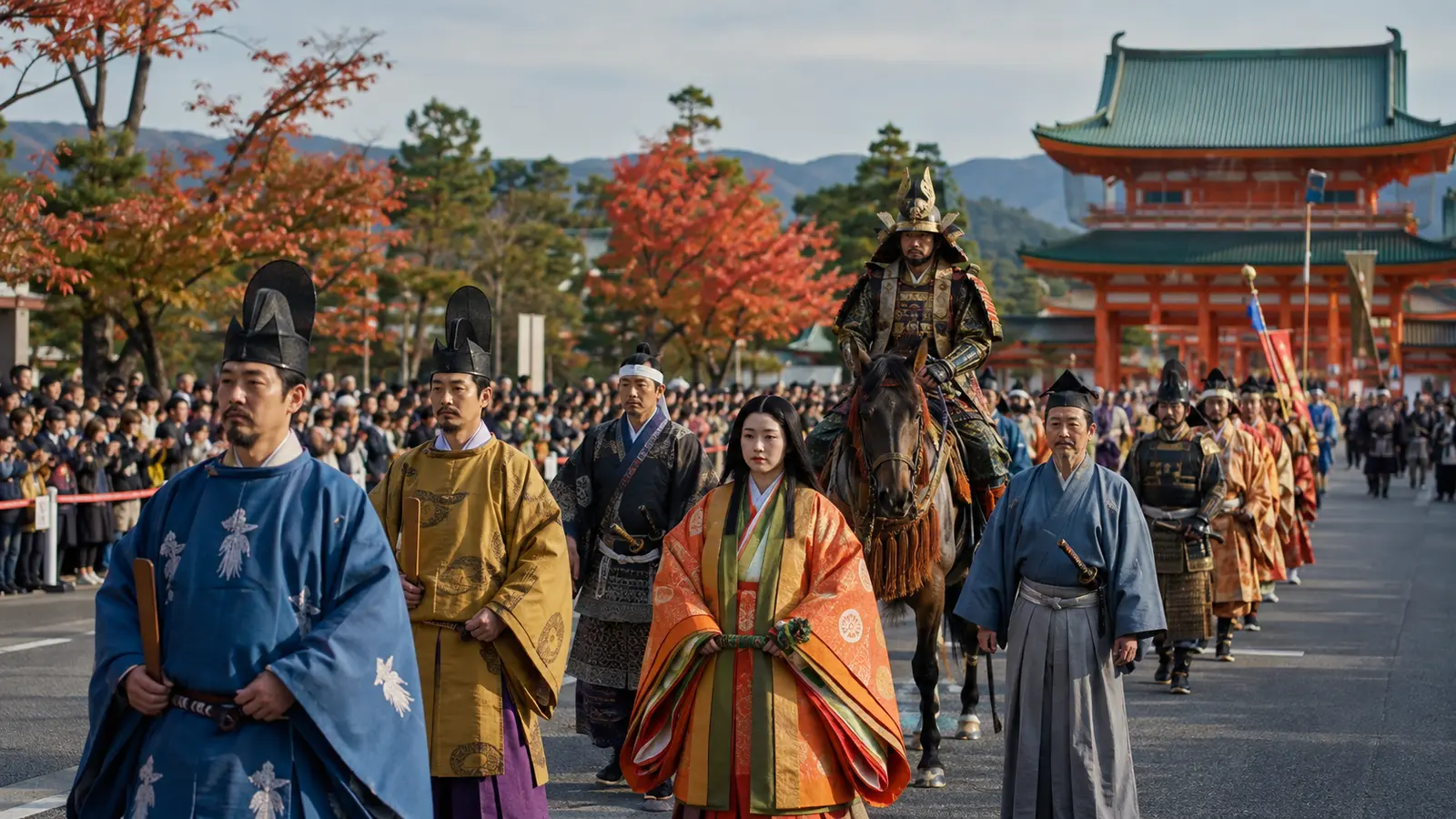
Check JMA weather warnings and the organizer's current page on the day. Because no unified 2026 postponement or cancellation rule is published, do not infer that ordinary rain, a warning or a railway suspension produces a particular outcome. The thumbnail on this page is a generated editorial illustration, not documentary photography of the 2026 festival or evidence of its actual crowd, torch design or weather.
If that does not work
Use the fallback.
- Police stop festival-bound transport: remain at the station, follow staff and use your central-Kyoto fallback; do not attempt to walk the closed mountain road.
- Your intended train is full: take the next service only if staff continue boarding and your exit plan still has margin.
- The 23:24 last train is too risky: leave earlier or use previously confirmed lawful accommodation; taxis and roadside pickup are not guaranteed alternatives.
- Weather changes the festival: follow the dated shrine, city and railway notice because no universal 2026 postponement rule is published.
- The shrine approach is restricted: stay on the assigned public route and do not use the grounds as a shortcut or viewing platform.
Before you need it
Save this offline.
- Eizan Railway October 22 special timetable and live operating page
- At least two return trains before the 23:24 final departure
- Kyoto City event notice, road restriction and shrine-access rule
- Accommodation address and a central-Kyoto fallback evening
- JMA warnings, portable battery, water and close-fitting rain protection
- A group meeting point outside the torch and mikoshi route
Frequently asked questions
Kurama Fire Festival 2026: Last Train, Access and Safety FAQ
When is Kurama Fire Festival in 2026?
Thursday, October 22. The main fire festival begins at 18:00 and official rites continue after midnight.
What is the nearest station?
Eizan Railway's Kurama Station. Yuki Shrine is about six minutes away in ordinary conditions, but festival crowd controls make access slower.
What is the last train from Kurama?
Eizan Railway lists 23:24 as the final Kurama-to-Demachiyanagi departure on the October 22 special timetable.
Do I need a ticket or reservation?
No general spectator ticket, reservation deadline or paid-seat inventory is published. Access can still close when crowd capacity is reached.
Can I drive or park at Kurama?
No. General vehicles are restricted between Kibuneguchi and Kurama Onsen from 15:00, and all parking in the Kurama area is closed.
What happens if Kurama is full?
Police can stop festival-bound transport. Follow station staff and use a fallback plan; do not try to bypass controls on foot or by road.
What happens if it rains?
The reviewed official pages do not publish one universal 2026 rain, typhoon, postponement or cancellation rule. Check same-day shrine, city, railway and JMA notices.
Can I stay until the final ritual and take the train back?
Do not assume so. Official rites continue after midnight, while the published last train leaves Kurama at 23:24.
Primary evidence
Official sources used
Open these pages again before travel. External links lead to the responsible Japanese authority or transport organization.