Do this now
Follow these steps in order.
- 01
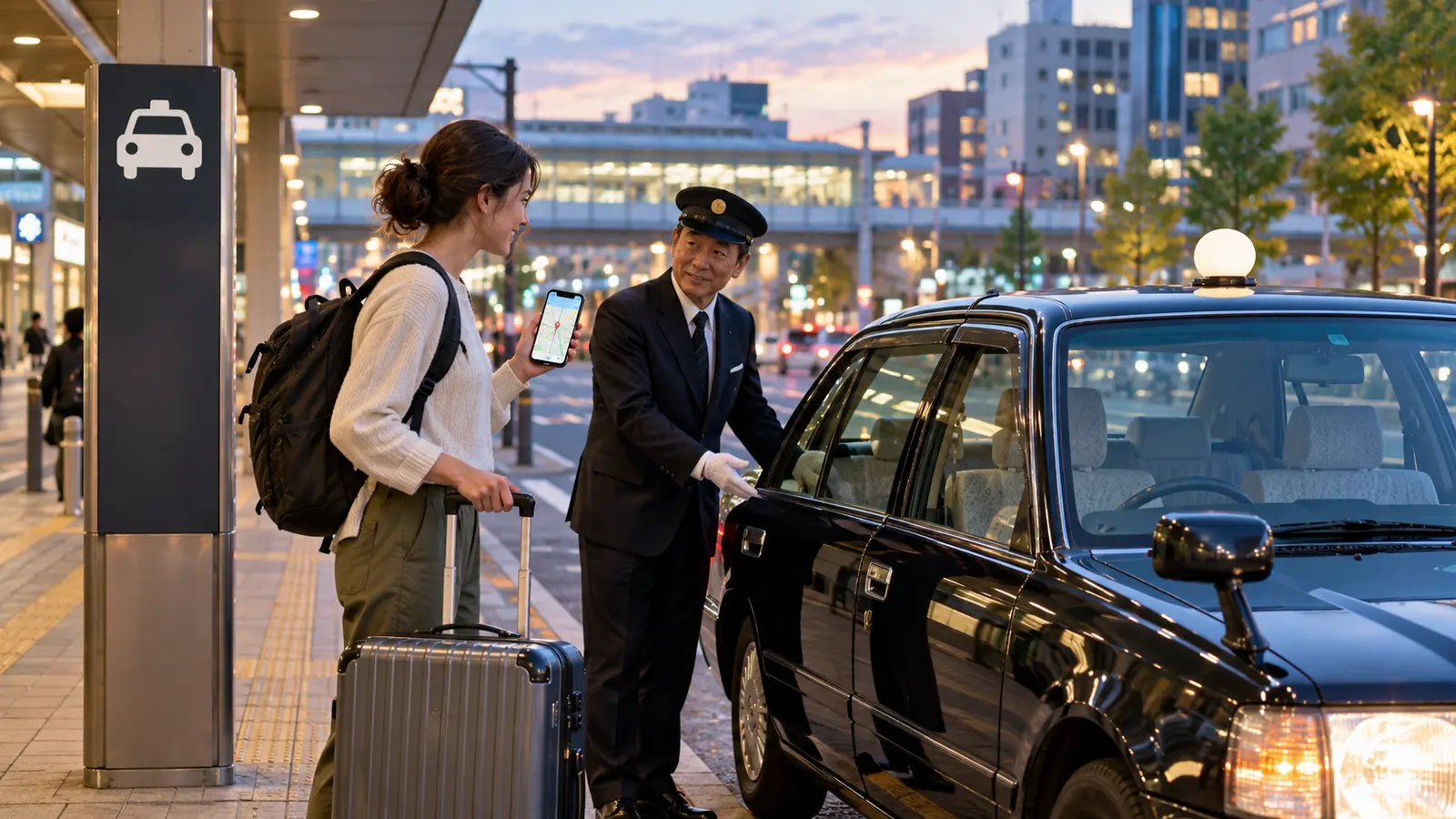
Choose the pickup method: join the signed taxi stand, hail a taxi displaying 空車 (vacant), ask hotel or station staff to call one, or use a dispatch app that serves your location.
- 02
Before requesting a car, place the pickup pin on the legal stopping point rather than inside a station, mall or restricted road. At an airport, open the official terminal map and check whether app pickups use a separate floor or bay.
- 03
Enter or save the destination's Japanese name, street address, phone number and nearest entrance. A hotel name alone can be ambiguous when chains have several branches.
- 04
For an app ride, match the vehicle number and confirmation number shown in the app. For a street or stand taxi, confirm the destination before the car moves and ask about a fixed airport fare before departure if you intend to use one.
- 05
Check the meter and any disclosed dispatch, reservation, priority or toll charge. Tokyo figures in this guide are examples only; the official local fare table and the taxi company's terms control your ride.
- 06
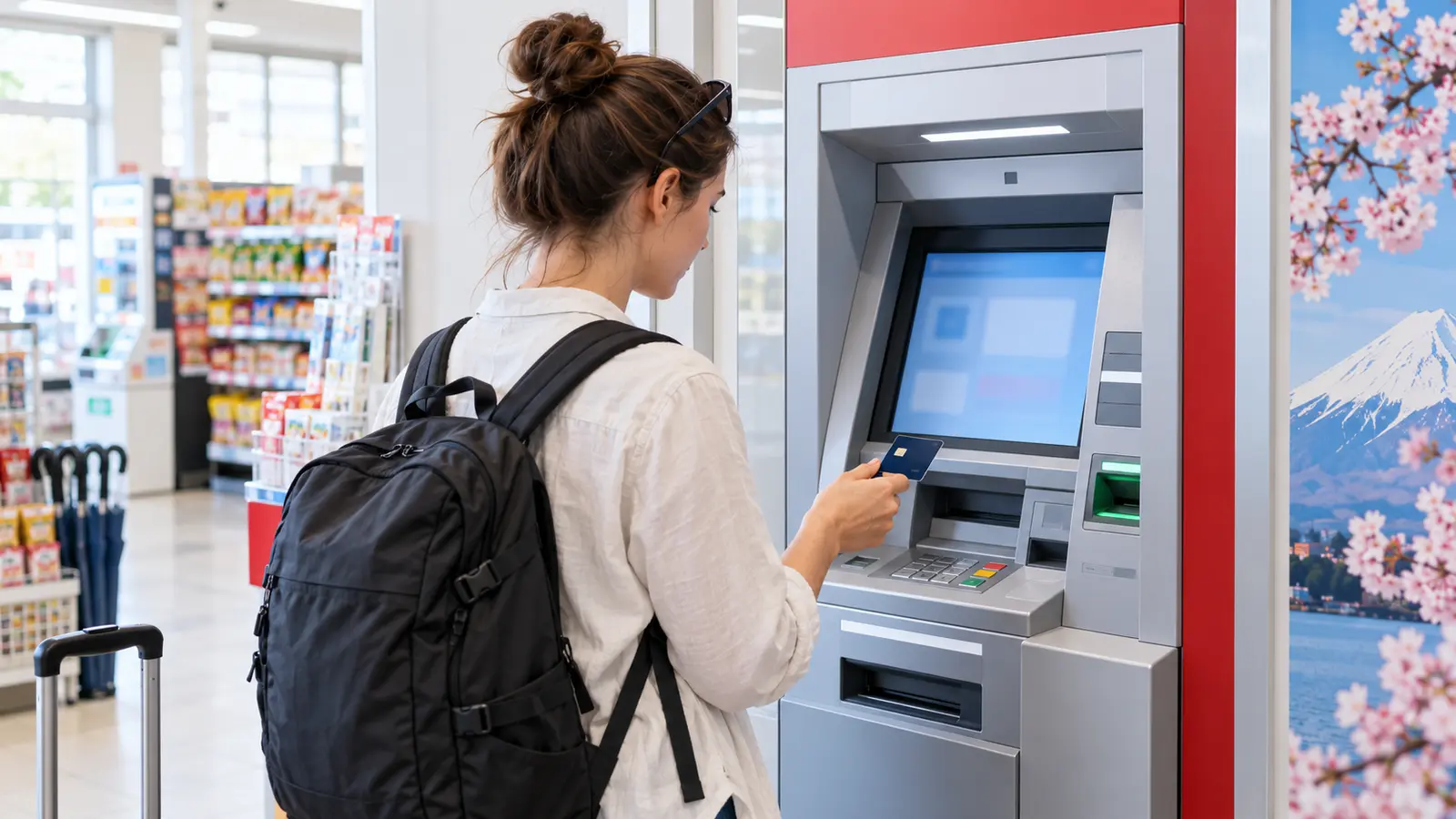
Confirm payment before arrival if cash is limited. In-car cashless methods differ by vehicle and company, while an app's registered payment applies only when that method was selected successfully.
- 07
At the destination, pay the metered or agreed fare plus applicable tolls and fees, collect the receipt and check the seat, floor and trunk before the taxi leaves. Tipping is not expected.
- 08
If the taxi cannot meet you, move only to a clearly legal pickup point, message or call through the app, and watch for cancellation terms. If the trip is cancelled, switch to a taxi stand, another licensed dispatch service or public transport rather than entering an unmarked solicitation vehicle.
What to know
Choose a taxi stand, street hail or dispatch app
Taxi stands are usually the simplest choice at railway stations, airports, hotels and major sights. Join the marked queue and use the first appropriate vehicle unless staff direct you elsewhere. In rural areas, JNTO notes that taxis may cluster at the station but be less common on the street, so asking accommodation staff to reserve one can be more reliable.
For a street hail, look for 空車 in the front display. Other displays can mean reserved, on the way to a customer or out of service. Stand where the taxi can stop legally and safely; a driver may pass you if stopping would obstruct traffic, a bus zone or an intersection.
Apps can set the destination in advance and reduce language friction, but coverage, vehicle supply, fees and supported payments vary. JNTO currently lists GO, S.RIDE, Uber and DiDi among English-language options. This guide does not rank or endorse one service, and the presence of an app in a prefecture does not guarantee an available taxi at your time and exact location.
What to know
Set a pickup point the driver can actually reach
A map pin is not proof that a taxi may stop there. Large stations can have several sides, taxi-only lanes and underground or elevated roads. Use an exit number, building name and visible landmark, then compare the driver's direction of travel with your side of the road.
App-dispatched taxis can use a different area from the walk-up line. Haneda Airport, for example, directs app-dispatched and reserved taxis at Terminals 1 and 2 to dedicated stands on the second-floor departure level, while ordinary taxi lines remain on the first-floor arrival level. Terminal 3 has its own published taxi guidance. Always use the current airport map rather than an old blog screenshot.
Once a car is assigned, use the app's message or call function if available and give the confirmation number when boarding. GO's official guidance warns that taxis may be unable to wait more than five minutes in some traffic areas and that cancellation fees can apply when rider and driver do not meet. Read the current service-specific policy before confirming.
What to know
Give the exact destination, not just a famous name
Save the destination in Japanese with its full address and telephone number. Many English hotel names, temple names and station names sound similar, and a large complex can have several entrances. Showing the official map pin or Japanese address is more dependable than asking a driver to interpret a translated nickname.
For airports, show the airport, terminal and airline. For a station, state the railway company and exit. For a hotel, include the branch and ward or city. If you need an accessible entrance or have oversized luggage, say so before departure so the driver can choose an appropriate drop-off point.
The driver will normally use the meter and navigation. If you want a specific route, say so before moving; toll-road charges are normally added. A fixed airport fare has its own eligible zones, reservation and routing rules, so do not assume every airport trip automatically uses a flat rate.
What to know
Understand the meter, time charges and extra fees
Taxi fares are regulated locally and are not one nationwide price. Distance, low-speed time, late-night surcharges, dispatch or reservation fees, priority options and tolls can all affect the total. Traffic can therefore raise a metered fare even when the distance does not change.
As a current example checked on October 30, 2026, Tokyo Taxi Center's Japanese passenger FAQ lists 500 yen for the first 1.0 kilometer in Tokyo's 23 wards, Musashino and Mitaka, then 100 yen for each additional 232 meters, or each 1 minute 25 seconds at 10 km/h or below. It also lists a 20% surcharge from 22:00 to 05:00. These figures took effect on April 20, 2026 and must not be used as a quote for Kyoto, Osaka or any other region.
A dispatch app estimate is useful for planning but is not necessarily the final fare. Check the fee breakdown before requesting, especially for a reservation, priority dispatch or airport product. If a driver proposes a fixed airport fare, confirm eligibility and whether tolls are extra before the car departs.
What to know
Pay in the method you actually selected
Japanese yen cash remains the universal fallback. JNTO says cards are generally usable in major-city taxis but cash may be the only option in some rural vehicles. Tokyo Taxi Center also advises checking before boarding because card and electronic-payment acceptance differs by car.
An app may offer in-car payment and app payment as separate choices. GO's official English support page, for example, says in-car methods are determined by the taxi company, while GO Pay uses a registered supported payment method. A card saved in your phone does not guarantee that every taxi terminal or app transaction will accept it.
If an app payment fails, do not leave until the fare is settled. Ask whether the same vehicle accepts a physical card, IC payment or cash. Keep enough yen for the full ride and obtain a receipt; it proves payment and is the fastest way to identify the operator later.
What to know
Doors, luggage, seats and accessibility
The driver normally operates the rear passenger door. Stand clear and do not pull it unless the driver asks. Enter and exit on the curb side when possible, keep clear of bicycles and fasten the seat belt; Tokyo Taxi Center states that seat belts are legally required.
A standard sedan may not fit four adults plus four large suitcases. Tokyo Taxi Center lists four passengers for a normal sedan and advises arranging a wagon or larger taxi for substantial luggage. Tell the company the passenger, suitcase, stroller and wheelchair count when booking; do not make the driver discover the capacity problem at pickup.
Universal-design taxis are regular taxis intended to be easier for wheelchair users, older travelers, pregnant passengers and people with luggage, but vehicle layout and boarding equipment vary. Reserve the required vehicle and explain wheelchair dimensions, transfer needs and luggage rather than relying on a generic car icon.
What to know
Airport fixed fares need the correct lane and conditions
Some airports and city zones offer approved fixed fares, but the conditions are specific. The Tokyo Hire-Taxi Association says Haneda fixed fares generally require advance reservation when travelling to the airport; the exception is boarding at the Haneda terminal taxi point. Expressway tolls are extra, and a late-night premium can apply.
Multiple stops, a substantial passenger-requested route change or ending the journey early can cause the trip to revert to a normal meter fare. Confirm the destination zone, pickup point, toll treatment and night surcharge with the operator before travel.
At the terminal, follow official signage and staff. Do not accept an unsolicited ride offer in the arrivals hall or car park. If the reserved vehicle is missing, contact the operator using the confirmation and use the official taxi line as the fallback.
What to know
Keep the receipt for lost property or a fare problem
Before closing the door, check the seat crease, floor, door pocket and trunk. Save the paper receipt or download the app receipt and trip history. Tokyo Taxi Center tells passengers who have a receipt or can identify the driver to contact the listed taxi provider directly.
If you notice a loss later, give the company the date, pickup and destination, approximate times, fare, vehicle number and item description. If the company is unknown, contact the police lost-property service for the place where the ride occurred and the local taxi association where available.
For a disputed fare or unsafe service, preserve the receipt, app screenshots and exact route without confronting the driver. Contact the operator first, then the relevant regional taxi center or transport authority. Tokyo Taxi Center only covers its stated Tokyo service area, so it is not a nationwide complaints office.
If that does not work
Use the fallback.
- If no taxi appears in the app, walk to the official station or hotel taxi stand, ask staff to call a licensed operator, or use the operator's published dispatch number. App coverage does not guarantee nearby supply.
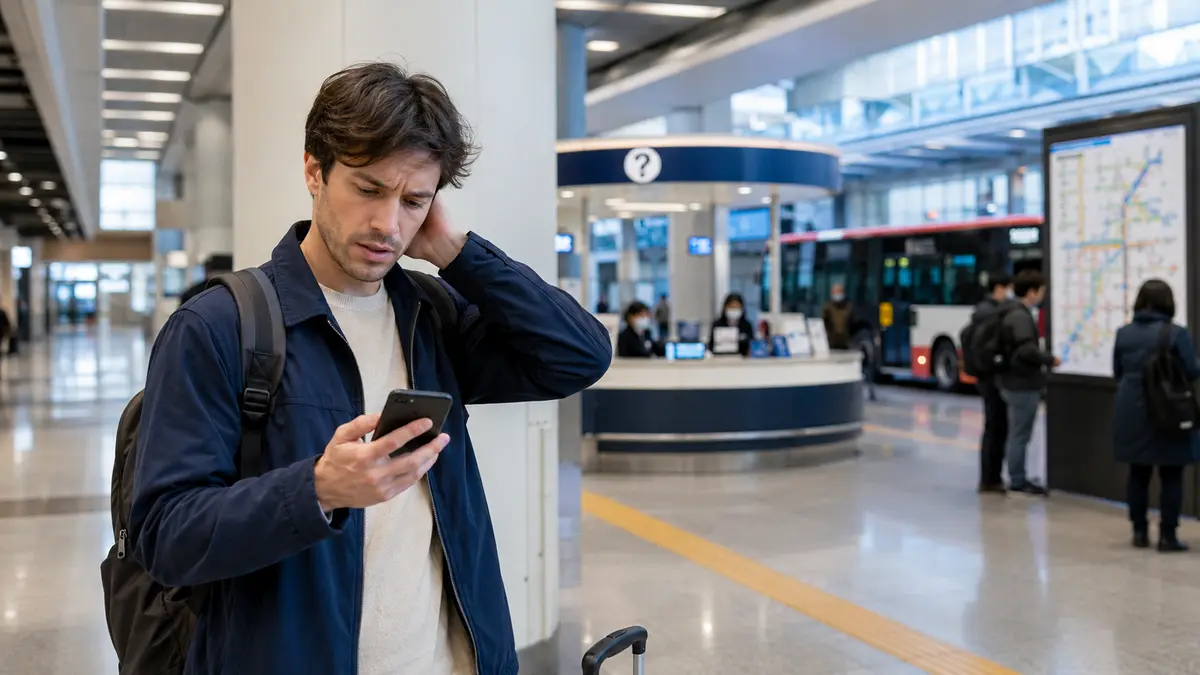
- If driver and rider cannot find each other, send the app's fixed message, verify the exit and road level, and move only to a legal stopping point. Do not create simultaneous requests in several apps without cancelling the others under their policies.
- If the app payment fails, use an accepted physical card or Japanese yen and request a receipt. A screenshot of a saved card is not payment.
- If your group or luggage will not fit, do not force bags into the passenger area. Ask for a wagon, larger vehicle or a second taxi and confirm the new fees before requesting.
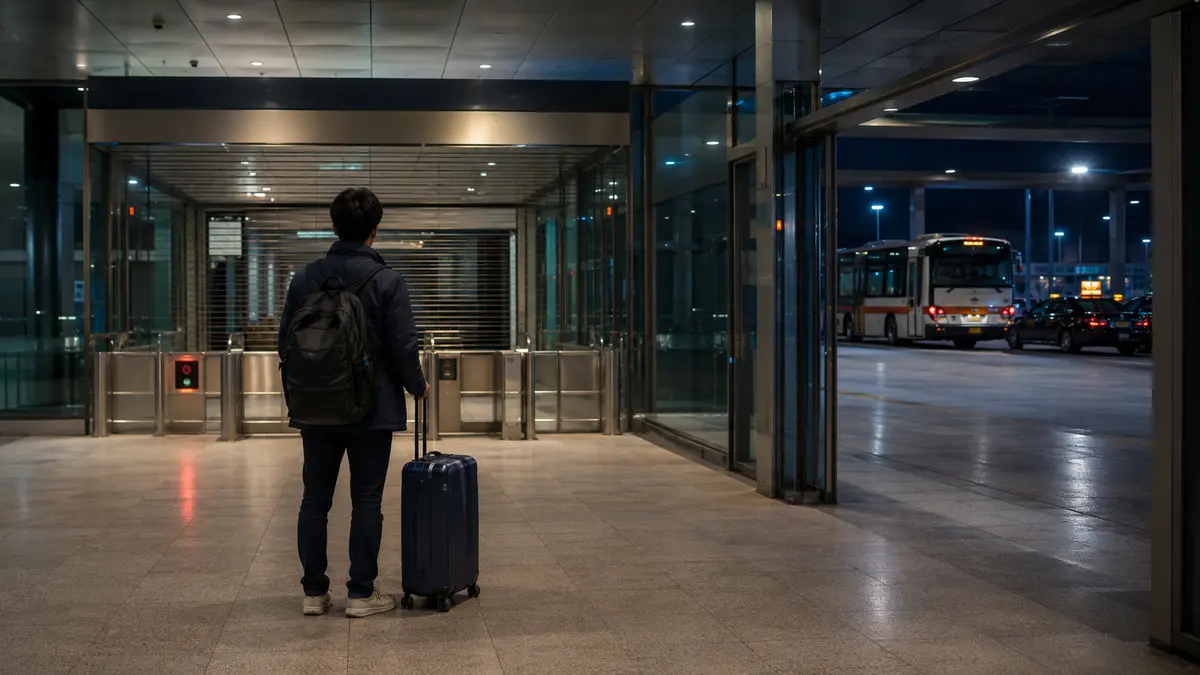
- If the last train has ended and taxis are scarce, wait at a staffed, well-lit official stand, ask the station or hotel for help, or use verified overnight accommodation; do not enter an unmarked car soliciting passengers.
- If you leave an item behind, contact the company on the receipt or app history immediately, then use the local police lost-property process if the operator cannot locate it.
Before you need it
Save this offline.
- Destination name and full address in Japanese, plus phone number and entrance or exit
- Taxi app login, registered payment and confirmation number tested before leaving Wi-Fi
- Airport or station official pickup map saved as a screenshot
- Enough Japanese yen for the estimated fare, dispatch charge and possible tolls
- Ride receipt or app trip history showing taxi company and vehicle details
- Passenger, suitcase, stroller and wheelchair details for a larger or accessible booking
Frequently asked questions
Japan Taxis: How to Hail, Use Apps, Pay and Meet Your Driver FAQ
How do I know whether a taxi in Japan is available?
Look for 空車 in the front display, use the official taxi queue, or request through an app. Reserved, pickup and out-of-service displays mean the vehicle cannot take a street hail.
Can I pay a Japanese taxi with a foreign credit card?
Often in major cities, but not in every vehicle. Check the in-car payment marks or selected app method and carry Japanese yen as a fallback.
Do I need a Japanese phone number to use a taxi app?
Requirements differ by app and can change. Check the app's current registration and verification page before travel; if registration fails, use a taxi stand, hotel dispatch or licensed operator phone line.
Should I open the taxi door myself?
Usually no. The driver normally operates the rear door. Stand clear, let it open and close, and exit on the curb side when possible.
Is tipping expected in Japanese taxis?
No. Pay the metered or agreed fare plus disclosed fees and tolls, and collect the receipt.
Why is the final fare higher than the app estimate?
The total can include low-speed time, late-night surcharge, dispatch or reservation charges and tolls. An estimate is not always a guaranteed price unless you selected an eligible fixed-fare product.
Where do I meet an app taxi at Haneda Airport?
Use Haneda's current official terminal map. Terminals 1 and 2 direct app-dispatched and reserved taxis to dedicated second-floor departure-level stands, separate from the first-floor walk-up lines.
Can a standard taxi carry four travelers and four large suitcases?
Do not assume so. A sedan may seat four but lack luggage space. Reserve a wagon or larger taxi and state the passenger and bag count.
What should I do if I leave something in a taxi?
Contact the provider shown on the receipt or app trip history immediately. Give the ride time, route, fare, vehicle details and item description, then use the local police lost-property process if needed.
Primary evidence
Official sources used
Open these pages again before travel. External links lead to the responsible Japanese authority or transport organization.