Do this now
Follow these steps in order.
- 01
Choose October 25 only if the Kawaotoshi finale is your priority; use October 23 or 24 for other festival rites, understanding that exact public times are still unannounced.
- 02
Use Imari Station as your gateway and keep the day flexible. Do not attach a tight onward train to an unpublished procession or finale time.
- 03
Treat street viewing as free and unreserved unless the organizer publishes a new 2026 ticket notice. A free event can still close viewing areas for safety or capacity.
- 04
Recheck the official organizer, Imari Tourism Association, city notices, transport and JMA weather information shortly before departure for the final route, traffic controls and weather decision.
What to know
Formal name, confirmed dates and what happens each day
The event is commonly called Imari Ton-Ten-Ton, an Imari Shrine procession and ritual contest involving the shrine's mikoshi and danjiri. The official 2026 organizer page lists a shrine rite on Monday, October 19, followed by the public festival sequence from Friday, October 23 through Sunday, October 25. The related Imari Autumn Festival is separately confirmed for October 24 and 25.
Friday, October 23 is listed as Anmaku. Saturday, October 24 is the first main-festival day. Sunday, October 25 is the final day and includes Kawaotoshi, the river-drop finale. The organizer identifies the red and white mikoshi groups, the rough mikoshi and the danjiri among the participating formations.
As of September 21, the official page does not give exact start or finish times for those public days. It also says the final procession route and ritual contest sites will be announced when decided. Do not copy times, maps or viewing positions from an earlier year into a 2026 itinerary.
What to know
How to choose the best day
Choose October 25 if the Kawaotoshi finale is the reason for your trip. It is the most distinctive part of the published program, but its 2026 time, exact spectator layout and safe viewing capacity are not yet announced. Build a full-day plan with a flexible return rather than arriving for an assumed hour.
October 24 is the first main-festival day and overlaps with the Imari Autumn Festival. It may suit travelers who want a broader downtown atmosphere without making the river finale their only goal. October 23 is the Anmaku day, but its detailed public program and hours are also pending.
The October 19 shrine rite appears in the organizer schedule but is not presented as one of the October 23–25 main public festival days. Visitors should not assume the same street program, access or spectator arrangements apply on October 19.
What to know
Venue, nearest station and access to Imari
The festival takes place around Imari Shrine and central Imari. Imari Station, served by the JR Chikuhi Line and Matsuura Railway, is the practical rail gateway and is also close to the city's main bus arrivals. The final route and battle locations are pending, so the station-to-viewing walk cannot yet be stated responsibly.
The Imari Tourism Association lists a direct highway-bus journey from Hakata to Imari of about 1 hour 50 minutes under normal conditions. It also gives typical rail approaches of about 1 hour 51 minutes via Arita and about 2 hours 19 minutes via Karatsu. These are planning estimates, not festival-day connection guarantees.
Check the actual operator timetable for your travel date and leave a wide return margin. Street controls and crowds can make the last walk back to Imari Station slower than a normal map estimate. Leave large luggage at accommodation or a confirmed facility rather than carrying it into a dense ritual route.
What to know
Admission, reservations and sellout conditions
The reviewed official pages do not publish a general spectator admission charge, advance reservation, booking deadline, paid grandstand or official sellout system for watching the street festival. That means no general viewing ticket is currently announced; it does not guarantee entry to every corner or an unrestricted view.
Police, shrine representatives and festival staff can restrict or close an area when the procession, ritual contest, emergency access or crowd density requires it. Private property, resident doorways and working streets are not viewing spaces. Do not buy an unofficial ticket or package that claims guaranteed access without confirmation from the organizer.
If a reserved area or paid program is announced later, its newly dated official terms will control price, deadline, capacity, cancellation and refund conditions. None of those conditions should be inferred from a previous edition.
What to know
Safety around the mikoshi, danjiri and river
This is an active shrine rite in which heavy festival structures and teams meet in controlled spaces. Watch only from the public side of barriers and staff lines. Never enter the carrying lane, stand at a turning point, follow between teams or move toward the structures for a close photograph.
Kawaotoshi brings the finale to the river. Keep well back from the river edge and any wet, sloping or closed surface. Hold children beside an adult, keep bags close to the body and leave immediately if staff reduce the viewing area. The absence of a ticket does not make the ritual zone open to spectators.
Use a compact camera setup, disable flash when it could distract participants and never extend a selfie stick, tripod or long lens into the route. No festival-wide 2026 drone or commercial-filming permission is published; obtain explicit organizer authorization before any aerial, staged or monetized production.
What to know
Traffic controls, parking and crowd planning
The final 2026 procession map, ritual contest sites, road-closure windows, bus diversions, visitor parking and shuttle arrangements are not yet published. The organizer's current detail page says the route and contest locations will be announced after they are decided.
Public transport through Imari Station is the safest default. If driving is unavoidable, wait for a newly dated 2026 parking and traffic notice before choosing a lot. Do not rely on normal navigation after controls begin, park on a procession street or use a shop's customer spaces without permission.
Agree on a meeting point away from the river and major intersections, save your accommodation address offline and expect mobile service to slow in a dense crowd. A clear view is never worth crossing a staff line or blocking emergency access.
What to know
Rain, severe weather and final checks
The reviewed official 2026 pages do not publish a rain-or-shine rule, severe-weather threshold, postponement date, decision time or unified cancellation policy. River conditions can matter separately from ordinary street weather. Check the organizer, tourism association, Imari City and JMA immediately before leaving.
If rain is possible, use compact rainwear rather than a wide umbrella beside the route and wear shoes with grip. Do not approach the river after staff close it, even if other parts of the festival continue. A social-media clip from an earlier year is not evidence that the 2026 finale will proceed.
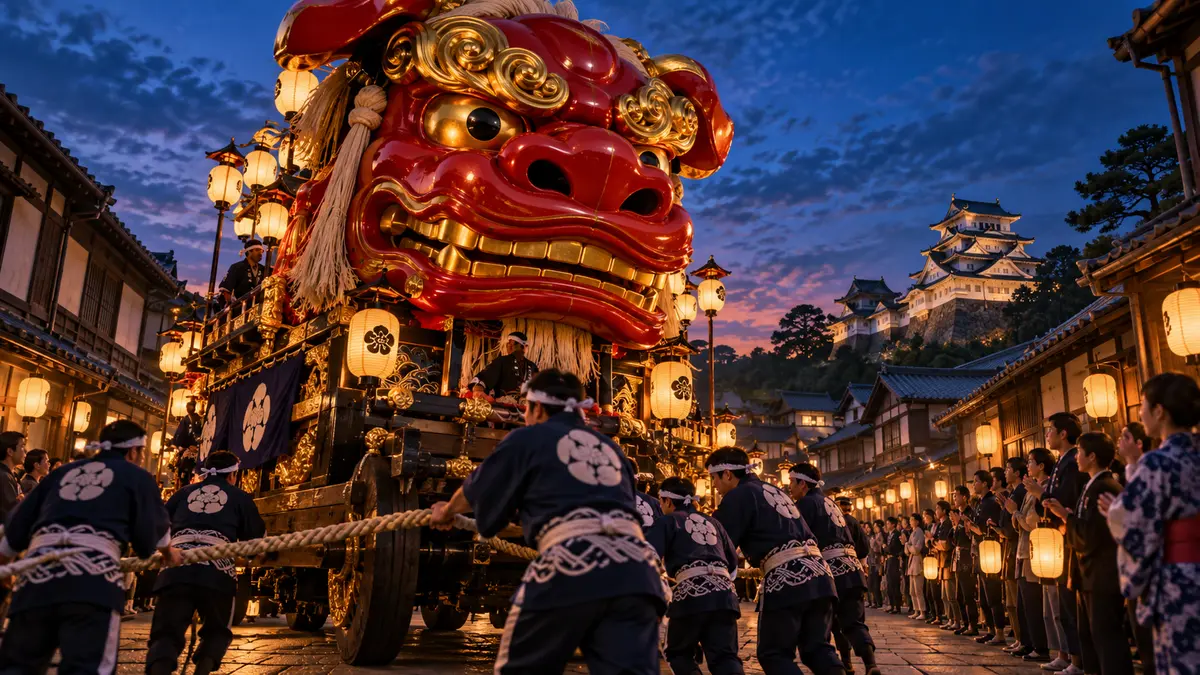
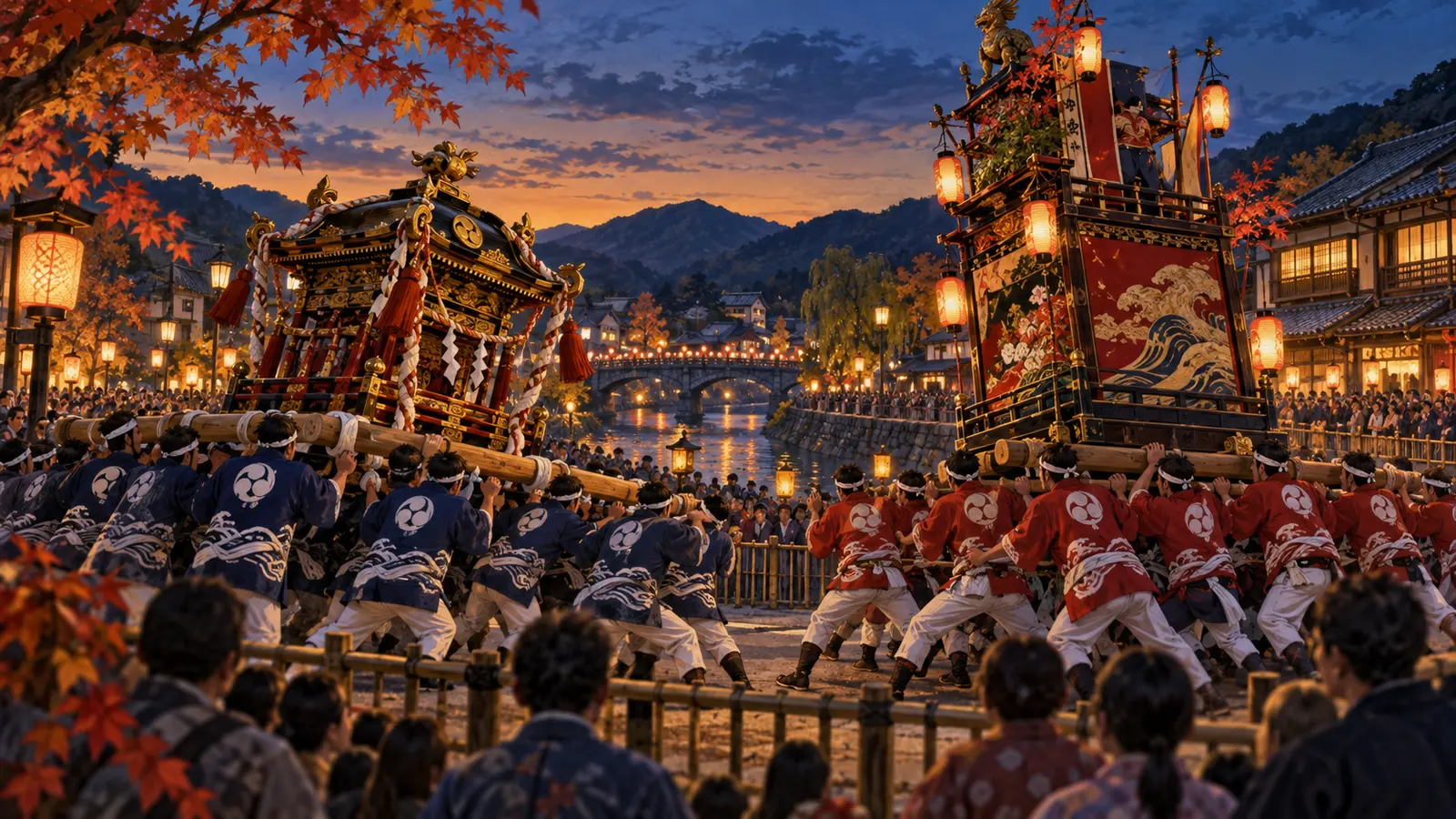
Before travel, confirm the daily time, route, contest sites, Kawaotoshi time, traffic controls, parking, weather decision and transport home. Any item still missing should remain flexible rather than being filled with an estimate. The article thumbnail is a generated editorial illustration and is not documentary photography of the 2026 festival.
If that does not work
Use the fallback.
- The route or Kawaotoshi time is still unpublished: plan a flexible day in central Imari and wait for the organizer instead of using an old timetable.
- A viewing area reaches safe capacity: follow staff to another permitted area and accept that a close view is not guaranteed.
- Rain or river conditions change the finale: follow the event-specific official notice; do not enter a closed riverbank or assume postponement.
- Road controls affect your bus or taxi: walk only on the signed public route and protect the return trip with a wide time margin.
- No official parking notice appears: arrive by rail or highway bus rather than searching residential streets for space.
Before you need it
Save this offline.
- October 23–25 dates and the organizer's latest daily schedule
- Imari Station and accommodation route
- Final procession, ritual contest and Kawaotoshi locations when published
- Traffic-control, bus-diversion and parking notice when published
- Return rail or highway-bus timetable with a generous margin
- JMA weather information, compact rainwear, water and portable battery
- Meeting point away from the river and active procession route
Frequently asked questions
Imari Ton-Ten-Ton Festival 2026: Dates, Access and Safety Guide FAQ
When is Imari Ton-Ten-Ton in 2026?
The main festival sequence runs Friday, October 23 through Sunday, October 25, 2026. A shrine rite is also listed on October 19, and the related Imari Autumn Festival runs October 24–25.
When is Kawaotoshi?
Kawaotoshi is listed for the final day, Sunday, October 25. Its exact 2026 time and spectator layout have not yet been announced.
What is the nearest station?
Imari Station is the practical gateway for central Imari. The final procession and ritual contest map is still pending, so check the walking route again after publication.
Do I need a ticket or reservation?
No general spectator ticket, advance reservation, deadline or sellout system is published on the reviewed official pages. Staff may still restrict viewing areas for safety and capacity.
What time does the festival start?
Exact daily start and finish times for October 23–25 are not yet published. Do not use a previous year's timetable for 2026.
What happens if it rains?
No unified 2026 rain rule, decision time or postponement date is published. Check the organizer, Imari City, tourism association and JMA immediately before travel.
Are traffic restrictions and parking published?
Not yet. The organizer says the final route and ritual contest sites will be announced when decided, and a final 2026 traffic, shuttle or visitor-parking plan is not currently published.
Can spectators enter the river or contest area?
No. Stay in designated public viewing areas and follow barriers and staff. The carrying lanes, contest spaces and river edge are active ritual and safety zones.
Primary evidence
Official sources used
Open these pages again before travel. External links lead to the responsible Japanese authority or transport organization.