Before you book
Make these decisions in order.
- 01
Open the exact package details for your date and confirm the itinerary, meeting point, language and inclusions before paying.
- 02
Book only if Oishi Park, the pagoda area and Oshino Hakkai still interest you when Mount Fuji is hidden by cloud.
- 03
Use the meeting point printed on the final voucher; Tokyo and Shinjuku are not interchangeable.
- 04
Wear secure walking shoes for the long stair ascent at Arakurayama and bring a warm layer if the selected route includes the Fifth Station.
- 05
Leave suitcases at your accommodation or a station locker and keep the evening after the tour flexible.
What to know
Why this classic route is different from a six-photo-stop tour
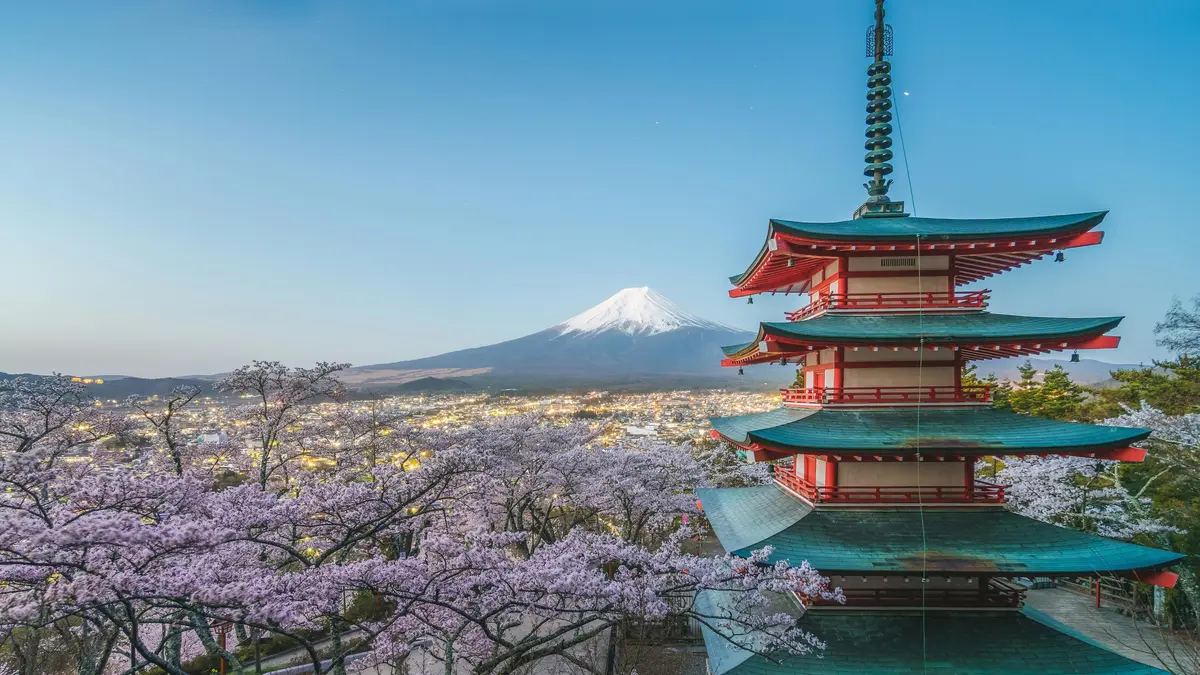
Klook activity 77703 concentrates on three established areas: Oishi Park on Lake Kawaguchi, Arakurayama Sengen Park with Chureito Pagoda, and Oshino Hakkai. It is a conventional Fuji Five Lakes sightseeing circuit rather than an itinerary built mainly around viral roadside compositions.
That distinction matters. Our separate Mt. Fuji photo-spots guide covers Honcho Street, the Lawson composition and several short camera stops. This classic tour is the better fit when you want fewer place types, a guide and time in recognized park or heritage settings. It is not automatically better for a creator trying to collect the maximum number of social-media angles.
The public listing describes a joined group with a guide and a roughly ten-hour duration. You are buying route coordination and bus transport across dispersed locations, not private control over timing.
What to know
The package name is part of the product
As checked on July 26, 2026, the English page displays three materially different choices: “Mt. Fuji day tour / TOKYO,” “Mt. Fuji day tour / SHINJUKU,” and “Mt. Fuji Premium Sake and Cruise day tour / SHINJUKU.” The first decision is therefore not simply how much to pay; it is which product you are buying.
Do not assume the premium sake-and-cruise option follows every stop shown in the classic-tour gallery. Likewise, do not assume a Tokyo package can use the Shinjuku meeting point. Select your date, open the package details and compare the named stops, meeting and end points, included admissions, meals or tastings, minimum age rules and cancellation terms.
Screenshots elsewhere on the page can survive after a package changes. The selected package panel and final voucher should control your plan.
What to know
Mount Fuji visibility is never included
A day can be bright in Tokyo and cloudy around Mount Fuji. Local wind, cloud and precipitation can change quickly, while promotional images show unusually clear conditions. The bus can operate even when the summit is hidden.
Use a forecast to choose clothing and understand risk, not as a promise of a photograph. The official Mount Fuji information site explains that weather differs sharply between the foothills, Fifth Station and summit and can change rapidly.
A good booking test is simple: would the lake, seasonal planting, pagoda, village and guide still justify the day if the mountain never appears? If the answer is no, stay overnight around Kawaguchiko and preserve flexibility for a clearer morning.
What to know
Oishi Park changes through the year
Oishi Park places a long flower strip between Lake Kawaguchi and Mount Fuji. The official Yamanashi guide describes a 350-meter flower street, with moss phlox typically in late April to early May and lavender typically in late June to early July.
Those are seasonal patterns, not inclusions. Bloom dates, color, snow cover and lake reflections depend on current weather. Summer may bring greenery and heat; winter can offer clearer air but cold lakeside wind.
The nearby Kawaguchiko Natural Living Center provides an indoor shop and local products, but a group itinerary may allow only limited browsing. Return to the bus at the guide’s stated time rather than treating the park as an open-ended visit.
What to know
Chureito Pagoda is a peace monument, not only a backdrop
Fujiyoshida City explains that Chureito Pagoda was built in 1958 as a memorial to approximately 960 local residents who died in wars after 1868. Knowing that context changes the stop from a quick photo prop into a civic memorial overlooking the city.
Reaching the famous observation area involves a long stair ascent. A fixed tour stop must cover the climb, view and descent, so this is the physical bottleneck for travelers with knee, heart or mobility concerns. Ask the operator about alternatives before purchase if the climb may not be possible.
The city also warns that local roads are narrow, parking is limited and the area becomes heavily congested on weekends, during autumn leaves and in the spring blossom season. A bus tour removes the parking decision but cannot remove queues, crowds or a shortened stop.
What to know
Oshino Hakkai is eight heritage ponds
Oshino Hakkai is not one ornamental pond. The official Yamanashi guide identifies eight ponds fed by Mount Fuji snowmelt filtered through porous volcanic rock over decades. The ponds form part of the Mount Fuji UNESCO World Cultural Heritage property.
Short group visits encourage people to cluster around the busiest water and food stalls. Use the posted paths, keep hands and objects out of protected water, and distinguish the eight named heritage ponds from other nearby water features.
The open-air museum around the largest pond has a separate small admission charge according to the official guide. Do not assume that optional entry or every snack is included in a general bus-tour price.
What to know
Treat the Fifth Station as package-dependent
The activity gallery includes a Mount Fuji Fifth Station image and past customers report visiting it when conditions allowed. However, the public headline route centers on Oishi Park, Arakurayama and Oshino Hakkai. Confirm the selected package itinerary before treating the Fifth Station as a fixed stop.
Road, snow, weather and operating decisions can make a high-elevation visit unavailable or lead to a substitute. The Fifth Station is also much colder than central Tokyo. Bring a warm and wind-resistant layer even in seasons that feel mild in the city.
A sightseeing bus stop is not a climbing permit or a climb. Travelers planning to go above the Fifth Station must use the separate official climbing rules, season, fees, reservation and safety information.
What to know
Language and group pace need realistic expectations
The current listing advertises English, Chinese and Cantonese. That does not necessarily mean a private English-only commentary stream; joined tours may communicate in several languages. Confirm what the selected package promises if detailed English interpretation is essential.
At each stop, record the bus location and the guide’s return time before walking away. A ten-hour shared day succeeds only when every traveler returns promptly. Keep your phone audible, save the voucher offline and set an alarm several minutes before the stated meeting.
Leaving the tour early is possible only after informing the guide when you meet in the morning, according to Klook’s current FAQ. The listing says there is no refund for leaving mid-tour or skipping the return bus.
Compare the selected package
Check live packages and the total price for your date.
Use the same date, meeting point, route, language, admissions, meals and add-ons when comparing Klook with another seller or a self-planned day. Choose the better complete cost, control and cancellation terms.
Compare Mount Fuji classic-tour packages on Klook↗Read Fujiyoshida City’s official Chureito Pagoda guidance ↗Non-affiliate link
Paid link. Commercial details checked July 26, 2026; availability and terms can change.What to know
Bring a day bag, not a suitcase
Klook’s current FAQ permits one carry-on item per person and tells travelers to leave suitcases and large luggage at the hotel or a nearby station locker. Do not use this sightseeing bus as an intercity luggage transfer.
A practical day bag contains water, a warm or rain layer, medication, a battery pack and only the camera equipment you can carry on stairs. Food opportunities exist around the route, but their timing, queue and inclusion are not guaranteed.
Keep valuables with you when leaving the bus. The public listing does not establish unattended storage responsibility or guaranteed space for oversized equipment.
What to know
Traffic can rewrite the day
The Chuo Expressway and roads around the Fuji Five Lakes can become congested on weekends, public holidays and peak flower or autumn dates. A ten-hour listing is a planning estimate, not a protected arrival time in Tokyo.
Weather, traffic and local restrictions can change the order, duration or availability of stops. Do not attach a same-evening flight, last Shinkansen, theatre booking or non-refundable dinner to the advertised return.
If one stop is indispensable, read the selected package’s substitution and cancellation terms before paying. Poor visibility alone normally does not mean the transport service failed to operate.
What to know
How to book the right version
Start with the real date. Choose Tokyo, Shinjuku or the premium sake-and-cruise product, then read only that package’s itinerary and inclusions. Confirm the guide language, exact meeting point, arrival time, end point, child rules, accessibility, food, admission, luggage and cancellation deadline.
Compare the final total in your payment currency rather than relying on the page’s changing headline price. Save the paid voucher, map and emergency contact offline and arrive earlier than the printed cutoff.
Use the paid link below when the classic three-area route matches your priorities. Choose our separate photo-spots tour instead if Honcho Street and the Lawson composition are essential; choose an overnight stay if flexibility for visibility matters more than a single coordinated day.
Compare a related booking
Mt. Fuji Photo Spots Tour from Tokyo: Visibility, Routes and Safety
Compare this classic three-area route with activity 93901’s photo-led itinerary covering Honcho Street, the Lawson composition and additional short camera stops.
A good fit
Put it on your list if...
- First-time visitors wanting three classic Fuji Five Lakes areas in one day
- Travelers who prefer a guide and joined bus to multiple independent transfers
- Visitors interested in lake scenery, a memorial pagoda and cultural heritage ponds
- People who can manage a long stair ascent and a fixed group timetable
- Travelers whose day still has value when Mount Fuji is hidden
Think twice
Skip or reconsider if...
- Anyone expecting guaranteed Mount Fuji visibility
- Travelers who cannot manage the Arakurayama stair ascent without a confirmed alternative
- Visitors carrying suitcases or oversized filming equipment
- Creators wanting long tripod setups or control over light at every stop
- Travelers with a flight or rigid evening booking after the advertised return
- Anyone assuming the premium and classic packages share one identical itinerary
Booking option
Check the current tour terms before paying.
The paid link opens Klook’s English activity 77703 page in USD without fixing a date or package. Select the real date and compare the Tokyo, Shinjuku and premium sake-and-cruise options before paying.
- The route does not guarantee a visible Mount Fuji, reflection, flowers or snow.
- Confirm the selected package’s stops, meeting point, language and inclusions.
- Leave suitcases and large luggage at the hotel or a station locker.
- Allow for traffic, weather, road and substitution changes.
- Check the live cancellation and late-arrival rules at checkout.
Evidence and commercial terms
Sources checked
Government, destination and transport pages establish safety, access and current operating facts. Booking-service and seller pages are commercial sources whose terms apply only to their own channel. Open the relevant sources again before travel.