
Before you book
Make these decisions in order.
- 01
Check a mountain forecast, but book only if the day still has value when Mt. Fuji is hidden.
- 02
Select English, tour type and Tokyo meeting point before comparing the final price.
- 03
Do not step into a road, block a crossing or place a tripod in traffic at any photo stop.
- 04
Assess whether every traveler can manage 397 steps at Arakurayama Sengen Park.
- 05
Read the previous-evening guide and vehicle email and use the latest version if several arrive.
What to know
This is a photo-route tour, not a Mount Fuji guarantee
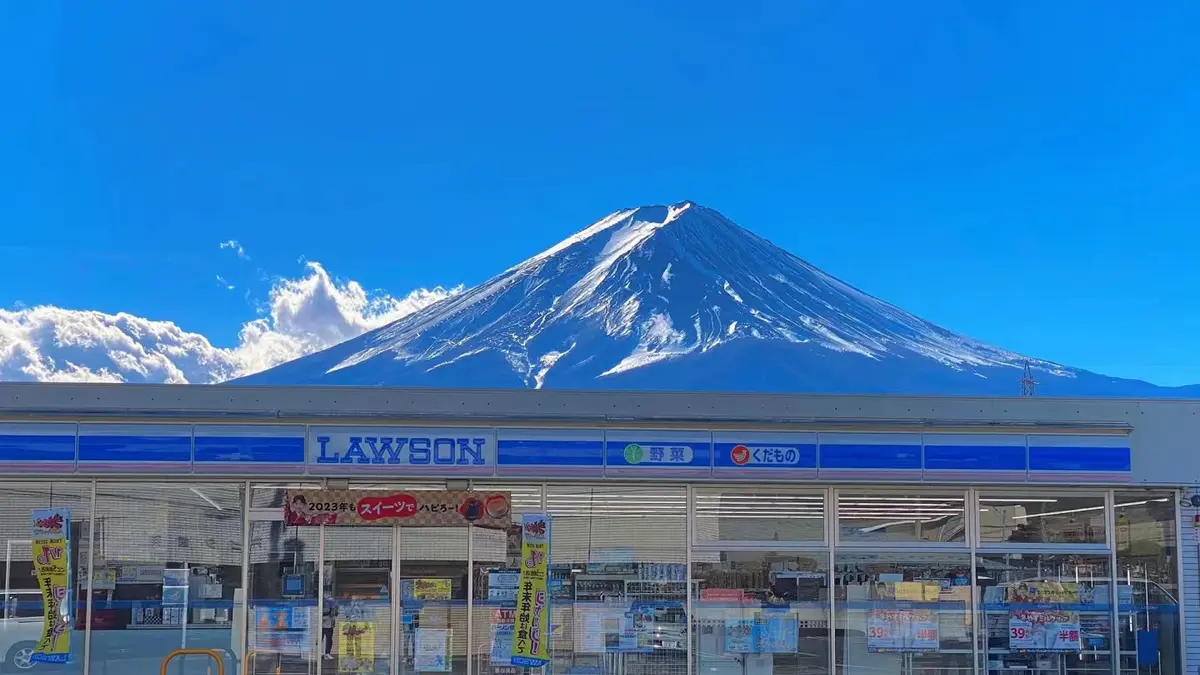
The itinerary links several social-media compositions: Mt. Fuji with Chureito Pagoda, the mountain at the end of a Fujiyoshida street, spring water at Oshino Hakkai, a convenience-store foreground and seasonal Lake Kawaguchi scenery.
The mountain creates its own cloud and can disappear even when Tokyo is sunny. Klook explicitly warns that summer visibility is lower. A clear forecast improves the odds but does not turn the ticket into a visibility guarantee.
Book for the landscape, towns and coordinated transport as a whole. If one unobstructed Fuji portrait is the only acceptable result, a flexible overnight stay is the safer plan.
What to know
Choose among three materially different tour types
The current page offers an assembled group at a designated meeting point, a small group with hotel pickup and drop-off, and a private charter. It also separates English and Chinese guide packages.
A low headline price generally corresponds to the large joined group, not a private car. Small vehicles can offer a more personal pace but have tighter seats and luggage space; Klook says their commentary may also be briefer because the driver prioritizes safe driving.
Confirm tour type, English service, pickup location, luggage and end point on the selected date before paying.
What to know
Chureito Pagoda requires 397 steps
Arakurayama Sengen Park provides the familiar layered view of Chureito Pagoda, Fujiyoshida and Mt. Fuji. The tour describes a climb of 397 steps to the observation area.
A short stop means climbing, photographing and descending on a fixed clock. Wear secure shoes, carry water and tell the guide before departure if a traveler cannot manage the stairs. A mobility limitation should be discussed before buying, not discovered at the parking area.
Cherry blossom, autumn color and snow are seasonal possibilities rather than package inclusions. Bloom timing and visibility can differ from promotional photographs without triggering a refund.
What to know
Honcho Street is a neighborhood, not a photo set
The “ladder town” or Hikawa Clock Shop composition is in Fujiyoshida’s Honcho commercial and residential district. The city welcomes careful visitors but states that stepping into the road for a Mt. Fuji photo is illegal because it blocks traffic and causes accidents.
Follow signals, crossing guards and the guide. Photograph only from a legal standing position, keep shop entrances open and avoid photographing identifiable residents at close range without permission.
A viral image is never worth forcing a vehicle to brake. If the safe angle is crowded, leave without the shot.
What to know
The Lawson stop demands the same safety standard
The Lawson near Kawaguchiko became famous because its low roof aligns with Mt. Fuji. It is still a working convenience store beside public roads, not an observation deck.
Klook’s page includes promotional wording about setting a tripod across the street. Do not follow that instruction where it obstructs a footpath, crossing or traffic. Follow current signs, barriers, staff and local law instead.
Buy something only if you need it, dispose of waste correctly and finish within the group’s time. The official town tourism site now promotes quieter Fuji viewpoints specifically to reduce concentration at viral spots.
What to know
Oshino Hakkai needs respectful time management
Oshino Hakkai’s eight spring ponds are part of the Mt. Fuji cultural landscape. The attraction is the water, village setting and religious history even when the summit is clouded.
Stay on visitor paths, do not touch or enter protected water and distinguish the named heritage ponds from nearby commercial ponds. Crowds, food stalls and narrow lanes can make a short stop feel rushed.
Agree on one or two priority ponds and return to the stated vehicle point early. Missing a shared departure can be costly and the group is not obligated to rebuild the day around a late traveler.
What to know
Lake Kawaguchi changes with the season
On ordinary dates the tour currently uses Oishi Park. Klook states that it substitutes the Kawaguchiko Cherry Blossom Festival from March 28–April 12 and the Maple Corridor from November 1–30, subject to official operation and conditions.
Lavender, kochia, cherry blossom and maple color depend on the year’s weather. The route can proceed even when flowers or leaves do not match their marketing peak, and Klook says this does not create a refund.
The local tourism organization publishes current events and traffic notices. Check it before the tour, especially around the August 5 lake festival and other dates with road restrictions.
Compare the selected package
Check live packages and the total price for your date.
Use the same date, meeting point, route, language, admissions, meals and add-ons when comparing Klook with another seller or a self-planned day. Choose the better complete cost, control and cancellation terms.
Compare Mt. Fuji photo-tour options on Klook↗Read Fujiyoshida’s official Honcho Street safety guidance ↗Non-affiliate link
Paid link. Commercial details checked July 27, 2026; availability and terms can change.What to know
Traffic can remove stops
Weekend and holiday congestion between Tokyo and the Fuji Five Lakes can be severe. The operator reserves the right to reorder or reduce stops because of traffic, weather and other conditions.
The listing also says commercial vehicles are limited to ten operating hours and mentions possible overtime charges of ¥5,000–10,000 per hour. Confirm at checkout who pays any charge and under what circumstances rather than assuming it can be collected automatically.
Do not schedule a same-evening airport departure, theatre ticket or non-refundable dinner immediately after the advertised return. The route needs a buffer.
What to know
Meeting points, luggage and late arrival
The operator says it sends guide and vehicle details between 20:00 and 21:00 on the previous evening. Check spam and use the latest message if special circumstances generate more than one.
Do not switch between Tokyo Station and Shinjuku after confirmation unless the operator approves it. The listing says a personal meeting-point change that causes a missed vehicle is non-refundable.
Large suitcases can be refused, particularly in small-group cars. The current policy asks travelers to declare even one luggage item in the special-requirements field at least a day ahead. Leave checked baggage at the hotel whenever possible.
What to know
A responsible camera plan
Bring one body and one versatile lens rather than a large roadside setup. Use a wrist or neck strap, keep bags against your body and do not walk backward into a road while composing.
A phone or camera with exposure compensation is enough for most stops. The main technical challenge is atmospheric visibility, not equipment. Polarization can change reflections and sky contrast but cannot reveal a mountain inside cloud.
Creators should keep the group moving and avoid staging repeated takes in residential or commercial space. A tour ticket does not provide a location permit or commercial control of the street.
What to know
How to book with realistic expectations
Choose the real date, English guide, tour format and exact meeting point. Check the cancellation deadline, pickup, baggage declaration, child seating, meal inclusion and overtime wording.
Accept in advance that Fuji, flowers and every stop are conditional. Save the voucher and previous-evening message offline, arrive early and follow the guide’s return alarms.
The paid link below is useful when convenience outweighs control. Travelers whose priority is one perfect image should instead plan an overnight stay with a flexible morning.
A good fit
Put it on your list if...
- First-time visitors seeking several classic Mt. Fuji compositions
- Travelers who prefer organized transport from Tokyo
- Phone photographers and creators comfortable working quickly
- Visitors who still value Oshino and Lake Kawaguchi in cloud
- Travelers able to climb 397 steps and follow fixed return times
Think twice
Skip or reconsider if...
- Anyone requiring guaranteed Mt. Fuji visibility
- Travelers unable to climb the Chureito observation steps
- Creators planning tripods or staged shoots in active roads
- Visitors who want hours at a single lakeside location
- Travelers with an inflexible evening commitment in Tokyo
- People carrying undeclared large luggage
Booking option
Check the current tour terms before paying.
The paid link opens Klook’s English activity 93901 page with USD selected and no fixed date. Select English, tour type and meeting point before comparing the final total.
- Mt. Fuji visibility, seasonal flowers and the full stop list are not guaranteed.
- Do not enter or obstruct roads even when promotional copy suggests a roadside composition.
- Confirm the cancellation, overtime, luggage and missed-departure terms at checkout.
- Use the latest guide and vehicle message sent on the evening before travel.
- Traffic and weather can change the order, duration or number of stops.
Evidence and commercial terms
Sources checked
Government, destination and transport pages establish safety, access and current operating facts. Booking-service and seller pages are commercial sources whose terms apply only to their own channel. Open the relevant sources again before travel.