Do this now
Follow these steps in order.
- 01
Choose Saturday for the all-float lineup and joint procession; choose Friday or Sunday for the shrine mikoshi and less schedule-driven float circulation.
- 02
Use JR Sawara Station and leave large luggage elsewhere. If considering the Limited Express Ayame on October 10–11, confirm the current JR timetable, fare and reserved-seat availability before relying on it.
- 03
Save the official 2026 schedule, traffic map and digital festival map. Live float and mikoshi positions are scheduled to begin on October 9.
- 04
If driving, use only the official Tone River temporary car park and shuttle. Do not enter controlled streets or assume a navigation app reflects the closures.
- 05
Recheck Katori City's festival page, bus-diversion notice and JMA warnings on the day, especially if rain, wind or transport disruption could affect the trip.
What to know
Formal name, dates, hours and festival area
The formal event is the 2026 Sawara Grand Festival Autumn Festival, the Suwa Shrine autumn festival often called Sawara no Taisai Aki Matsuri. Katori City schedules it for Friday, October 9 through Sunday, October 11, from 10:00 to 22:00 each day in Sawara's Shinjuku district, on the west side of the Ono River.
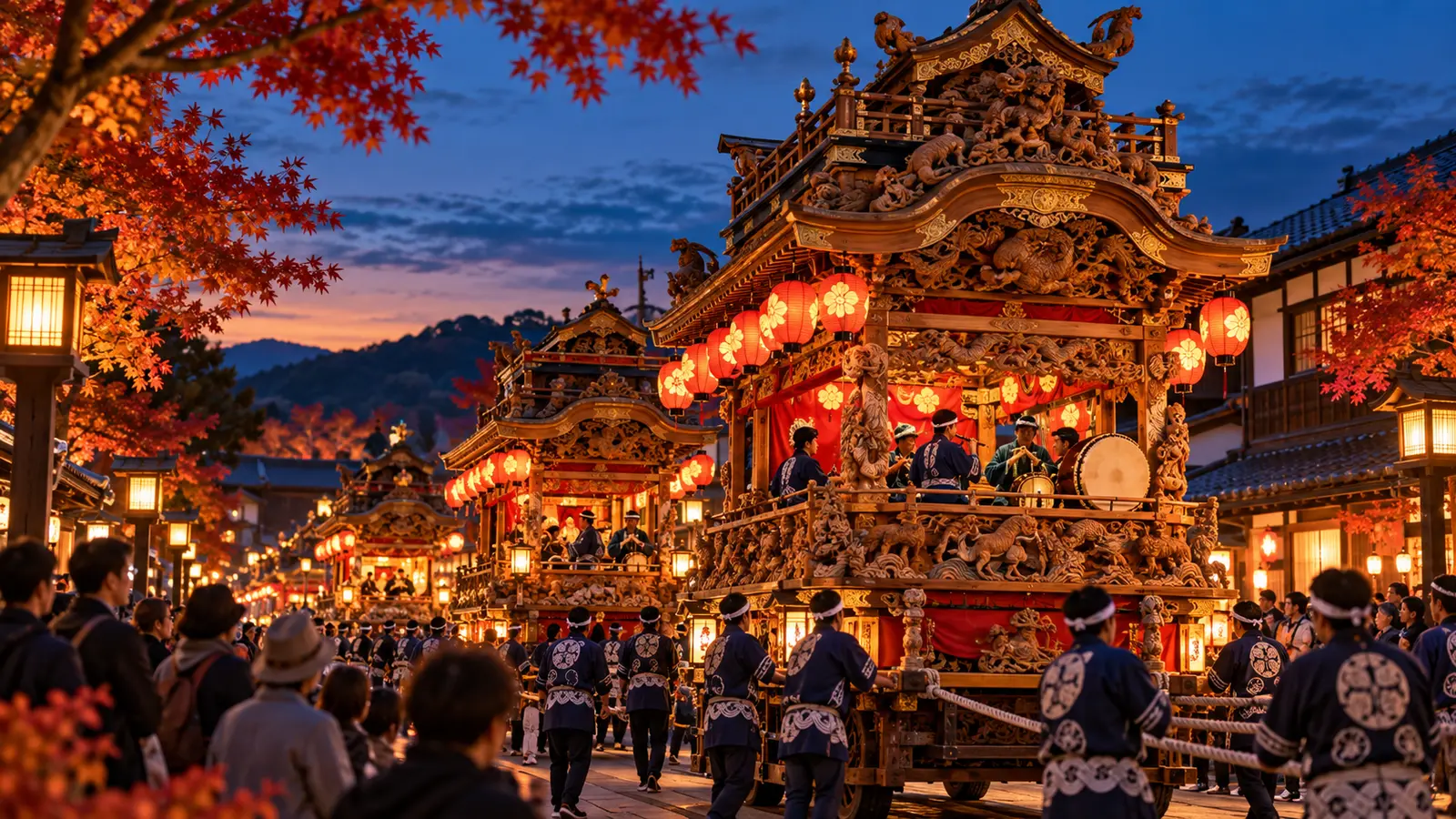
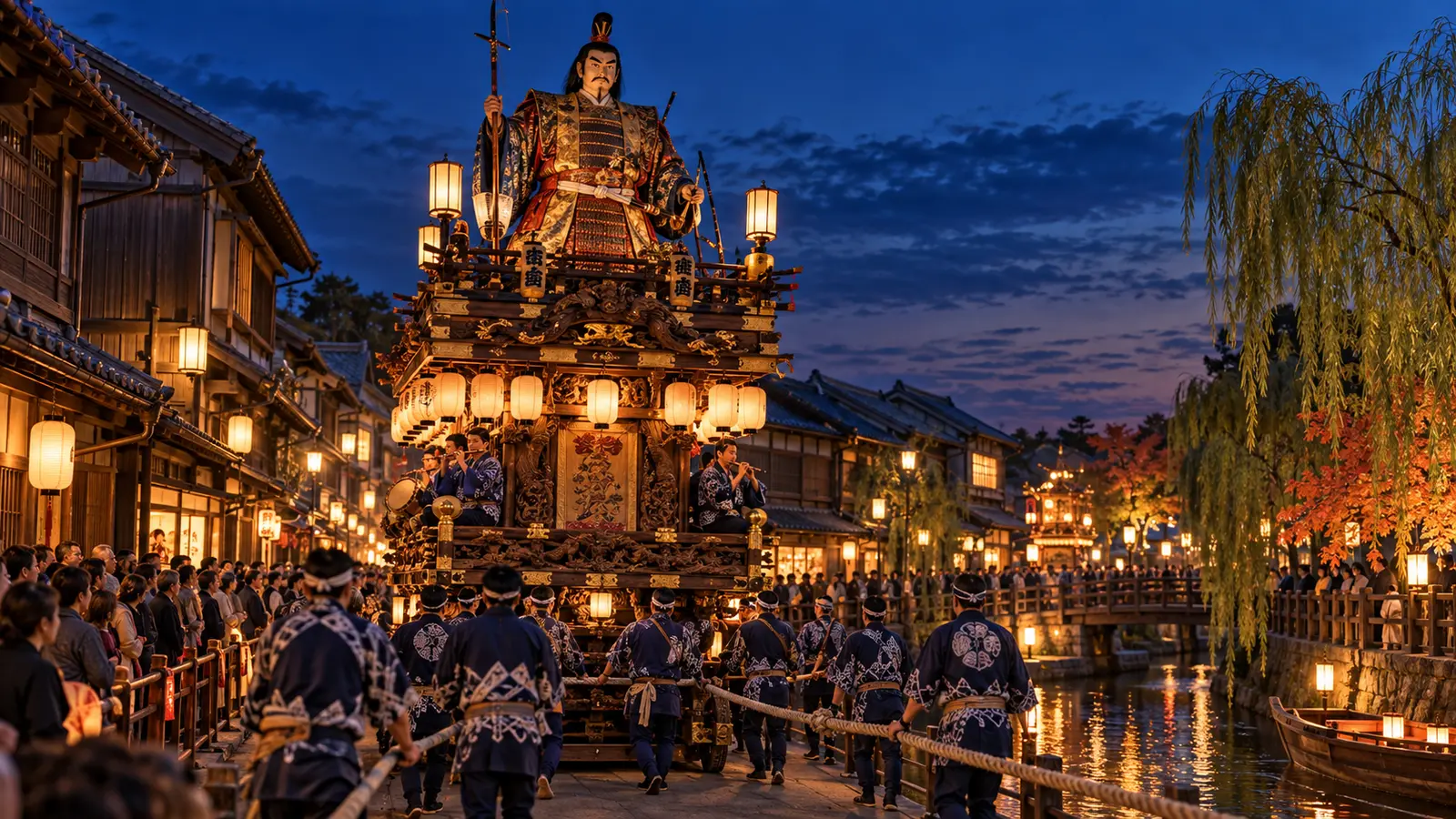
Fourteen dashi floats move through the historic streets to Sawara-bayashi festival music and hand-dance performances. Katori City describes the wider Sawara Grand Festival as a roughly 300-year-old float tradition included in UNESCO's Yama, Hoko, Yatai float-festival inscription. The carved wooden floats carry enormous historical or legendary figures; the city says some dolls are about four metres tall, while JNTO describes complete floats rising over nine metres.
The 10:00–22:00 period is the overall festival window, not a promise that every float passes every point continuously. Each neighborhood sets its own roaming route during the three days, and exact float positions change. Use the live digital map rather than waiting at one intersection based on an old video.
What to know
The three-day schedule and the best day to visit
On Friday, October 9, the Suwa Shrine mikoshi procession begins at 15:00 from the shrine toward its temporary resting place. Sawara-bayashi, hand-dance performances and the rotating No-no-ji Mawashi float maneuver appear at various points rather than one fixed grandstand.
Saturday, October 10 is the clearest choice for seeing all 14 floats together. The city schedules the lineup to be complete by 12:00 between the old Fugetsudo area and Takeda Barber Shop, music and dance from 13:00, the through-performance and 14-float joint procession from about 13:30, and the breakup near Chukei Bridge around 16:30. These are planned times, not guarantees against operational delay or crowd control.
On Sunday, October 11, the mikoshi return begins at 09:00 from the resting place back to Suwa Shrine. Float circulation, music, hand dancing and No-no-ji Mawashi continue at various points. Travelers who mainly want the all-float formation should not assume it repeats Sunday in the same format.
What to know
Admission, reservations, contributions and sellouts
General street viewing is free. Katori City publishes no general spectator ticket, advance booking deadline, reserved viewing section or festival-wide sellout condition. Free viewing does not guarantee a front-row position or unrestricted access: police and staff can hold pedestrians when floats turn or when a street reaches safe capacity.
The festival committee asks visitors for a ¥500 environmental-maintenance contribution and provides an original commemorative item to contributors. The city says the funds support the shuttle bus, temporary toilets and safety staff. The official shuttle listing gives the same ¥500 amount for each elementary-school-age or older rider. Treat this as a contribution supporting festival operations, not as an admission ticket or a reserved seat.
Food, drinks, posters and other purchases are separate. No event-wide card, cashless-payment or allergen policy is published; carry yen and check each temporary seller. A popular product can sell out even though the streets remain open.
What to know
JR Sawara Station, the Limited Express Ayame and Tokyo access
JR Narita Line Sawara Station is the nearest station, and Katori City describes the station front as part of the festival area. The city's normal planning estimate is about 110 minutes from Tokyo Station using rapid and local trains, or about 70 minutes from Chiba Station on the Sobu and Narita lines. JNTO gives about 40 minutes from Narita International Airport, subject to the actual connection.
JR East plans a reserved-seat Limited Express Ayame between Shinjuku and Sawara on Saturday, October 10 and Sunday, October 11. The municipal festival page confirms the operating dates and endpoints but does not reproduce the full timetable, fare or live seat inventory. Check JR East's current booking display before building the day around that train; reserved seats can become unavailable.
Tokyo–Sawara highway buses normally take roughly 85 minutes, but festival traffic changes the final approach. The official diversion notice warns of closed stops and major delays. Rail is the simpler default, especially for a fixed return connection. Leave large luggage at accommodation or a confirmed station facility before entering narrow float routes.
What to know
Driving, the official car park and shuttle
Katori City provides a free temporary car park on the Tone River floodplain with about 1,000 spaces, including large-bus parking. Capacity is not reserved or guaranteed. Do not park at nearby shops, on residential streets or in a road-control approach when the official lot is full.
A shuttle bus links the temporary car park and the festival area from 09:30 to 21:00 on all three days. The city lists a ¥500 contribution per person aged elementary-school and older. The last shuttle is earlier than the festival's 22:00 overall close, so a driver who stays for the final hour needs a verified return plan rather than assuming buses continue until the floats stop.
The shuttle boat used in some previous years will not operate in 2026. Do not follow an old blog or map to a river boarding point. Drivers should search for Sawara Kasenjiki Ryokuchi Parking or use Katori City Hall as the nearby navigation reference published by the city, then follow current signs.
What to know
Traffic restrictions and bus-stop closures
Traffic controls apply in central Sawara from October 9–11. City loop buses, local routes and some highway buses divert, skip central stops and may run substantially late. Several services cannot use the normal Sawara Station stop and instead use a temporary Sawara Station North Exit stop; other affected stops include Suwa Shrine, Chukei Bridge, Higashi-Sekido and the float museum, depending on route and day.
The details are route-specific. On Friday, both east and west city loop routes divert for all trips; the weekend sightseeing loop diverts on Saturday and Sunday. Keisei Bus Chiba East, JR Bus Kanto, Oto Bus and the Hokota–Tokyo highway route also have published diversions for selected or all services. Open the municipal transport notice for the exact route rather than applying one replacement stop to every bus.
The festival digital map is scheduled to show current float and mikoshi positions from October 9, plus rest areas and toilets. Save the traffic map before arrival, but use staff directions and the live map when street access changes around a turning float.
What to know
Rain, severe weather, crowds and photography
Katori City says the festival proceeds in rain, while the giant float figures may be covered with protective sheets. The reviewed official pages do not publish a single severe-wind threshold, same-day cancellation time, postponement date or refund rule for general visitors. Rain-or-shine wording is not permission to ignore a JMA warning or police closure.
Floats are heavy, tall and maneuvered through narrow streets. Stay behind barriers and rope teams, never cross between a float and its pullers, and do not touch the wheels, ropes or carved body. Choose a meeting point away from Chukei Bridge and the Saturday lineup in case mobile service or pedestrian flow separates the group.
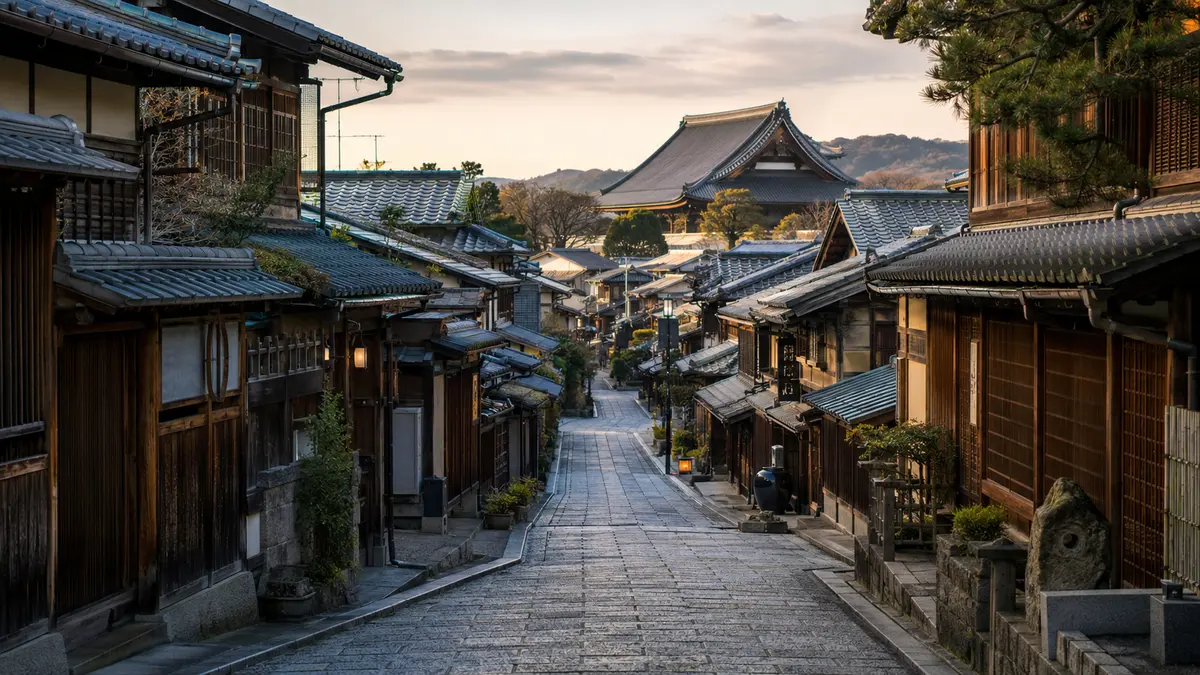
No single event-wide 2026 rule for tripods, commercial filming or drones is published in the reviewed visitor pages. Keep equipment out of the route, ask before identifiable close portraits and follow every temporary sign. The thumbnail on this page is a generated editorial image inspired by Sawara's float tradition and merchant-town setting; it is not documentary photography of the 2026 festival or an exact route record.
What to know
What to verify before leaving
Open Katori City's 2026 festival page and confirm the latest schedule, traffic map and weather decision. If using a local or highway bus, open the separate diversion notice and identify the exact temporary stop. If using Limited Express Ayame, confirm train number, time, fare, reserved seat and return connection directly with JR East.
Save the festival digital map link, the official car park and shuttle hours if driving, and the route back to Sawara Station. Carry cash, compact rainwear, water and a charged phone. Treat anything not published—such as a universal tripod rule, severe-weather decision time or guaranteed final shuttle connection—as unannounced rather than filling the gap from a previous year.
If that does not work
Use the fallback.
- The Saturday lineup street is full: use the live map to watch a float elsewhere, then return only when staff reopens pedestrian access.
- Limited Express Ayame is sold out: use regular JR Narita Line services and protect the return with extra time; do not board a reserved train without the required ticket.
- The temporary car park is full: switch to rail or another officially directed option; never use shop or residential parking.
- A normal bus stop is closed: use the temporary stop shown for that exact route, often Sawara Station North Exit, and expect delay.
- Heavy rain or wind changes operations: follow Katori City, police and JMA instructions; do not approach a suspended float route because the event is normally rain-or-shine.
Before you need it
Save this offline.
- October 9–11 dates, 10:00–22:00 overall hours and chosen day's key events
- Sawara Station route and reserved Limited Express Ayame ticket if booked
- Official schedule, traffic map and live digital-map link
- Temporary bus stop for the exact route if not using rail
- Tone River temporary car park and 09:30–21:00 shuttle hours if driving
- Cash for the ¥500 contribution and temporary vendors
- JMA warnings, compact rainwear, portable battery and meeting point
Frequently asked questions
Sawara Grand Festival Autumn 2026: Floats, Trains and Access FAQ
When is Sawara Grand Festival Autumn 2026?
Friday, October 9 through Sunday, October 11, with overall festival hours of 10:00–22:00 each day in Sawara's Shinjuku district.
When can I see all 14 floats together?
Saturday, October 10. The lineup is planned complete by noon, music and dance start at 13:00, and the joint procession begins around 13:30 before breaking up around 16:30.
Do I need a ticket?
No general street-viewing ticket or reservation is published. The committee asks for a ¥500 environmental-maintenance contribution, but it is not a reserved seat or admission ticket.
What is the nearest station?
JR Narita Line Sawara Station. The station front is part of the festival area, making rail the simplest arrival.
Is there a special train?
Yes. JR East plans a reserved-seat Limited Express Ayame between Shinjuku and Sawara on October 10–11. Check the live JR timetable, fare and seat inventory.
Can I drive?
Use the official free Tone River temporary car park, about 1,000 spaces, and the 09:30–21:00 shuttle. Space is not guaranteed and central roads are controlled.
What happens if it rains?
The city says the festival proceeds in rain and the float figures may be covered. A unified severe-weather threshold, decision time and postponement date are not published; check official notices and JMA.
Will buses stop at Sawara Station normally?
Not all of them. Multiple routes divert, and some replace the normal station stop with Sawara Station North Exit. Check the city notice for the exact service.
Primary evidence
Official sources used
Open these pages again before travel. External links lead to the responsible Japanese authority or transport organization.