Do this now
Follow these steps in order.
- 01
Choose September 11 or 12, then decide between an available advance box and a ¥5,500 same-day individual ticket; do not plan around the sold-out September 12 one-day box or sold-out camera area.
- 02
Base the return on Nagaoka Station: save the exact outbound bus, the temporary Katakai Gonocho stop and the separate ¥2,500 post-fireworks return-bus payment before departure.
- 03
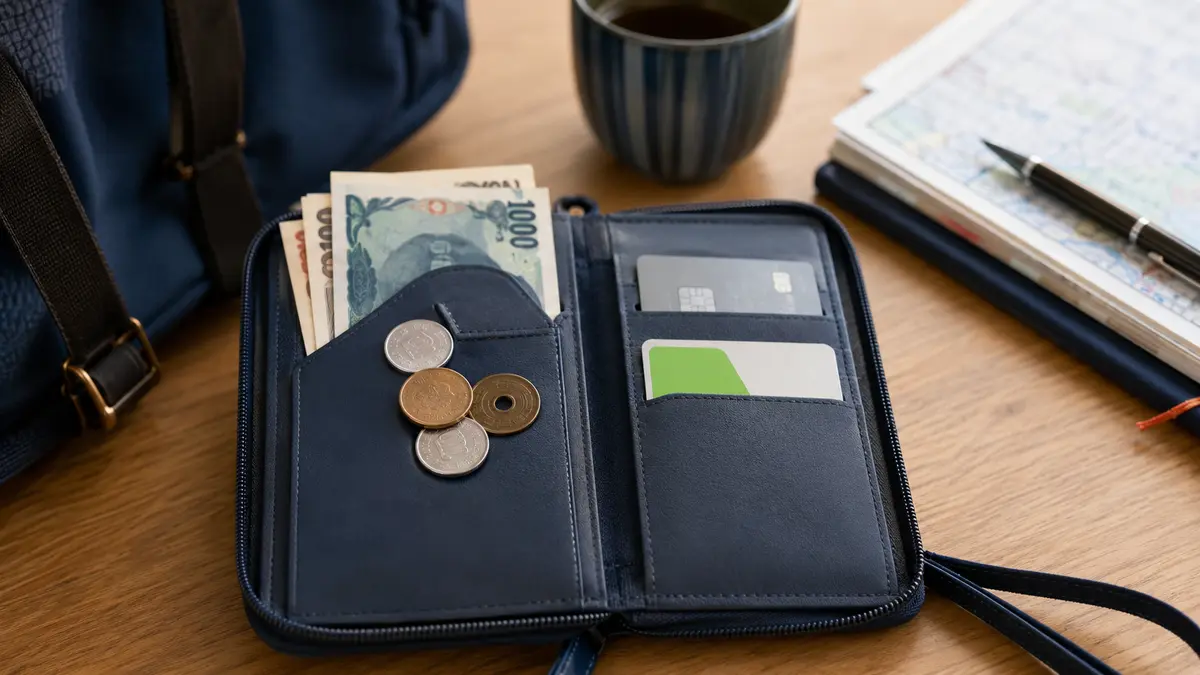
Download the 2026 traffic map, carry cash for buses and on-site needs, and arrive before the 18:00 vehicle-exclusion period if you need time to find the shrine approach safely.
- 04
On the day, check the organizer's automated launch line, Niigata WBGT and JMA warnings because ordinary rain and severe-weather postponement are handled differently.
What to know
Why Katakai is more than a large fireworks show
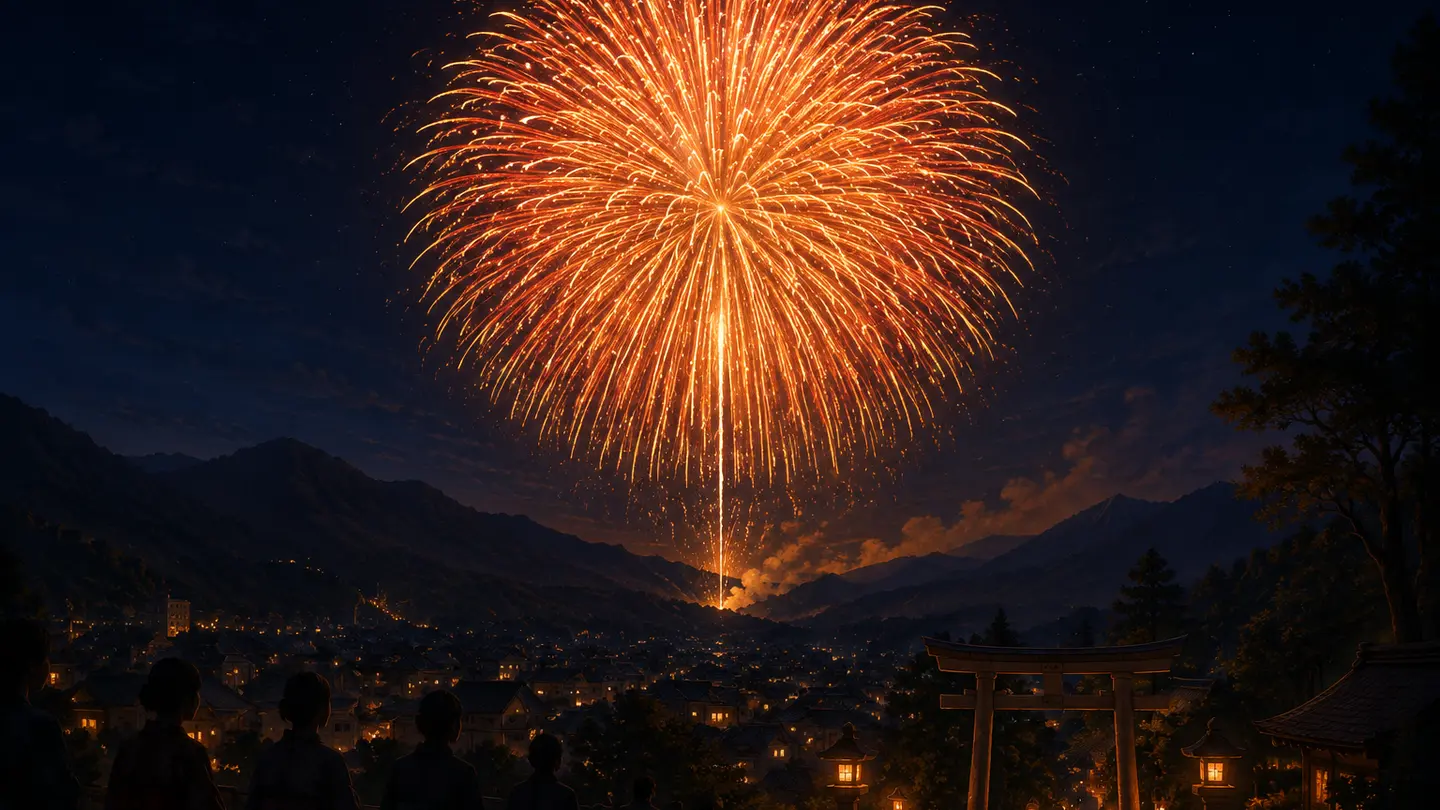
Katakai's fireworks are offerings to Asahara Shrine. Individuals, families, school-year groups and companies dedicate individual shells for births, marriages, health, memorials and other milestones; a message is announced before each firework. That community purpose explains the unusually deliberate rhythm and why the festival should not be treated as a continuous commercial display.
Ojiya City also documents the kiyari songs and traditional tamaokuri processions that carry fireworks through town for dedication. The organizer describes about 30 groups taking part and roughly 110 stalls around the shrine. Make room for processions and religious activity instead of focusing only on the night launch field.
What to know
Official 2026 dates, hours and the four-shakudama
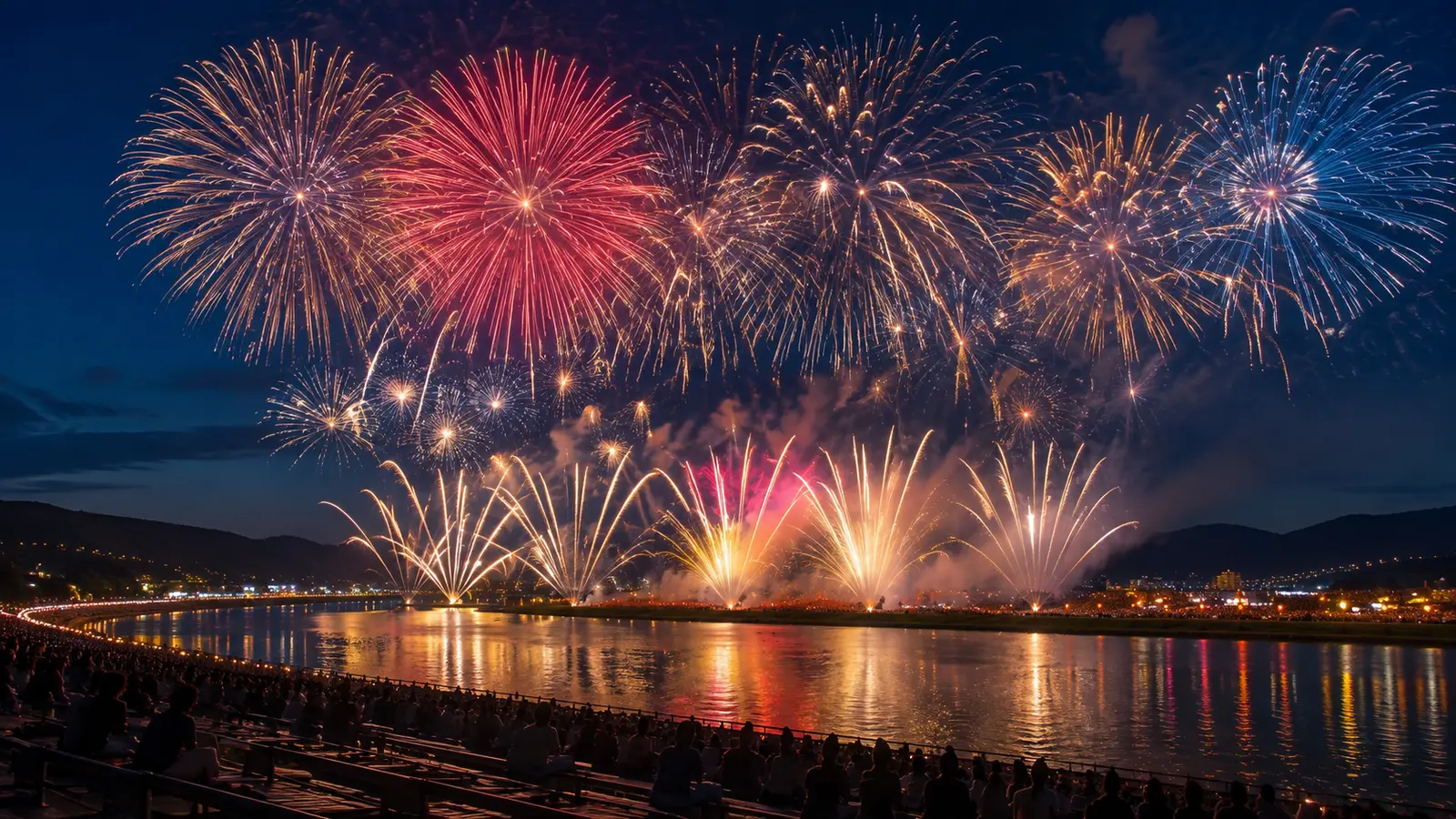
The 2026 festival runs Friday, September 11 and Saturday, September 12. Night fireworks are scheduled from 19:30 to 22:20 on both days, with about 15,000 launches across the two nights. The organizer schedules the four-shakudama — a shell weighing about 420 kilograms whose burst can span roughly 800 meters — for 22:00 on each night.
Saturday also has daytime fireworks from 13:00 to 14:00, ending with a daytime three-shakudama at 14:00. That program is not a substitute for the night spectacle, but it can justify arriving early and helps separate the festival's daytime shrine activity from its evening crowd peak.
What to know
Tickets, prices and what has sold out
The official box seats are sold by square rather than by individual chair. A two-day box costs ¥33,000 including tax and fits about eight people, or about six when eating. A one-day box costs ¥25,300. As checked on August 22, the September 12 one-day boxes were sold out; the organizer directs buyers to September 11 one-day boxes or the two-day option. The dedicated tripod-friendly camera allocation is also sold out.
For visitors who cannot receive a paper box ticket overseas, the organizer says an individual ticket costs ¥5,500 and is sold on site at Asahara Shrine on the event day. No online overseas reservation, guaranteed quantity, final sale time or sold-out protection is published for that same-day inventory. Arrive with a fallback rather than treating the quoted price as guaranteed admission.
Tripods are not permitted in the ordinary box seating when they obstruct another viewer. The separate camera area was the organizer's tripod option, and it has reached capacity. Do not improvise a tripod position in an aisle, road, shrine approach or another person's box.
What to know
Access from Nagaoka and the return-bus trap
The organizer estimates about 30 minutes by bus from JR Nagaoka Station to Katakai and about 20 minutes from JR Ojiya Station, followed by roughly a ten-minute walk from the temporary stop. For most international travelers, Nagaoka is the clearer base because it is a Joetsu Shinkansen stop and has a dedicated return arrangement after the display.
The outbound route from Nagaoka is an ordinary route bus to the temporary Katakai Gonocho stop: ¥470 for an adult and ¥240 for a child. After the fireworks, the return is a special charter-style bus from Katakai Gonocho toward Nagaoka Station and requires a ¥2,500 cooperation payment for each adult or child; infants are free. It is not the same fare or service pattern as the outbound bus.
No post-fireworks special bus to Ojiya Depot operates. That detail can break a hotel plan built around Ojiya Station, so do not assume the 20-minute daytime route has a matching late return. Save the final official bus notice and ask staff for the correct queue rather than following a crowd by guesswork.
What to know
Shuttles, parking and road restrictions
Shuttles depart the P1–P6 parking areas between 16:00 and 19:30 and return from Katakai Seisakusho-mae between 20:30 and 23:00. P1 and P2 shuttle rides cost ¥500 one way or ¥1,000 round trip for elementary-school age and above, cash only. Paid P3–P6 parking costs ¥2,000 and includes shuttle transport for up to two people; additional passengers pay ¥500 round trip.
Road controls are extensive. The 2026 guide shows closures beginning from 10:00 in parts of town, one-way controls from 13:00 and vehicle exclusion in the central area from 18:00 to midnight. Routes from the Nagaoka side may detour after 13:00. A navigation app does not override police, staff or temporary signs, and a full car park does not create permission to use a roadside, business or residential space.
What to know
Rain, wind and postponement
The organizer states that fireworks launch in rain. Do not read a wet forecast as an automatic cancellation, and use a raincoat rather than an umbrella inside a dense viewing area. Protect tickets and electronics, choose shoes for wet roads and keep evacuation and staff routes open.
Typhoon-level severe weather is handled differently. The published policy says that when warnings are issued under conditions such as winds of 10 meters per second or more, the event is postponed to a later day. The first-night and second-night programs keep their order, and official box tickets slide with the corresponding program. The page does not promise one fixed substitute calendar in advance, so use the automated launch-information line and organizer updates before traveling.
What to know
Crowds, sound and a safer viewing plan
The organizer reports typical attendance of 180,000–200,000 across the festival, while Ojiya City's fire-safety designation anticipates at least 100,000 people and more than 100 stalls. The launch site sits against a mountain that reflects the blast. Expect extreme sound, congested streets and slow post-event movement rather than an easy station-to-seat trip.
Bring hearing protection for children and anyone sensitive to sudden sound, keep companions within a shared meeting plan and do not stand under ropes or staff-controlled launch buffers for a photograph. Leave large luggage at a confirmed facility in Nagaoka or your hotel. Save the temporary stop, bus queue and lodging address offline because mobile service can slow in a concentrated crowd.
What to know
Visit as a shrine festival, not a backdrop
Listen to the dedication messages and let tamaokuri groups pass. Do not touch the floats, enter a procession, climb shrine structures or block a worship route. When photographing people at close range, ask first; a festival street is not blanket permission to make intimate portraits.
Take rubbish with you as requested on the official traffic guide. Toilets are provided at designated parking areas, the shrine grounds, approach and box seating, but queues can be long. Use marked facilities, follow staff and avoid residential entrances even when the main approach is crowded.
If that does not work
Use the fallback.
- September 12 box seats are sold out: choose an available September 11 box, a two-day box or the ¥5,500 same-day individual route without assuming on-site stock.
- The camera area is sold out: use handheld equipment from a lawful public or ticketed position; do not set a tripod in ordinary box seating or a route.
- The Nagaoka return queue is longer than expected: follow official bus staff and pay the stated ¥2,500 fare; do not switch to an unverified ride or assume an Ojiya return bus exists.
- Severe weather postpones the launch: keep the ticket tied to its first- or second-night program and wait for the organizer's new date rather than choosing one yourself.
- The central area is full: move to a staff-approved edge or leave early; do not enter a launch buffer, shrine route, private property or closed road.
Before you need it
Save this offline.
- September 11 or 12 ticket plan and current sellout notice
- 19:30–22:20 program and 22:00 four-shakudama time
- Nagaoka outbound route, Katakai Gonocho stop and ¥2,500 return-bus payment
- 2026 traffic map, shuttle stop and any parking reservation
- Organizer launch-information phone number: 050-3665-9603
- Hotel address and a meeting point outside the shrine approach
- Niigata WBGT and JMA weather warnings
- Cash, water, raincoat, hearing protection and portable battery
Frequently asked questions
Katakai Festival 2026: Fireworks, Tickets and Access FAQ
When is Katakai Festival in 2026?
It runs Friday, September 11 and Saturday, September 12. Night fireworks are scheduled from 19:30 to 22:20 on both days.
When is the four-shakudama launched?
The organizer schedules one giant four-shakudama for 22:00 on each festival night.
Are Katakai Festival tickets sold out?
September 12 one-day box seats and all camera seats are sold out. The organizer still lists September 11 one-day boxes, two-day boxes and ¥5,500 same-day individual tickets, subject to live availability.
Can overseas visitors reserve a box seat?
The organizer does not ship paper box tickets overseas and instead directs overseas visitors to ¥5,500 same-day individual tickets at the shrine. Stock is not guaranteed on the public page.
How do I reach Katakai Festival from Nagaoka?
Take the temporary route bus from Nagaoka Station to Katakai Gonocho, then walk about ten minutes. The outbound adult fare is ¥470.
How do I return to Nagaoka after the fireworks?
A special return bus leaves Katakai Gonocho for the Nagaoka Station area and requires a ¥2,500 cooperation payment per adult or child. There is no post-fireworks special bus to Ojiya Depot.
Does Katakai Festival happen in rain?
Yes, the organizer says fireworks launch in rain. Severe weather such as a typhoon and warning-level strong wind can postpone the two-night sequence.
Can I use a tripod?
The normal box-seat rules prohibit obstructing others with tripods, and the separate camera area is sold out. Use handheld equipment from a lawful position.
Primary evidence
Official sources used
Open these pages again before travel. External links lead to the responsible Japanese authority or transport organization.