Do this now
Follow these steps in order.
- 01
Before travel, measure the stroller folded and unfolded, practise a one-person fold, label it, and pack a baby carrier for stairs, crowds and a bus with no available stroller space.
- 02
For every railway transfer, open the operator's current station map and choose the elevator or other step-free route. Do not assume the shortest route or the exit nearest on a street map is step-free.
- 03
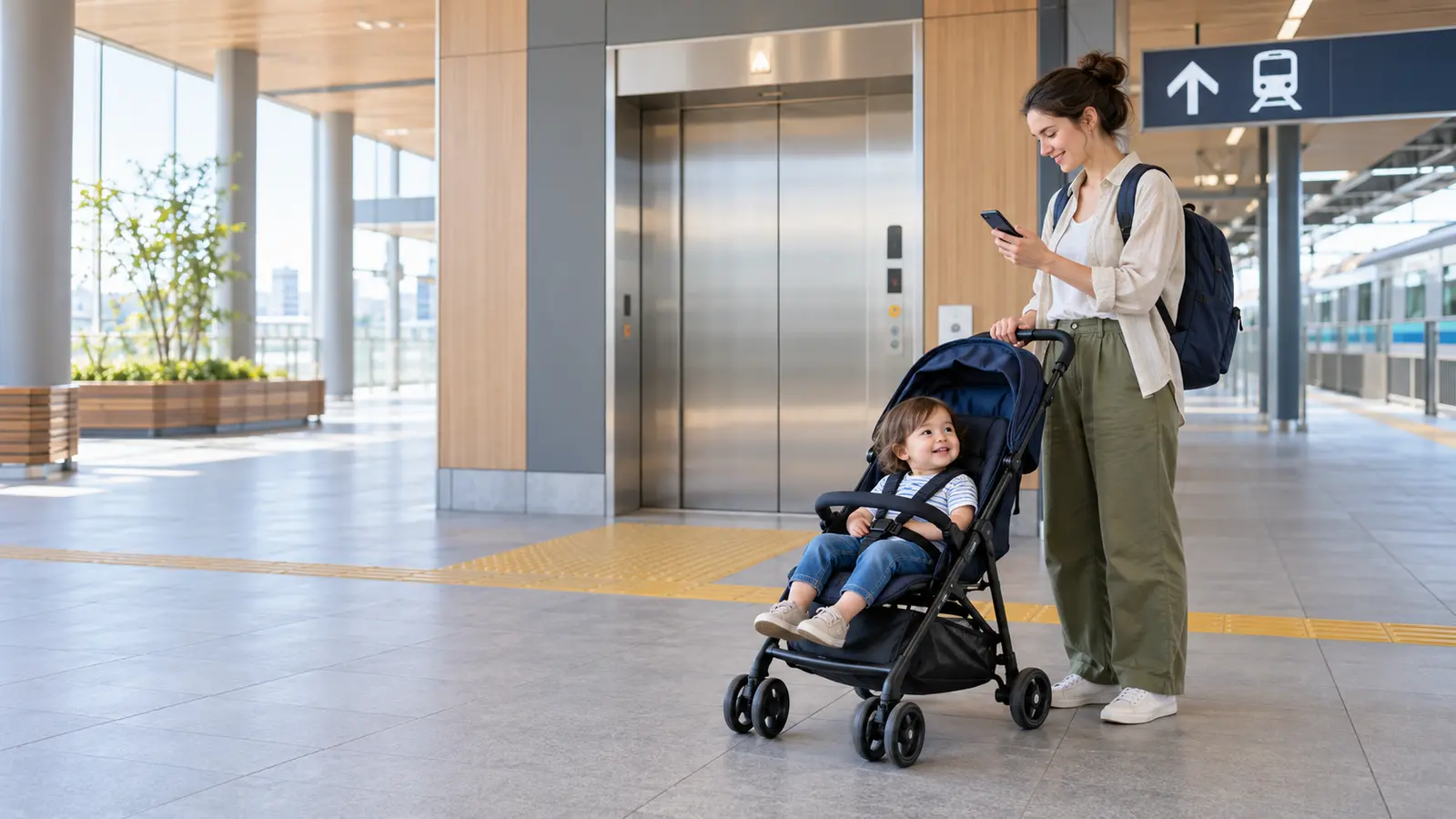
At a station, use the elevator. If stairs are unavoidable, ask staff for the safe route or assistance instead of carrying an occupied stroller. Remove the child and fold the stroller before using an escalator.
- 04
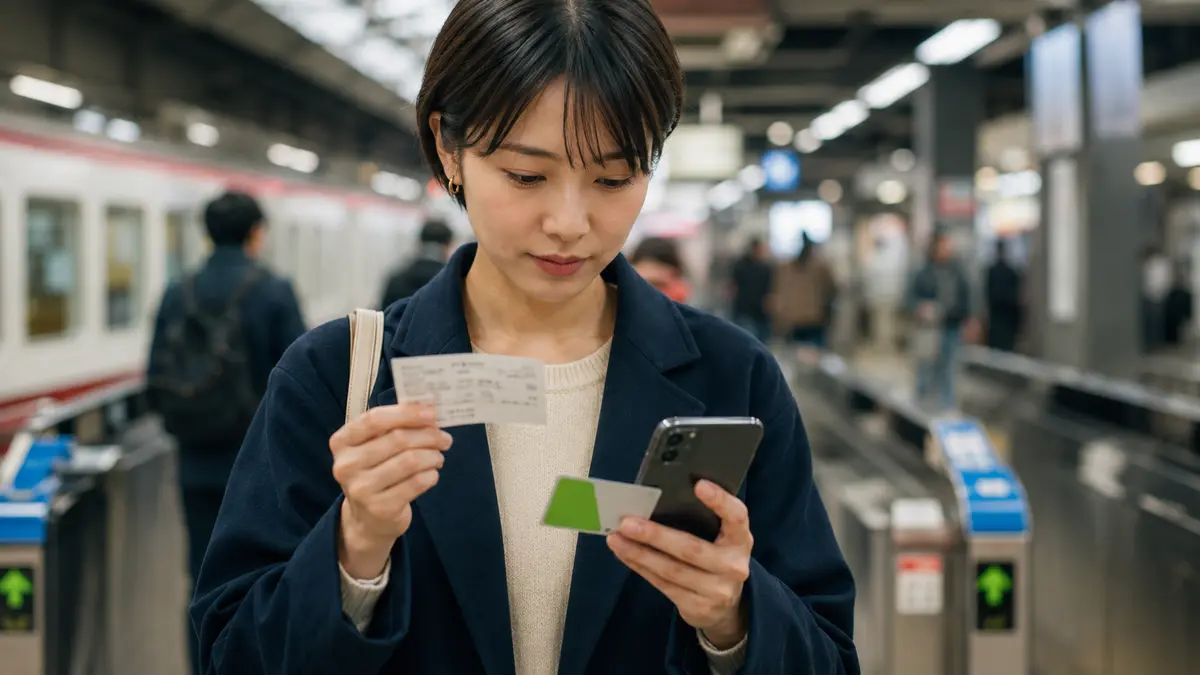
On the platform, stop behind the tactile paving, apply the brake and keep both hands available. Board only after passengers leave, watch the wheel-to-train gap, and move out of the doorway.
- 05
Inside a train, keep the child harness fastened and maintain control of the stroller. Use a marked free space when available, but share it with wheelchair users and do not treat it as a reserved stroller bay.
- 06
For a local bus, check that operator's own stroller page before boarding. Tell the driver if you need help, use the designated space and vehicle belt exactly as instructed, and keep holding the stroller for the full ride.
- 07
For a Shinkansen, fold the stroller before boarding when practical. If you need the area behind the last row, reserve a seat with an oversized baggage area; an ordinary seat does not give you permission to use that space.
- 08
Avoid the busiest commuter periods where possible. If a lift is out, the vehicle is too crowded or the stroller bay is occupied, switch to the baby carrier, wait for the next service, use an accessible taxi or change the attraction rather than forcing the stroller through.
What to know
Choose a compact stroller and carry a second option
A lightweight stroller is useful for long sightseeing days, naps and carrying small essentials, but the easiest model for home pavements may be awkward in a narrow lift, an older station or a crowded bus. Measure the full width and the folded size, and practise folding it while holding the child safely before departure.
Bring a soft baby carrier even if the stroller is your main plan. JNTO advises that major sights, some stations and airports may offer stroller rental, but availability and rules differ and a rental cannot be assumed at every stop. A carrier keeps the trip moving when a lift is closed, a bus space is occupied or a restaurant cannot store the stroller.
Do not overload the handle with bags. Removing the child can make a heavily loaded stroller tip backward. Keep travel documents, medicine and valuables in a separate small bag that stays with the adult when the stroller is folded or stored.
What to know
Plan the elevator route, not only the fastest route
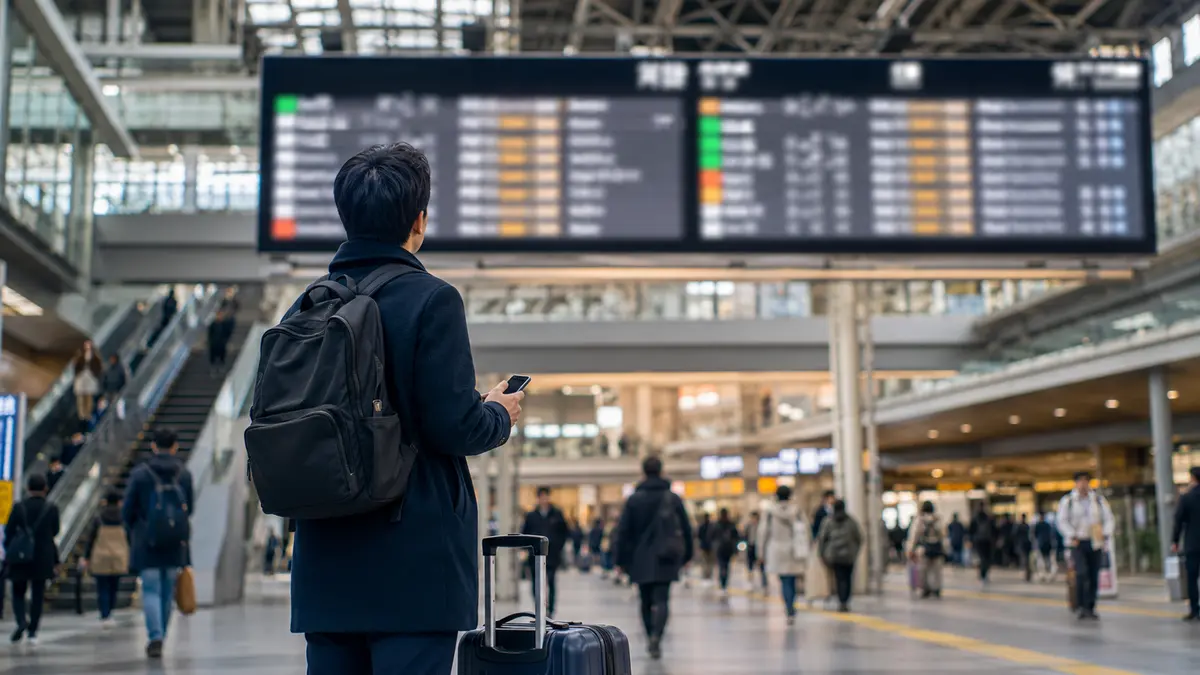
Large Japanese stations can have multiple railway operators, ticket areas and exits. A route planner can show the fastest transfer without showing the lifts needed to cross several levels. Check the official station map for each interchange and note the elevator numbers, accessible gates and street-level exit before leaving Wi-Fi.
Tokyo Metro tells stroller users to use elevators and allows time for a longer route. JR East publishes station equipment information, but equipment and the route to it differ by station. Follow current signs and staff instructions; construction or maintenance can temporarily change the step-free path.
An elevator may be on the opposite side of the concourse from the stairs. Leave extra transfer time and avoid booking a connection that depends on a single quick lift. If you cannot find the route, show staff the destination line and exit rather than carrying an occupied stroller up stairs.
What to know
Use elevators; never take an occupied stroller on an escalator
Tokyo Metro's official guidance says to remove the child, fold the stroller and hold the handrail when an escalator must be used. Wheels can move or catch, and an adult cannot safely control both an open stroller and the child on the moving steps.
If the only visible path is stairs, stop in a safe place and ask station staff. Tokyo Metro asks passengers who need stair assistance to speak with staff. Assistance and staffing vary, so a baby carrier and a stroller that one adult can carry remain the practical fallback.
Do not block the elevator doors while reorganising bags. Prepare the child and stroller before entering, let exiting passengers leave, and make space for wheelchair users and others who need the lift.
What to know
Board JR East and Tokyo Metro trains without blocking doors
JR East's current FAQ says a stroller may board without being folded and asks users to consider other passengers. Tokyo Metro gives the same answer. These operator statements do not guarantee room on a particular train and should not be applied automatically to every private railway in Japan.
Before the train arrives, stand behind the tactile paving, apply the wheel brake and hold the handle. Release the brake only when it is time to board, let passengers exit first and lift or guide the small front wheels carefully over the platform gap. Once inside, move away from the door and reapply the brake.
Tokyo Metro says each train has two free spaces that can be used with a stroller. A free space is shared accessibility space, not a stroller reservation. Yield according to staff instructions, keep the aisle clear and be ready to move or fold when the vehicle is crowded.
What to know
Bus instructions vary by operator and vehicle
There is no single boarding procedure for every Japanese bus. Read the operating company's page, follow the driver and check the vehicle symbol. Door, fare and stroller-space arrangements can differ even within one city.
Toei Bus allows a child to remain in a single stroller when the stroller is placed rear-facing in the designated space, the wheel locks and child harness are fastened, the bus's green belt is attached and the adult keeps holding it. Toei may require folding when the space is already occupied, the aisle is too crowded, the stroller is too wide or it lacks a stopper or harness. Its official page gives separate instructions for side-by-side double strollers.
Kyoto City Bus also allows an occupied stroller, including a two-seat stroller, subject to crowding. Its current instructions say to board through the middle or rear door, place the stroller rear-facing, lock the wheels, use the child's harness, attach the bus belt and support it throughout the ride. Tourist Express buses reverse the stated boarding and exit doors.
What to know
Reserve Shinkansen storage only when you need that space
JR Central says the Tokaido–Sanyo–Kyushu–Nishi Kyushu Shinkansen oversized-baggage rules do not apply to strollers, sports equipment or musical instruments. That means a stroller does not become chargeable oversized baggage merely because its three dimensions exceed 160 centimetres.
The exception is storage access: the space behind the last row and the oversized baggage compartment belong to passengers who reserved the corresponding seat. JR Central recommends reserving a seat with an oversized baggage area when you want to place a stroller there. Without that reservation, keep the folded stroller near you in a permitted space without blocking the aisle or doors.
Reserve seats together where possible, fold before the train arrives, remove loose items and board without stopping in the doorway. If the intended storage seat is sold out, choose another train, keep the stroller at your seat only if it fits safely, or send nonessential luggage ahead so the stroller remains manageable.
What to know
Crowds change the safe answer
A rule allowing an open stroller is not a promise that it will fit comfortably at 08:00 in a city-centre commuter train. JNTO recommends avoiding rush-hour crowds with children where possible. Travel after the morning peak, leave before the evening peak and add time for the next train or bus.
If the child can transfer safely to the carrier, fold before entering a dense platform or bus queue. Keep the folded stroller upright and under control rather than resting it in a doorway. When the child cannot be carried, wait for a less crowded service or ask staff for a route with more space.
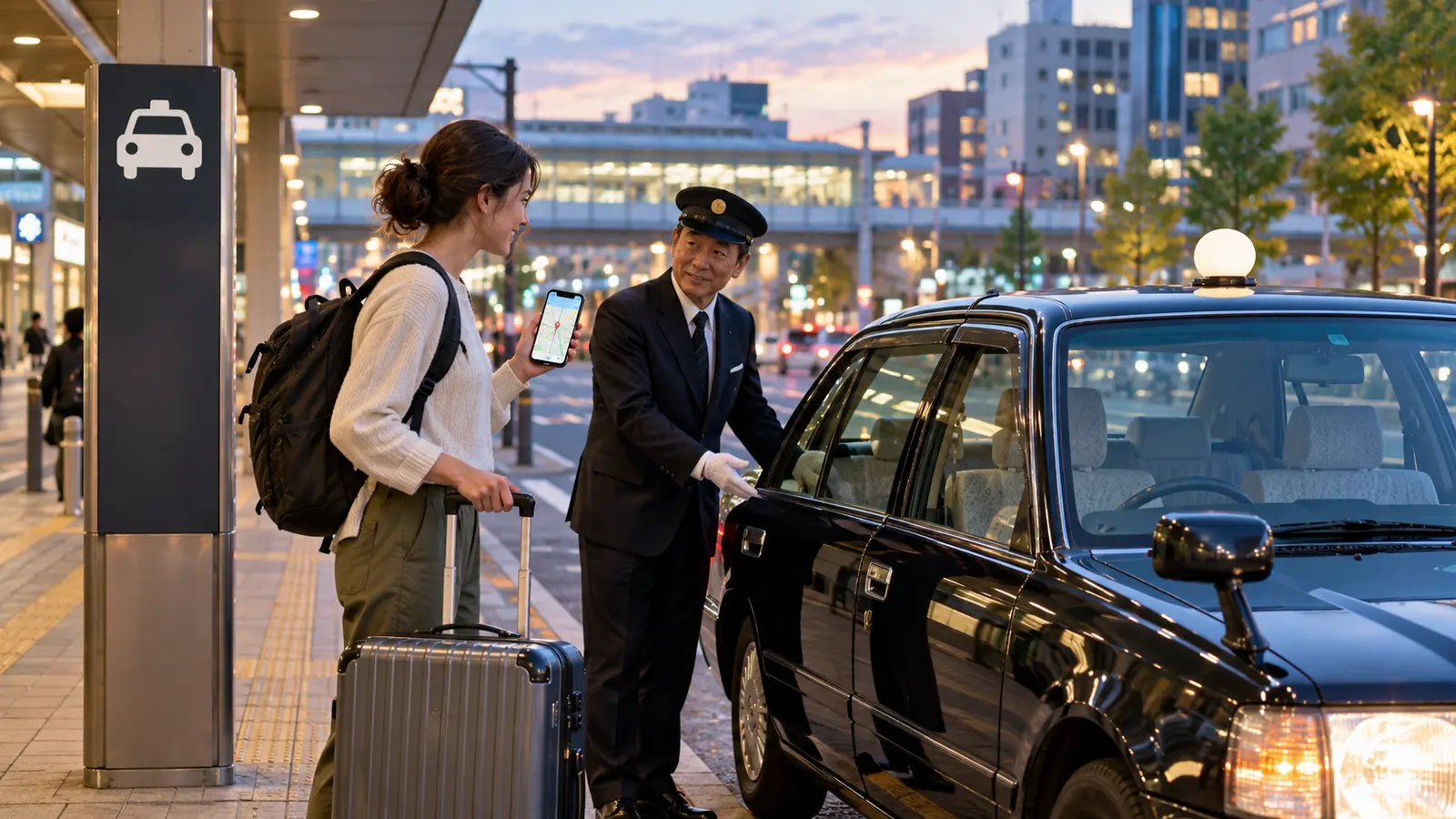
On sightseeing days, combine nearby stops and use luggage forwarding so the adult is not controlling a stroller and multiple suitcases. An accessible taxi can be a useful fallback, but tell the dispatcher the stroller, passenger and luggage count because a standard sedan may not fit everything.
What to know
Check rentals and attraction storage before arrival
Some airports, stations, museums, aquariums, parks and shopping facilities lend strollers, but the age or weight limit, hours, deposit, pickup point and return location are facility-specific. Use the venue's official page and do not rely on a general city guide for same-day availability.
Restaurants, temples and small shops may ask you to fold or leave the stroller in a designated place. Ask before blocking an entrance and never leave passports, medicine or valuables attached. A rain cover can make the stroller wider and reduce visibility, so remove it indoors when practical.
Before each day, save the official station maps, bus operator rules and venue accessibility page. Recheck service alerts in the morning; a lift outage or event crowd can change an otherwise workable route.
If that does not work
Use the fallback.
- If the elevator is closed or missing, ask station staff for the current step-free route. Transfer the child to the carrier and fold the stroller only if you can do so safely; do not take an occupied stroller onto an escalator.
- If a train is too crowded, move away from the platform edge and take the next one. Avoid holding doors while deciding whether the stroller fits.
- If a bus stroller space is occupied or the driver asks you to fold, use the carrier and fold, or wait for the next bus. Operator rules and the driver's safety decision control that vehicle.
- If a Shinkansen baggage-area seat is sold out, select another train or store the folded stroller near your own seat only where it fits without obstructing the aisle; do not use the reserved last-row space without the matching seat.
- If one adult cannot manage the child, stroller and luggage, forward the suitcase, ask the hotel to hold it, or book a suitable taxi and state every passenger, stroller and bag before dispatch.
- If a venue has no stroller rental or storage, switch to the carrier and keep valuables with you. Do not leave the stroller where it blocks an evacuation route.
Before you need it
Save this offline.
- Folded and unfolded stroller dimensions, child weight limit and a luggage label
- Comfortable baby carrier tested before the trip
- Screenshots of official elevator routes for every major transfer and exit
- Bus operator stroller instructions for the cities in your itinerary
- Shinkansen seat and baggage-space reservation confirmation when applicable
- A small essentials bag that detaches from the stroller
- Hotel, attraction and accessible taxi contact details
Frequently asked questions
Japan With a Stroller: Trains, Elevators, Buses and Shinkansen FAQ
Must I fold a stroller on trains in Japan?
JR East and Tokyo Metro say you may board without folding, but you must control the stroller and consider other passengers. Crowding or another operator's rules can change the practical answer, so carry a baby carrier and be ready to wait or fold.
Can I take a stroller on a Tokyo Metro escalator?
Not with the child seated in it. Tokyo Metro says to remove the child, fold the stroller and hold the handrail. Use the elevator whenever possible.
Are stroller spaces on trains reserved?
No. Tokyo Metro's free spaces are shared accessibility areas, not stroller reservations. Follow signs and staff directions and make room for other users.
Can my child remain in the stroller on a city bus?
It depends on the operator and available space. Toei Bus and Kyoto City Bus allow it when the stroller is rear-facing, braked, harnessed, secured with the vehicle belt and held, but crowding or an occupied space can require folding or waiting.
Does a stroller need an oversized-baggage reservation on the Shinkansen?
JR Central says the oversized-baggage rules do not apply to strollers. However, you must reserve a seat with the corresponding baggage area or compartment if you want to use that reserved space.
Can station staff carry my stroller up stairs?
Ask staff for the safe route and available assistance, but do not plan a tight connection around guaranteed carrying help. Use a baby carrier and a stroller one adult can fold and carry as the fallback.
Are stroller rentals common in Japan?
Some airports, stations and attractions offer them, according to JNTO, but inventory, hours, child limits and return rules are facility-specific. Confirm on the venue's current official page.
What is the best way to travel at rush hour with a stroller?
Avoid the peak if possible. If the child can use a carrier, fold before entering a crowded area; otherwise wait for a less crowded service and keep well behind the platform edge.
Primary evidence
Official sources used
Open these pages again before travel. External links lead to the responsible Japanese authority or transport organization.