Do this now
Follow these steps in order.
- 01
Write down each child's age on the travel date and whether the child is already in elementary school; do not choose a fare from age alone when the child is 6 or 12.
- 02
Choose seats before tickets: a baby or infant using a separate reserved seat needs a child ticket even when that child could ride free without a seat.
- 03
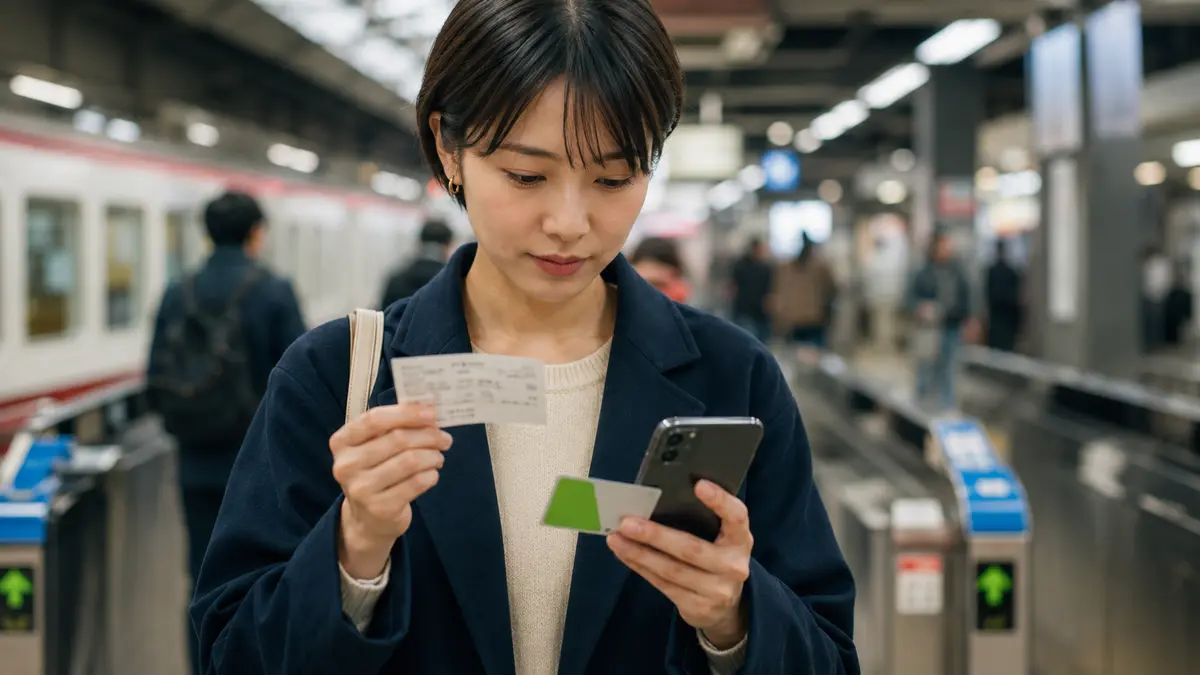
For local trains, decide between a child IC card and paper child tickets. Use an ordinary adult IC only for an adult; it cannot be switched to a child fare at the gate.
- 04
To buy a child Suica or PASMO, take the child's passport or another accepted official age document to an eligible operator counter or supported machine and follow the operator's current procedure.
- 05
For Shinkansen or limited-express travel, price every component: basic fare, limited-express charge, reserved seat and any Green, GranClass or sleeper supplement.
- 06
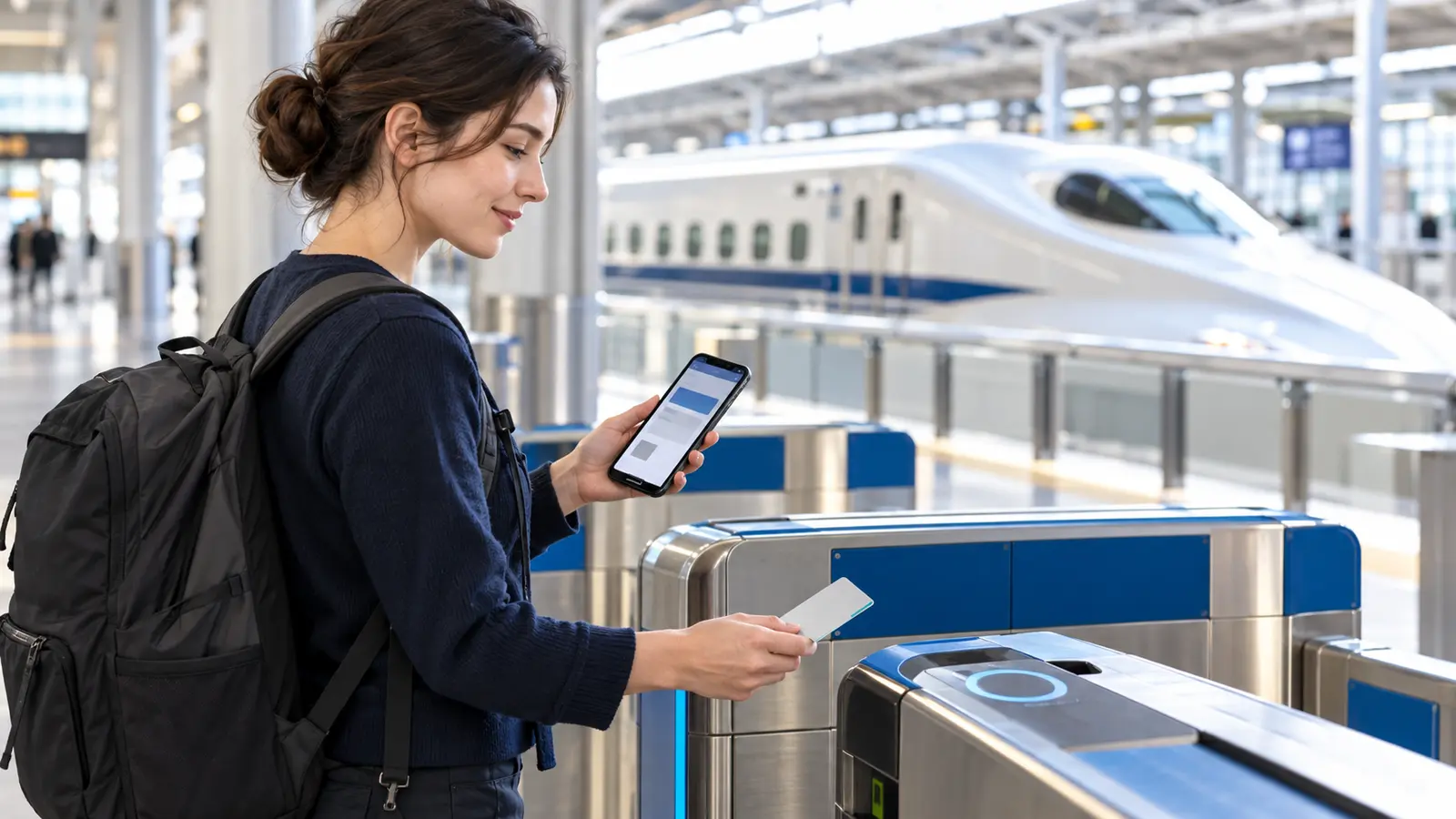
When using SmartEX for several travelers, assign one transport IC card to each seat. A child's reservation needs a child IC card when transferring through conventional-line and Shinkansen gates.
- 07
If any traveler lacks the correct IC card, collect the reservation as paper tickets for the whole relevant journey and follow the pickup instructions before entering the gate.
- 08
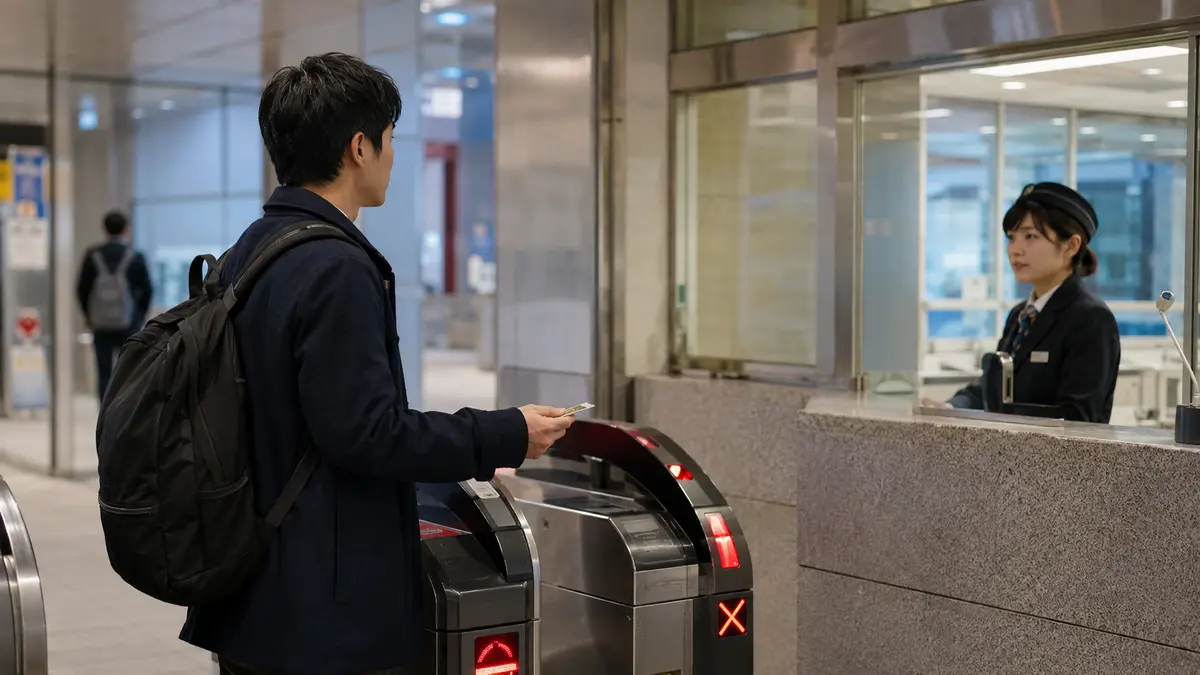
At the gate, let each person use only their own card or ticket. If the child gate does not open, stop and ask staff rather than tapping an adult card repeatedly or lifting the child through.
What to know
Use age and school status on the travel date
JR Central and Tokyo Metro divide travelers into adult, child, infant and baby categories. Adult normally starts at 12, child normally covers ages 6 through 11, infant covers ages 1 through 5, and baby means under 1. The ticket category applies on the day of travel, not the day you book.
The boundary is not purely a birthday rule. A 6-year-old who has not entered elementary school is treated as an infant, while a 12-year-old still attending elementary school is treated as a child under the operator's published rules. JR Central notes that its elementary-school exception refers to schools established under Japanese law, so an international visitor with a child at either boundary should show the age and school situation to staff rather than assuming a foreign school calendar produces the same exception.
Keep the child's passport available when buying a child IC card or when staff need to confirm the category. A booking website's age field does not override the operating railway's fare rules.
What to know
A child fare is usually half, but not every charge is halved
JR Central says the child basic fare, limited-express fare, express fare and reserved-seat ticket are half the corresponding adult amount, with fractions of 5 yen rounded down. Tokyo Metro also charges half the adult fare, but its official table applies different rounding: paper child fares are rounded up to the nearest 10 yen and IC child fares are rounded down to the nearest yen.
Do not divide the final adult total by two without checking its components. JR operators can charge the full adult amount for Green Car, GranClass, sleeper and similar accommodation supplements even when the child basic fare and limited-express fare are reduced.
A ticket machine or reservation service should calculate the correct amount after the passenger type and product are selected. If the total is unexpected, ask which component is not discounted before paying.
What to know
Know when infants and babies travel free
Up to two infants or babies may generally accompany one fare-paying adult or child without their own fare. The third and every additional infant or baby with that fare-paying passenger needs a child fare. This allowance is per fare-paying traveler, not automatically per family booking.
A child fare is also required when an infant or baby travels alone or uses a separate reserved seat, Green Car seat or berth. JR East's English FAQ specifically tells travelers to buy the child ticket needed to secure a reserved seat for a child under 6.
On an unreserved local train, a free infant does not own a separate seat. Keep the child with the accompanying traveler and follow staff directions when the train is crowded. If your family needs a guaranteed seat for each child, reserve and pay for it.
What to know
Buy the correct child IC card for local travel
An ordinary blank PASMO deducts the adult fare and PASMO states that it cannot be used as a child card. Child PASMO and child Suica deduct child fares automatically. The child should use only their own card; one IC card cannot carry several passengers through an automatic gate.
PASMO requires official proof of age, and its accepted documents include a passport. It will not issue another child card when the child already holds a child PASMO or child Suica. JR East similarly requires age identification for a Child Suica and provides sales through supported counters or operator-assisted machines.
Child cards remain valid through March 31 after the child turns 12. From April 1, the stored card needs the operator's adult-card procedure before use as an adult card. Do not assume the fare changes automatically on the birthday.
What to know
Visitor cards and paper tickets are practical alternatives
JR East offers a child version of Welcome Suica, with the child's passport or other accepted identification required at purchase. Sales locations, product availability and validity are operator-controlled, so check JR East's current Welcome Suica page rather than planning around an old airport counter list.
If a child IC card is unavailable, buy a paper child ticket from a machine that offers the child option or ask the ticket office. For a simple local journey, select the child passenger before choosing the fare. For limited-express or Shinkansen travel, confirm that the purchase includes both the basic fare and the required train or seat ticket.
Paper tickets are also the clean fallback when a child card has expired, the name or age data is wrong, a regional IC product is unavailable, or an online reservation cannot accept the intended card. Keep every ticket until the final gate has accepted it.
What to know
Reserve a seat for every child who will occupy one
A free infant or baby does not receive a reserved seat. To guarantee a separate seat on a Shinkansen or limited-express train, include the child as a child passenger and buy the corresponding child fare and reserved-seat product.
Do not book fewer passengers and expect to use an empty neighboring seat. That seat may be sold at any point, and a conductor can ask to see the ticket for every occupied reserved seat. Keep the child fare ticket and reservation together when the system issues separate pieces.
If adjacent seats are unavailable, try another train or time before paying. The railway is not required to keep an unticketed child beside the adult in a separate seat, and moving after boarding can displace another reservation.
What to know
Assign SmartEX IC cards one passenger at a time
SmartEX permits a transport IC card to be designated for each reserved seat. For a group, every passenger needs their own designated card; otherwise the reservation must be collected as paper tickets under the service's instructions.
For a child reservation that connects through conventional-line and Shinkansen transfer gates, SmartEX says to designate a child transport IC card. A blank adult IC card is not a substitute because the conventional-line gate would calculate an adult fare. SmartEX describes a limited exception for entering the Shinkansen directly without a conventional-line transfer, but using the correct child card or paper ticket is the least error-prone plan.
Before travel, open the reservation and compare each seat, passenger type and IC number. When one card is replaced, update the designation before the train and make sure each traveler taps only the card assigned to that seat.
What to know
Handle gates and fare adjustments without improvising
At an automatic gate, one person passes per card or ticket. Do not carry a fare-paying child through while tapping only the adult's card, and do not hand one card back across the gate. The entry record is used to calculate the journey and must belong to the same traveler at exit.
If a gate closes, step aside with the family and show staff every card, paper ticket and reservation. Common causes include an adult card used for a child fare, a missing basic-fare ticket, an expired child card or an IC card that was not designated to the SmartEX seat.
Do not enter by another card and try to repair the record at the destination unless staff direct you. Fixing the journey at the origin is usually clearer, particularly when a Shinkansen transfer gate combines several tickets or IC records.
If that does not work
Use the fallback.
- The child is 6 or 12 and school status is unclear: take the passport to the operating railway's ticket office and ask staff to determine the category before purchase.
- A child IC card is unavailable: buy a paper child ticket for that journey; do not use a blank adult IC card and expect the gate to deduct a child fare.
- The child needs a guaranteed seat: add the child as a fare-paying passenger and reserve that seat rather than relying on the free infant allowance.
- SmartEX will not accept the intended child IC: collect paper tickets under the reservation's pickup instructions before entering any gate.
- A gate rejects the card or ticket: keep the family together, move out of the flow and show staff all cards, tickets and the reservation screen.
- Adjacent reserved seats are sold out: select another departure or travel in an eligible unreserved product; do not occupy a seat booked by someone else.
- The child card has passed its March 31 validity date: ask the issuing operator to change it to the appropriate adult card or use a paper ticket until the card is updated.
Before you need it
Save this offline.
- Each child's passport and age on every travel date
- Elementary-school status for a traveler aged 6 or 12
- Child IC card number and issuing operator
- SmartEX passenger-to-seat-to-IC assignment screenshot
- Paper-ticket pickup code and the purchaser's required payment card or identification
- Japanese note: 子ども用ICカードを買いたいです — I would like to buy a child IC card
- Japanese note: この子は指定席を使います — This child will use a reserved seat
Frequently asked questions
Japan Train Fares for Children: Ages, IC Cards and Reserved Seats FAQ
What age pays a child train fare in Japan?
Normally ages 6 through 11. A 6-year-old not yet in elementary school is treated as an infant, while a 12-year-old still in elementary school can remain a child under the operator's stated rule. Ask the railway at these boundaries, especially for a foreign school calendar.
Are Japanese child train tickets always half price?
The basic fare, limited-express charge and reserved-seat fee are generally half the adult amount, subject to operator rounding. Green Car, GranClass, sleeper and similar accommodation supplements can remain the full adult price.
Does a toddler need a Shinkansen ticket?
A toddler who travels free with a fare-paying passenger does not receive a reserved seat. Buy a child ticket when the toddler will occupy a separate reserved seat, travels alone, or exceeds the two-free-young-children allowance.
Can my child use my Suica or PASMO?
No. Automatic gates require one card per traveler, and an ordinary adult card deducts an adult fare. Buy a child Suica or PASMO with age identification, or use a paper child ticket.
Can a tourist buy a child Suica or PASMO?
Yes, subject to the issuing operator's current sales procedure and availability. Bring the child's passport or other accepted official age document. JR East also publishes a child Welcome Suica option.
When does a child IC card expire?
Child Suica and PASMO products generally remain valid through March 31 after the child turns 12. Ask the issuer to convert or replace it for adult use from April 1.
Can one IC card cover several SmartEX passengers?
No. Assign one suitable IC card to each reserved seat, or collect paper tickets. A child transferring between conventional lines and the Shinkansen needs a child IC card for the child reservation.
What should I do if the child gate will not open?
Move aside and show station staff the child's card or ticket, the adult's ticket and any online reservation. Do not tap another person's card or force the child through the gate.
Primary evidence
Official sources used
Open these pages again before travel. External links lead to the responsible Japanese authority or transport organization.