Before you book
Make these decisions in order.
- 01
Choose the exact pickup, guide language and meal option, then save the final mobile voucher—not only the public map.
- 02
Book only if you will still enjoy the day when clouds hide Mt. Fuji or the 5th Station is replaced by the shrine.
- 03
Preselect a few Oshino ponds and three to five outlet stores; the published stop times do not support complete visits.
- 04
Carry your passport for tax-free shopping, bring a layer and rain protection, and keep the evening after the tour flexible.
What to know
Why this four-stop itinerary can be a good first Mt. Fuji day
The appeal is variety. Fuji Subaru Line 5th Station brings you to roughly 2,305 m when the road is open. Lake Kawaguchi gives a lower, wider landscape; Oshino Hakkai connects Fuji’s spring water with village history; and Gotemba Premium Outlets adds a practical shopping stop before returning to Tokyo.
That combination is difficult to reproduce smoothly by public transport in one day. A single bus removes ticket and transfer decisions, making the tour useful for first-time visitors who value coverage more than control.
The trade-off is pace. You are buying transportation between highlights, a host and limited free time—not a slow photography day, a mountain hike, a complete heritage walk or a dedicated outlet trip.
What to know
What the current schedule actually allows
Klook currently lists a 7:30 meeting and 7:40 departure at JR Ueno Station’s Park Gate, followed by an 8:20 meeting and 8:30 departure outside Shinjuku Post Office on the west side of Shinjuku. The scheduled final return is 18:30 in Shinjuku.
The published itinerary assigns about 40 minutes to Fuji Subaru Line 5th Station, 60 minutes around Lake Kawaguchi, 50 minutes at Oshino Hakkai and 90 minutes at Gotemba Premium Outlets. These are planning estimates, not minimum guaranteed sightseeing times; road, weather and operational conditions can affect the day.
From Ueno, the complete schedule is roughly ten hours fifty minutes. From Shinjuku, it is about ten hours. Long periods are spent on the bus, so the tour suits travelers comfortable with an early start and a structured group timetable.
What to know
A Mt. Fuji tour cannot guarantee that you will see Mt. Fuji
Cloud, fog, rain and changing mountain weather can hide part or all of Fuji even when Tokyo is clear. The official climbing site warns that conditions and temperature differ greatly between the foothills, 5th Station and summit and can change rapidly.
The Klook terms do not promise a refund merely because the mountain is not visible. The tour can still operate and visit the lake, Oshino and outlet, or substitute the shrine when the 5th Station is closed.
Book only if the complete route has value for you without the iconic view. Photographers whose sole goal is a clear Fuji image should preserve date flexibility and choose transport that lets them respond to the forecast rather than committing their only available day.
What to know
The 5th Station visit is not a Mt. Fuji climb
Fuji Subaru Line 5th Station is the Yoshida-side road destination and climbing gateway, not the summit. Klook schedules only 40 minutes there. That is enough for a brief look, facilities and nearby scenery when conditions cooperate; it cannot accommodate a summit attempt or substantial hike.
For 2026, Fujiyoshida City lists the Yoshida Trail climbing season from July 1 through September 10. The official climbing site says trails to the summit are closed outside their designated season and off-season climbing is extremely dangerous. Its 2026 information also lists a ¥4,000 Yoshida Trail entrance fee above the 5th Station during the season, but this sightseeing stop does not include climbing above the gate.
The city describes the short Ochudo nature walk at the 5th Station as not requiring the climbing fee or reservation. Even so, do not leave the tour’s permitted area or attempt a trail segment unless the host confirms there is enough time to return to the bus.
What to know
If the 5th Station closes, the tour visits a shrine instead
Klook explicitly says Kitaguchi Hongu Fuji Sengen Shrine replaces the 5th Station when the latter is closed. A road closure therefore does not automatically cancel the whole tour or create a refund right.
The replacement is meaningful rather than random. The shrine stands at the historic entrance to the Yoshida climbing route and preserves the religious relationship between Fuji, pilgrimage and Sengen worship in a forested precinct.
It is still a different experience. You lose the high-altitude road stop and gain cultural context at the mountain’s base. If standing at the 5th Station is non-negotiable, check road information close to departure and accept that the operator controls the final safety decision.
What to know
Bring a layer even when Tokyo is hot
The 5th Station is much higher and can feel considerably cooler and windier than Tokyo or Lake Kawaguchi. The official mountain guidance recommends warm clothing and rain gear for rapid weather changes.
Use shoes that work on uneven or wet surfaces, carry a light layer and keep rain protection accessible rather than buried in bus luggage. Summer heat protection is still needed at the lake, Oshino and outlet, so adaptable clothing is more useful than dressing for only one stop.
Travelers with altitude, mobility or respiratory concerns should ask the operator about bus access, walking distance and support before booking. The public Klook page does not provide a complete accessibility specification for every stop and vehicle.
What to know
Lake Kawaguchi is a short scenic and meal stop
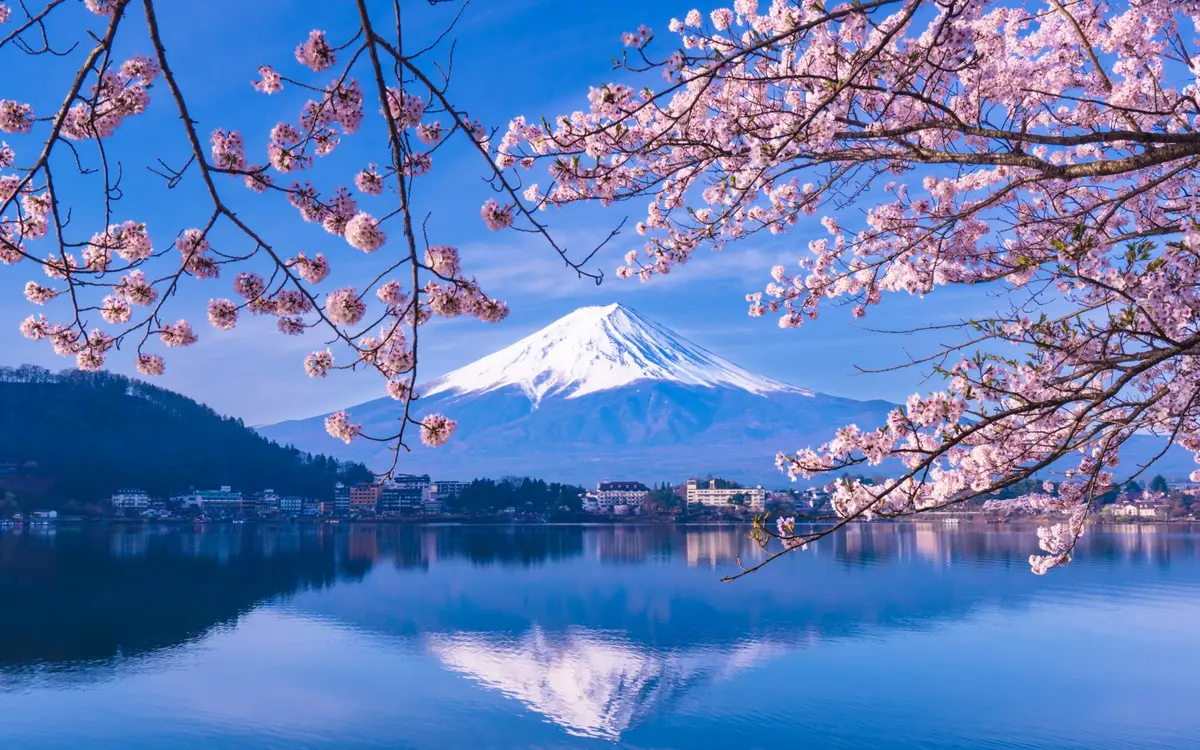
Lake Kawaguchi can produce classic Fuji views, including reflections when wind and visibility cooperate. The Klook itinerary groups the lake with Kawaguchiko Craft Park and shows seasonal locations such as the Maple Corridor, but the exact route and what is photogenic depend on date and conditions.
The supplied hero image shows cherry blossoms, which are seasonal and never guaranteed by buying this tour. Autumn color, flowers, snow cover and even an unobstructed mountain view vary from year to year and day to day.
With about one hour allocated, meal-plan travelers will spend part of the stop dining. No-meal travelers must decide whether to prioritize food, the lake or shopping at the local facilities; one hour cannot be treated as a complete Lake Kawaguchi visit.
What to know
Fifty minutes at Oshino Hakkai does not mean all eight ponds
Oshino Hakkai is a group of eight spring-fed ponds associated with Mt. Fuji and included among the cultural heritage components of the mountain. The village explains that meltwater filters underground before emerging as springs, making the water and pilgrimage history more important than a single postcard viewpoint.
Oshino Village’s official guided route through all eight ponds takes about two hours. Klook schedules around 50 minutes. Prioritize the central area, follow the host’s meeting instructions and set a turnaround alarm rather than trying to complete the formal eight-pond sequence.
Most of the area has no single admission gate, but Sokonashi-ike lies inside the Hannoki Bayashi Shiryokan property and requires its separate admission during opening hours. A tour stop called “Oshino Hakkai” does not guarantee time or admission for every pond.
What to know
Plan Gotemba Premium Outlets before the bus arrives
Gotemba currently lists 290 outlet stores across a large, multi-zone site. The official hours are 10:00–20:00 from March through November and 10:00–19:00 from December through February. Its next scheduled annual closure is February 25, 2027, based on information checked July 25, 2026.
The tour allows about 90 minutes. Download the official map, choose three to five priority stores and note their zones before the trip. Browsing all 290 stores, eating a relaxed meal and collecting tax-free purchases in that window is unrealistic.
If you plan to travel on February 25, 2027, ask Klook in writing what replaces the outlet stop. If shopping is a main purpose rather than a bonus, use a direct outlet bus or independent trip that provides several hours.
What to know
Keep your passport with you for tax-free shopping
Gotemba’s official service guide tells eligible visitors to present their passport to the cashier when paying at participating tax-free stores. Do not leave it in luggage stored under the tour bus. Tax-free participation and product handling rules vary by store and purchase type.
The outlet provides free Wi-Fi throughout the site, and most stores accept Visa, Mastercard, American Express, Diners, JCB and Discover. It also offers free telephone interpretation in English and several other languages, plus information centers and lockers.
A passport and card do not guarantee every purchase qualifies for exemption or every store accepts the same payment method. Ask at the store, protect time for checkout and know the bus meeting zone before entering a queue.
What to know
Meal choice changes how you use Lake Kawaguchi
The current booking page offers a no-meal option and several named lunch add-ons, including noodle soup, wine beef, shabu-shabu and a sukiyaki bowl. Only the option selected at checkout is included.
Klook does not provide a reliable blanket guarantee for allergies, halal, vegetarian or other dietary needs on the public page. A dish name is not enough to establish ingredients, shared preparation or certification. Request written confirmation before choosing a meal when the answer determines whether you can eat it.
With no meal, plan where and when you will obtain food within the same limited stop. Bring a suitable backup snack and water; do not assume the bus will wait while you search for an alternative restaurant.
What to know
Selecting English does not turn every stop into a guided walk
Klook currently lets buyers choose an English or Chinese host. The individual attraction stops are labeled self-guided, so the host coordinates the trip and may provide commentary, but does not necessarily escort you around every pond, store or viewpoint.
Select the preferred language explicitly and verify it in the final booking summary. Do not rely on reviews from another bus, date or guide to promise the same depth of explanation.
Travelers who want detailed interpretation of shrine history, Oshino’s eight ponds or Fuji geology should use official visitor information in advance or book a smaller specialist tour.
What to know
The two pickup points are easy to confuse
The Ueno pickup is JR Ueno Station’s Park Gate, not a central gate and not a Tokyo Metro entrance. The current instructions say to look for a guide with a blue flag, meet at 7:30 and depart at 7:40.
The Shinjuku pickup is outside Shinjuku Post Office on the west side, not a platform or generic “Shinjuku Station” meeting point. The current schedule is 8:20 meeting and 8:30 departure.
Arrive around 20 minutes early, because ten minutes between the published meeting and departure leaves little recovery time. Save the final voucher’s map, address and emergency contact offline, and navigate to the exact street-level point the previous evening.
What to know
Do not connect the scheduled 18:30 return to a hard deadline
The listed 18:30 Shinjuku arrival is an estimate after a long highway day. Congestion, weather, stop timing and passenger coordination can move the actual return.
Avoid placing an airport departure, last long-distance train, non-refundable show or tightly timed restaurant immediately afterward. This tour works best when your evening can absorb a delay.
Klook’s FAQ says carry-on luggage up to the size of a suitcase is allowed, but it does not state a precise number, dimensions or weight limit. Confirm large or multiple bags in advance instead of assuming the coach can store them. Children aged 0–3 are currently free only when they do not occupy a separate seat.
What to know
Klook currently shows two different cancellation deadlines
As checked on July 25, 2026, the main cancellation and change sections say a full refund or change is available at least 48 hours before the activity. The FAQ on the same page says cancellation and amendment require at least 11 days. Those statements conflict.
Do not let this article choose a contract term for Klook. Select the actual date, pickup, language and meal, then read the final package and checkout rule. Save a screenshot before payment. If the contradiction remains and flexibility matters, contact Klook in writing or treat 11 days as the safer practical deadline.
The main page says that if the operator cancels the entire tour for unforeseen events or extreme weather, travelers may reschedule or request a full refund. That is different from replacing only the 5th Station with the shrine. Klook also says that leaving at a designated stop or skipping the return bus produces no refund.
What to know
Who should book the bus instead of traveling independently
The bus is strongest for a first visit when you want a sample of several Fuji-area experiences and do not want to drive. It can also suit a mixed-interest group: one traveler gets scenery and heritage while another gets outlet time.
Independent travel is better for sunrise or sunset photography, weather-driven date changes, a full Oshino route, hiking, a long lake visit or serious outlet shopping. A private tour may be better when mobility support, child seating or diet requirements need explicit coordination.
Before paying, verify the pickup, English or Chinese selection, meal, final cancellation rule and mobile-voucher status. Then ask one decisive question: would this day still feel worthwhile if Fuji is completely hidden? If yes, the route’s breadth is its real value.
Compare a related booking
Mt. Fuji, Oshino Hakkai & Gotemba Tour: Choose Outlet or Onsen
Compare this four-stop Lake Kawaguchi route with activity 87225, which uses a seasonal Fuji viewpoint and lets you choose Gotemba shopping or an onsen.
A good fit
Put it on your list if...
- First-time visitors who want several Fuji-area highlights without renting a car
- Travelers who enjoy a mix of scenery, heritage and shopping
- Visitors comfortable with short self-guided stops and substantial bus time
- People who can enjoy the route even if clouds hide Mt. Fuji
Think twice
Skip or reconsider if...
- Photographers who need to choose the date and viewpoint around live visibility
- Travelers planning a summit climb, long hike or all-eight-pond Oshino visit
- Serious outlet shoppers who need several hours
- Anyone with a hard evening transport or reservation immediately after 18:30
Booking option
Check the current ticket before paying.
The link opens Klook’s English activity page with USD selected. Choose the pickup, guide language and meal before comparing the final price and cancellation terms.
- Mt. Fuji visibility and access to the 5th Station are not guaranteed.
- The 5th Station is replaced by Kitaguchi Hongu Fuji Sengen Shrine when closed.
- Klook’s main terms currently say 48 hours, while its FAQ says 11 days for cancellation; verify checkout.
- The scheduled 18:30 return can move because of road and operating conditions.
Evidence and commercial terms
Sources checked
Government and operator or venue pages establish rules and practical details. Booking-service pages are commercial sources for the package and checkout terms only. Open the relevant sources again before travel.