Do this now
Follow these steps in order.
- 01
Do not travel using the August 29–30 dates, seat conditions or temporary transport rules on this archived page; the scheduled 2026 event has finished.
- 02
For a future edition, begin with a newly dated organizer announcement and confirm the year before booking accommodation or transport.
- 03
Recheck future viewing-seat prices, inventory, refund terms, rail stopping patterns and road controls instead of assuming the 2026 rules repeat.
- 04
Use the remaining sections only as a record of the published 2026 plan and as a checklist of items to verify again.
What to know
Why Koenji is worth making part of a Tokyo trip
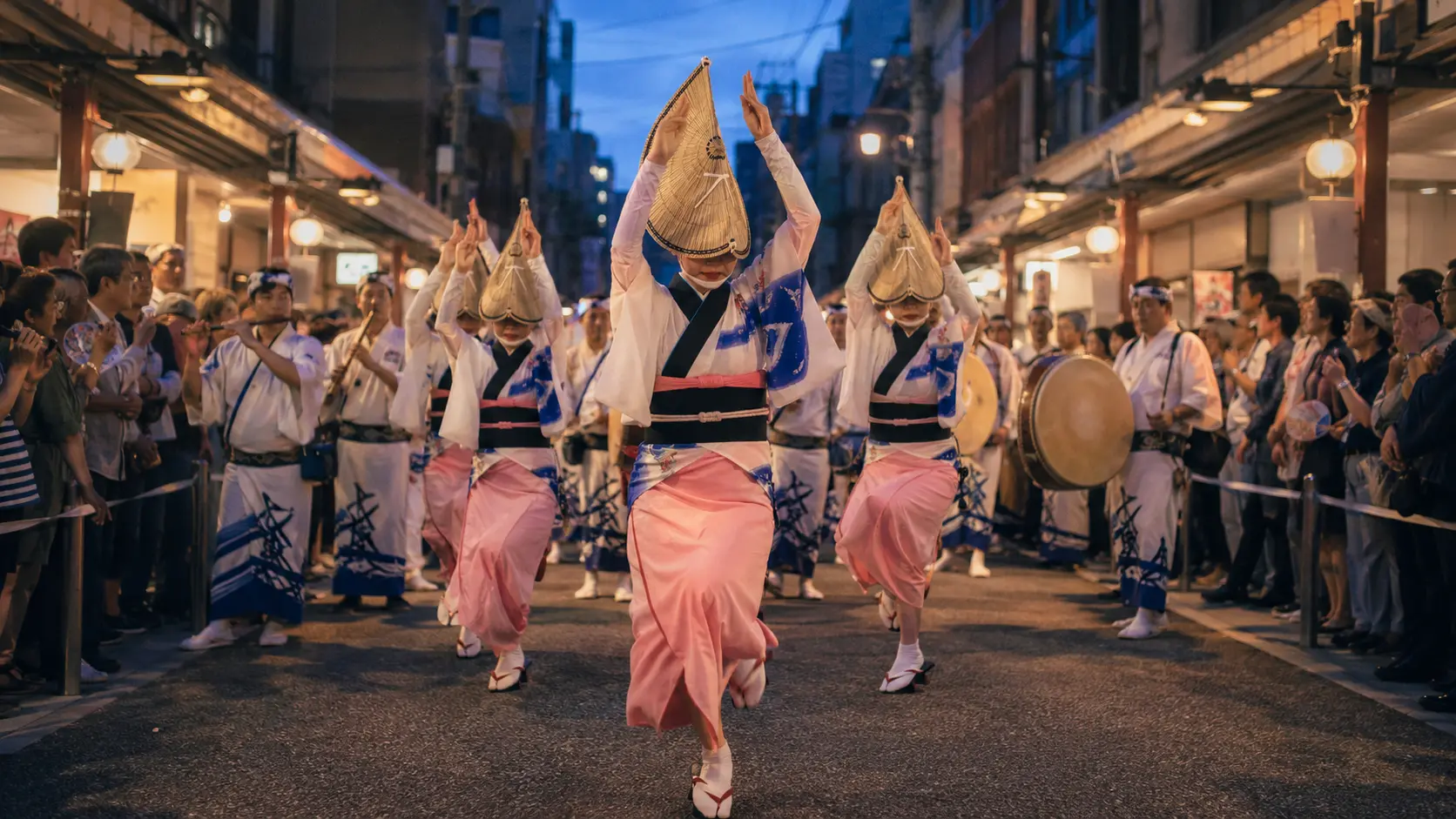
Tokyo Koenji Awa Odori brings the dance tradition of Tokushima into compact shopping streets west of Shinjuku. Teams called ren move through the neighborhood with taiko, flutes, shamisen and bells, so the experience changes as different groups enter each performance area. It feels less like watching one distant stage and more like seeing an entire district become the venue.
The Koenji festival began in 1957. The organizer says the previous edition involved 158 ren across the two days and drew about 1.02 million spectators. Those are previous-year figures rather than a 2026 promise, but they explain why a festival that is easy to reach from central Tokyo still needs a crowd and exit plan.
What to know
Official 2026 dates, times and performance areas
The 67th Tokyo Koenji Awa Odori is scheduled for August 29–30, 2026. Street performances run from 17:00 to 20:00 on both days around JR Koenji Station, Tokyo Metro Shin-koenji Station, the nearby shopping streets and Konan-dori. The organizer names nine performance areas, including Chuo, Higashi, Junjo, Pal, Momozono, Minami, Look First, Look Second and Koen-mae.
There is no single front-facing main stage for ordinary street spectators. Each ren follows an assigned route, and the line-up at one viewing point differs from another. Use the official program and movement schedule when it is available, but keep the plan flexible because barriers, crowd controls and staff instructions determine where you may stand.
What to know
General street viewing is free; supporter seats are a separate product
The organizer does not list a general admission ticket or reservation for ordinary street viewing. You can watch from an open lawful spectator area, but you cannot reserve road or curb space with tape, sheets or other objects, and a crowded arrival does not guarantee a clear view. Do not block a shop entrance or enter an active performance route.
For a fixed seat, the organizer offers special viewing admission as a thank-you for a festival donation. One seat is provided per ¥15,000 contribution for Chuo or per ¥10,000 contribution for Junjo, Momozono or Minami. Applications are limited to five per person, handled first come, first served, and close when the allocation is full or at 23:59 on the day before the festival. The live ticket centre is the only reliable source for current inventory; availability could not be independently confirmed on August 16.
What to know
Read the paid-seat conditions before contributing
The contribution is treated as a donation rather than an ordinary refundable ticket purchase. The organizer states that applications cannot be canceled or changed, admission tickets will not be reissued, and there is no refund if rain or another condition cancels the event. Payment and convenience-store ticket issuance may also carry service fees.
Online applicants may choose credit card or convenience-store payment and must issue the admission ticket at a designated convenience store by the stated deadline. A successful payment screen is not a substitute for the required entry ticket. Travelers who cannot complete Japanese convenience-store issuance should verify the full purchase flow before paying.
What to know
Use local trains or the Marunouchi Line
JR Koenji Station is about five minutes from the route, as is Shin-koenji on the Tokyo Metro Marunouchi Line. The critical 2026 exception is that Chuo Line rapid trains do not stop at Koenji on August 29 or 30. From Shinjuku or Tokyo, change to a Chuo-Sobu local service at a station such as Nakano, or take the Marunouchi Line to Shin-koenji.
The official map also lists JR Asagaya and Nakano about 15 minutes away, and Higashi-koenji on the Marunouchi Line about 12 minutes away. A secondary station can be useful if Koenji is heavily controlled after 20:00, but choose it before joining the crowd and save the walking route. Confirm live service because a festival access rule does not protect the railway from an unrelated delay.
What to know
Road controls and crowd flow change the neighborhood
Road controls are scheduled from 16:10 to 20:30 on both festival days in the area bounded by Ome-kaido, Kannana-dori, Waseda-dori and Mabashi-dori. Vehicles cannot enter or pass through the regulated area without the required authorization. The organizer asks visitors not to drive, and buses and taxis normally using the south side of JR Koenji move to temporary north-side arrangements during the controls.
Bicycles and strollers are discouraged because of the density. If traveling with a child or someone who cannot remain standing in a crush, use an earlier arrival, an agreed exit point and the less central edge of the route. The organizer identifies the starting areas of Junjo and Pal and the Look Second area as relatively easier for children to see based on past conditions, but explicitly does not guarantee the same result in 2026.
What to know
Rain, heat and same-day cancellation checks
The official FAQ says the street festival normally proceeds in rain unless it is exceptionally heavy. It does not publish a universal rainfall threshold, a guaranteed postponement date or a fixed English cancellation time. Check the event homepage and official social updates before leaving the hotel, then follow police, security and staff if weather or an emergency changes the route.
Late August can remain dangerously hot even when the performance begins at 17:00. Check Tokyo's current WBGT, drink before entering a dense area and use a first-aid point or tell staff if you feel unwell. A national Heat Stroke Alert is a warning threshold, not proof that a day without an alert is cool or safe.
What to know
Photography rules are stricter than many visitors expect
Photography from a lawful spectator position is possible, but entering a performance area is prohibited. The organizer bans tripods, monopods, stepladders, chairs, selfie sticks and drones. Plan to shoot handheld, keep the camera inside your own body space and do not lift equipment into another spectator's face or route.
Roadside place-holding with tape is prohibited, smoking is limited to designated locations, and visitors should take rubbish home or use the large separated bins at information points. A creator badge, large camera or paid supporter seat does not override staff directions, performer privacy or the need to keep evacuation and shop access clear.
If that does not work
Use the fallback.
- Supporter seats are sold out or the purchase flow is impractical: use free street viewing and accept that the sightline will change as the crowd moves.
- JR Koenji becomes too congested: use the pre-saved route to Shin-koenji, Higashi-koenji, Asagaya or Nakano only after confirming the walk and live service.
- A child, companion or group becomes separated: stop moving, use the agreed meeting point and ask the nearest official information point or police box for help.
- Heavy rain, a weather warning or police instruction changes the event: follow the official decision; no postponement or alternative program should be assumed.
Before you need it
Save this offline.
- Official 2026 event overview and performance-area map
- JR local-train or Marunouchi Line arrival route
- Two different station exit plans for after 20:00
- Supporter-seat confirmation and issued ticket if purchased
- Tokyo WBGT, JMA warning and organizer update pages
- Hotel address and a group meeting point
- Water, compact raincoat, portable battery and hands-free bag
Frequently asked questions
Tokyo Koenji Awa Odori 2026: Event Finished — Archived Guide FAQ
When is Tokyo Koenji Awa Odori in 2026?
The street festival is scheduled for Saturday, August 29 and Sunday, August 30, 2026, from 17:00 to 20:00 on both days.
Is Tokyo Koenji Awa Odori free?
General street viewing does not have a listed admission fee or reservation. Fixed special viewing seats are offered through ¥15,000 or ¥10,000 supporter contributions and are limited first come, first served.
Which station should I use?
Use JR Koenji on a Chuo-Sobu local train or Shin-koenji on the Tokyo Metro Marunouchi Line. Chuo Line rapid trains do not stop at Koenji on the two festival days.
What time are the road closures?
Traffic controls are scheduled from 16:10 to 20:30 on August 29 and 30 in the surrounding Koenji area.
Does the festival continue in rain?
The organizer says it normally proceeds in rain unless it is exceptionally heavy. Check the official homepage and weather warnings for the same-day decision.
Can I reserve a place on the street?
No. Using tape, sheets or other objects to hold road or curb space is prohibited, and spectators must not block shops or enter the performance route.
Can I use a tripod or selfie stick?
No. The organizer prohibits tripods, monopods, stepladders, chairs, selfie sticks and drones. Photograph only handheld from a lawful spectator position.
Are special viewing-seat contributions refundable if the event is canceled?
No. The organizer treats the contribution as a donation and states that rain or another cancellation does not produce a refund.
Primary evidence
Official sources used
Open these pages again before travel. External links lead to the responsible Japanese authority or transport organization.