
Do this now
Follow these steps in order.
- 01
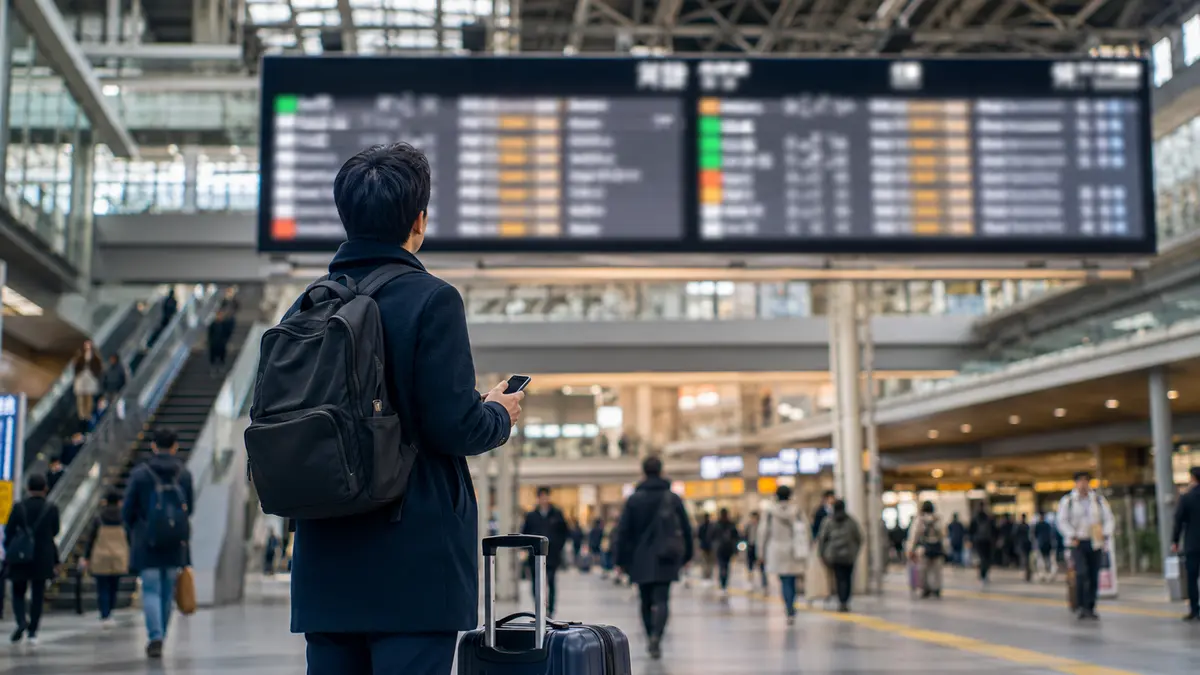
Confirm the platform, direction, service type and departure time on the official display.
- 02
Match the train to its colored, numbered or labeled boarding position on the floor.
- 03
Join the back of that queue without standing on tactile paving or in a through-path.
- 04
Wait behind the yellow warning blocks, white line or closed platform doors.
- 05
Move to either side when the train arrives and let all alighting passengers clear the doorway.
- 06
Board in order without pushing, then move away from the door when space is available.
- 07
Let a departing train go rather than running, holding the door or forcing into a full car.
What to know
One platform can have several boarding lines
Local, rapid, express and reserved-seat services may stop at different door positions. Floor markings can use colors, car numbers, triangles, circles or service names, and a later train may have a separate queue.
Read the electronic departure board first, then match your train to the marking. A line of people is useful evidence but not a substitute for the service name and time.
What to know
Join the end without blocking the platform
Stand behind the last person in the appropriate line. Do not create a parallel line closer to the track, reserve a place with luggage or stand across the route people use to transfer.
Tactile paving is navigation and warning infrastructure, not a queue marker or luggage shelf. Keep it clear and follow staff instructions when crowd control changes the normal arrangement.
What to know
Wait behind the safety boundary
Tokyo Metro instructs passengers to wait behind the yellow warning blocks. Depending on the station, the boundary may also be a white or yellow line or a closed platform-door line.
Keep children and rolling bags under control. Never lean over the edge to look for the train, step into a restricted area or use the platform door as a support.
What to know
Let everyone get off before boarding
JNTO advises lining up to the side of the train so passengers can disembark before boarding. Stay beside, not in front of, the opening until the flow stops.
Do not squeeze inward while someone is still exiting. A passenger with luggage, a stroller or mobility support may need more time and space than the people ahead.
What to know
Board in order and move inside
After alighting passengers clear the doorway, follow the queue at a walking pace. Once inside, move toward the center of the car where practical so the doorway remains usable.
If you remain near the door, be ready to step out temporarily at a later station to let others pass and then reboard. Do not anchor yourself in the doorway with a suitcase.
What to know
Reserved seats do not justify skipping the queue
A reserved seat guarantees the assigned seat on the booked service, not first access through the train door. Join the appropriate car line and allow people off as usual.
Have the car and seat number ready before arrival. If you are at the wrong car, board only if it is safe and permitted, then move through the train after departure—or ask staff—rather than running along a closing train.
What to know
Do not rush a departing train
Tokyo Metro tells passengers not to rush when trying to catch a train, and railway safety campaigns warn against dashing onto departing services. Doors and platform gates are safety equipment, not a deadline to challenge.
Never hold a door with a hand, bag or umbrella. Step back when the chime sounds or staff close the queue, and take the next train or ask about rebooking if the service is reserved.
What to know
Crowd instructions override the usual line
During rush hour, events or disruption, staff may create temporary lines, hold passengers back or direct boarding through selected doors. Follow their gestures and floor barriers even when they differ from normal markings.
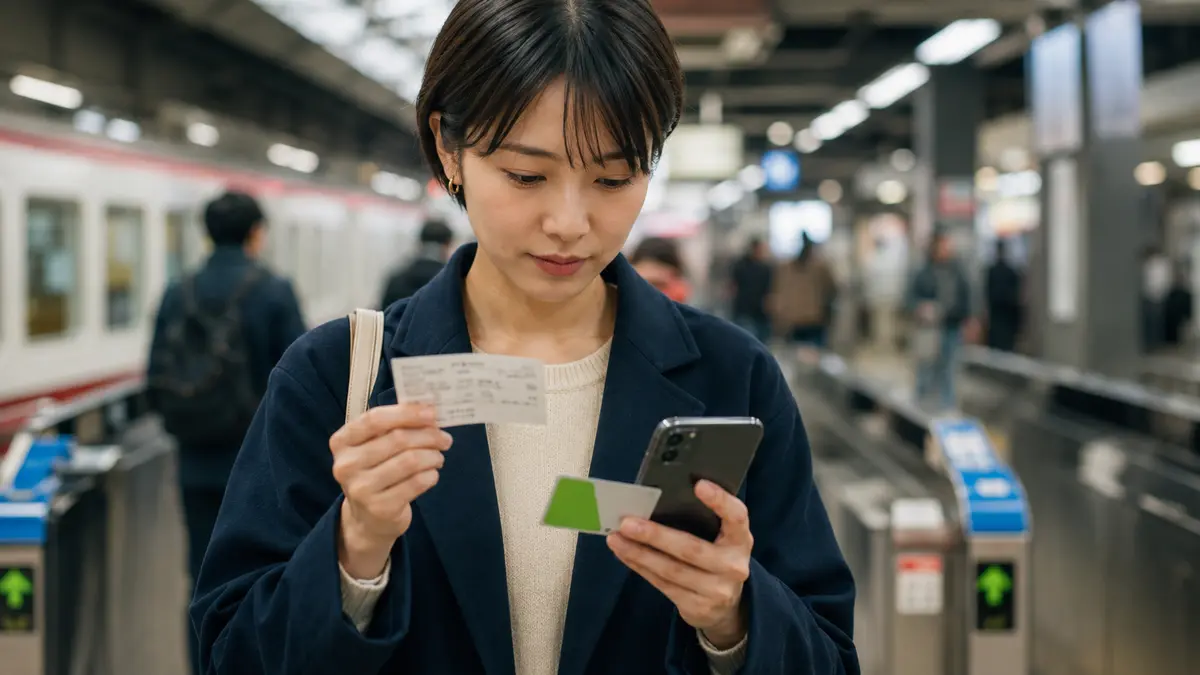
Keep announcements audible and avoid stopping in front of stairs or escalators to check a phone. Move to a wall-side safe area before reorganizing tickets or the route.
If that does not work
Use the fallback.
- If you are in the wrong line, step out and rejoin the correct queue at its end.
- If you cannot identify the marking, show the train name and departure time to station staff.
- If the train is too full for you or your luggage, wait for the next one when practical.
- If your reserved car is far away, do not run beside the train; ask staff where to board safely.
- If an item falls onto the track, never retrieve it yourself—alert station staff.
- If staff stop boarding, step back immediately and follow the next instruction.
Before you need it
Save this offline.
- A screenshot showing operator, line, direction, departure time and train name
- Car and seat number for a reserved service
- A platform map when the train is long
- The rule: correct marking, end of line, exit first, no rushing
- Destination and train name in Japanese for staff assistance
Primary evidence
Official sources used
Open these pages again before travel. External links lead to the responsible Japanese authority or transport organization.