Do this now
Follow these steps in order.
- 01
Contact the exact hotel through its official website, the booking channel's verified message function or the phone number on your confirmation. Do not rely on a similarly named property or an unverified social account.
- 02
Give the reservation holder's full name, check-in and checkout dates, room number if known, booking reference, item description, distinctive marks, likely location and a contact that will work after you leave Japan.
- 03
Ask staff to confirm that the item—not merely a similar object—has been found. Request a reference, photo or identifying question that does not expose a password, card number or private account data.
- 04
Ask for the holding deadline and whether the hotel will keep the item, dispose of it, or transfer it to a named police station. Record the date, staff contact and any police reference.
- 05
Choose one approved route: collect it yourself, authorize a trusted person, send it to your next Japanese accommodation after that property agrees, or request an international-return quote if the hotel offers one.
- 06
Before domestic forwarding, confirm the recipient, address, arrival window, carrier, packaging, prepaid or cash-on-delivery method and who pays. A hotel at the destination must agree before you use it as the address.
- 07
Before international shipping, have the sender check Japan Post or the chosen carrier's current destination service, prohibited-item and lithium-battery rules. Complete an accurate customs description and value; do not label used belongings as a gift merely to avoid duties.
- 08
Approve the quoted shipping and handling method only through a verified channel. Do not email a full card number or passport image unless the official process clearly requires it and provides a secure route.
- 09
Keep the tracking number, item photos, hotel or police reference, payment receipt and customs documents until delivery. If a valuable item is missing, also follow the issuer, embassy or insurer's deadline rather than waiting only for shipment.
What to know
Call the property before the item moves
Hotels use their own front desk, housekeeping and security records before an item is handed to police. The quickest useful message identifies the exact property and stay, not just the brand: reservation name, dates, room, booking channel, checkout time, likely location and a description that distinguishes the item from similar belongings.
Describe color, size, material, brand or model, case, contents and a non-sensitive serial fragment where useful. For electronics, do not send a device passcode. For a wallet or document holder, list the kinds of contents without emailing complete card, passport or account numbers.
Ask when you will receive a reply and how long the property can hold the item. Perishable food, opened drinks, toiletries, damaged goods and safety-sensitive items can be disposed of sooner than ordinary belongings, so delay can remove the available options.
What to know
There is no universal hotel storage deadline
Published hotel terms differ materially. JR Kyushu Hotels and Resorts says ordinary left items are generally held for instructions and may be disposed of after one month, while food, drink, tobacco and magazines may be discarded on discovery; valuables without instructions are handled under the Lost Property Act and submitted to police.
Hotel Nikko Osaka publishes a different rule: when ownership cannot be identified or instructions are not received, it keeps the item for seven days including the day found and then turns it over to the nearest police station. The Imperial Hotel publishes still another timetable for valuables and ordinary items. These examples prove why a traveler must ask the exact property rather than applying another hotel's deadline.
A hotel may need to inspect a misplaced bag enough to identify, store or dispose of it safely. Do not assume the room remains sealed after checkout or that the property must store every item until your next trip.
What to know
Confirm the item before paying for recovery
Ask the hotel to confirm a positive match. A neutral photo can help for an ordinary item, but some properties may protect privacy by asking you to describe a mark or contents instead. Do not ask staff to photograph identity documents, card numbers, device screens or keys in a way that creates a new security risk.
Request the collection or shipping choices in writing, including packaging, handling, carrier, service level, insurance or declared-value option, expected dispatch date, tracking and payment method. Shiba Park Hotel's official FAQ, for example, says it can arrange domestic or overseas courier return after the item is confirmed and then contacts the guest about shipping method and charges; that is a property policy, not a promise by every hotel.
Hotels may refuse to mail cash, cards, passports, keys, medicines, food, liquids, alcohol, aerosols, batteries, fragile goods or high-value property. A front desk is also not required to advance postage, customs charges or a courier fee for a former guest.
What to know
Pickup, proxy and domestic forwarding are separate choices
Self-pickup is often the simplest route when you are still nearby. Ask what identification, reservation evidence and collection hours are required. If a friend, guide or courier will collect it, ask whether the hotel accepts a proxy and what written authorization and ID are required before sending anyone.
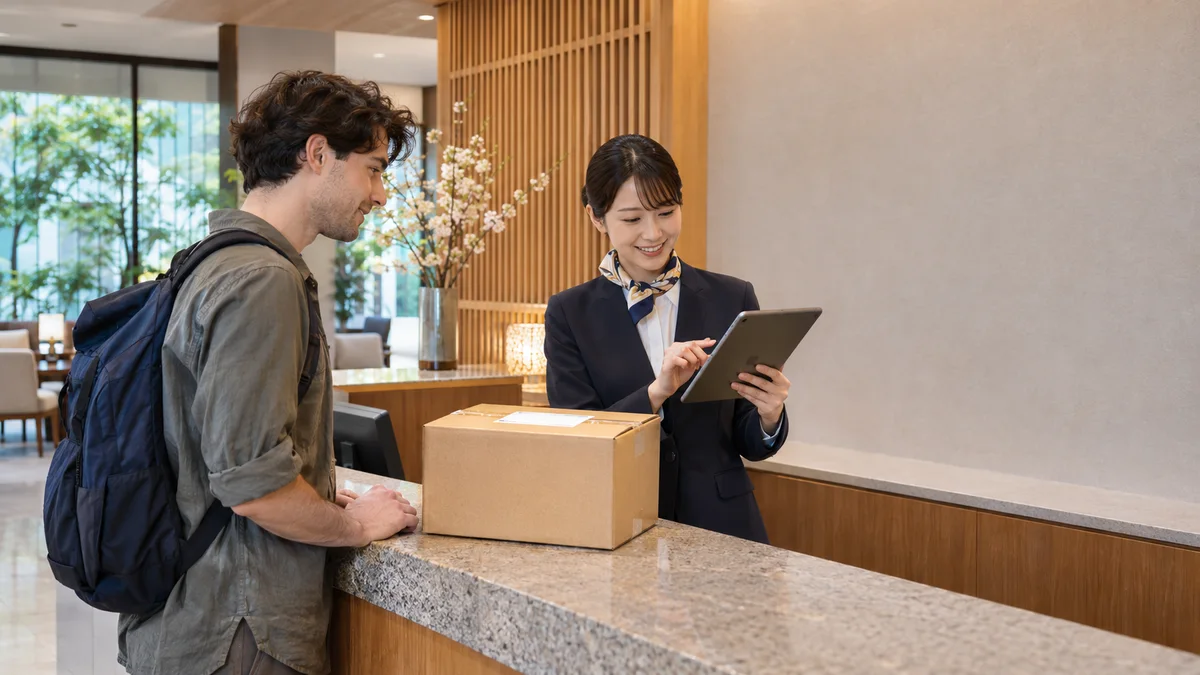
For delivery to your next accommodation, first ask that property whether it will accept the parcel, under which name and on what date. Yamato states that a hotel or ryokan delivery depends on the property's willingness to receive it and that cash-on-delivery service cannot normally be addressed to an accommodation guest. The originating hotel may offer another payment method, but it must confirm it.
Do not schedule an independent courier to enter staff areas or collect a package that the hotel has not prepared. Give both properties the tracking number and reservation name only after the arrangement is accepted.
What to know
If the hotel has transferred the item to police
The National Police Agency says to contact the facility manager when an item was lost at a facility or store and to submit a Lost Property Report promptly. Property reported to police is generally retained for three months; umbrellas and clothing may be sold or disposed of after two weeks in the circumstances described by the NPA. A report records the claim but does not mean police will conduct a search.
Ask the hotel for the police station name, transfer date and any receipt or item number. Contact that police station directly and give a phone number or email that remains reachable after you leave Japan.
The NPA's English guidance says a police-held item can be shipped when the claimant prepares the Lost Property Shipping Request Form and Receipt of Lost Property and supplies the required shipping cost. A proxy can collect with a Power of Attorney and copy of ID. The police station—not the hotel—must confirm the actual forms and payment route for your case.
What to know
International return is a customs shipment
A hotel willing to help still needs a carrier that accepts the item to your destination. Japan Post's service-availability chart was last updated October 23, 2026 when checked on November 24; routes and products can be suspended or limited. Check the destination and service again immediately before dispatch.
Japan Post requires goods to be described accurately on a customs declaration, including the detailed item name, quantity and value. Labels and electronic advance data are created through International Mail My Page for relevant services. The destination country can assess duty or tax even when the item is your own used property, and false or incomplete descriptions can delay, return or seize a parcel.
Tokyo Customs says ordinary postal exports valued at no more than JPY 200,000 generally need no special export declaration when they are not regulated, while items above that value require an export declaration and supporting documents. Regulated goods, repairs, cultural property and other special cases can need checks regardless of value.
What to know
Batteries, valuables and perishables can block shipping
Japan Post lists universal and destination-specific nonmailable articles. Standalone power banks, aerosols, lighters, perfume or other flammable liquids, compressed gas and some medicines can make a parcel unacceptable. Lithium batteries installed in equipment are allowed only under stated conditions and are unavailable to some destinations. The hotel should identify the contents with the carrier rather than guessing from the product name.
Japan Post says valuable goods such as cash and precious materials cannot be sent by EMS, while some other mail categories may permit registered or insured handling subject to country limits. Cards, passports and keys also create identity and security concerns even when not described by the same postal category, so ask for police, issuer or embassy instructions.
Perishable food and drink may already have been disposed of under the hotel's hygiene policy. Do not ask staff to repackage an unsafe, leaking or unidentified product merely to preserve it.
What to know
Checked November 24, 2026 — the exact property decides
This guide was checked on November 24, 2026 against current National Police Agency, hotel, Japan Post, Tokyo Customs and Yamato information. It does not claim a universal hotel retention period, a guaranteed shipping service or a fixed recovery price.
Storage, disposal, police transfer, proxy release, packaging, payment and courier options depend on the exact property and item. International service availability, dangerous-goods rules, customs documentation and destination import charges can change, so reopen the linked official pages before approving shipment.
If that does not work
Use the fallback.
- The hotel cannot find it: file a police Lost Property Report, keep the claim details and ask the hotel whether housekeeping, laundry, security or an outsourced cleaner has a separate record.
- The item is already with police: get the station and item reference from the hotel, then follow that station's pickup, proxy or shipping instructions rather than sending a courier to the hotel.
- You are still in Japan but far away: ask whether an authorized person can collect it or whether the hotel can send it to a staffed Japanese address that has agreed to receive it.
- The next hotel refuses delivery: use your own reachable Japanese address, a trusted contact or another carrier-approved pickup method; do not put an unwilling property on the label.
- International shipping is unavailable: ask the hotel about a trusted proxy collecting the item, storage until a stated date or lawful disposal. Do not pressure staff to misdeclare or conceal the contents.
- The parcel contains a battery, liquid or restricted item: ask whether the hotel can safely separate items with your written permission and hold the excluded part for another recovery route; do not assume staff can open or alter it.
- The hotel cannot take your payment method: ask for another secure official method or use a trusted person in Japan. Never send full card credentials in ordinary email.
- A passport, residence card, bank card, cash or controlled medicine is involved: secure or cancel it through the issuer, embassy, police or relevant authority now; shipping should not delay those protective steps.
- Delivery fails or the parcel is returned: use the tracking number to contact the carrier and hotel promptly, and expect additional forwarding, return or storage charges unless the carrier confirms fault.
Before you need it
Save this offline.
- Exact hotel name and official contact
- Reservation holder's name
- Stay dates and room number
- Booking reference
- Item description and photo
- Last-seen place and time
- Hotel or police item reference
- Holding deadline
- Approved collector or destination
- Written shipping quote
- Carrier and tracking number
- Customs declaration copy
- Payment receipt
- Insurer and issuer deadlines
Frequently asked questions
Left Something at a Japan Hotel? Recovery and Shipping After Checkout FAQ
How soon should I contact the hotel?
Immediately. Food, drink and unsafe items may be discarded quickly, and ordinary belongings can move from housekeeping to security or police under the property's own timetable.
How long must a Japanese hotel keep a forgotten item?
Do not rely on one universal number. Published hotel policies vary by property and item; some transfer unidentified items to police after days, while others keep ordinary items longer and dispose of perishables quickly.
Will the hotel contact me automatically?
Not necessarily. Even when ownership appears identifiable, privacy, incomplete reservation data or internal procedure can prevent contact. Contact the exact property yourself and keep a reference.
Can the hotel send the item to my next hotel?
Only if the hotel holding it offers shipping and the destination property agrees to receive it. Confirm recipient format, date, payment method and tracking with both properties.
Can a friend collect the item?
Possibly, but the hotel decides its authorization and ID requirements. If police hold the item, the NPA says a proxy needs a Power of Attorney and a copy of ID; confirm the station's exact form first.
Can a hotel ship my item overseas?
Some hotels do, but it is not a standard obligation. The hotel, carrier, destination service, item restrictions, customs declaration, payment and import rules must all allow it.
Who pays the return shipping?
Expect the owner to pay packaging, postage, handling, customs and possible return costs unless the hotel or carrier confirms another arrangement in writing.
Can a power bank or phone be mailed overseas?
Do not assume so. Standalone power banks and lithium batteries face strict international-mail limits; a battery installed in equipment is allowed only under stated conditions and not to every destination.
What if the hotel handed the item to police?
Get the station name and item reference. The NPA says police-held property can be shipped using its request and receipt forms with required shipping cost, or collected by an authorized proxy; the station confirms the case-specific process.
Do I mark my own used item as a gift on the customs form?
No. Use an accurate detailed description, quantity and value. A false or incomplete declaration can cause delay, return or seizure and does not lawfully remove destination taxes.
What if the item is a passport or bank card?
Contact the issuing authority or card issuer and police immediately. Cancellation, replacement and identity protection should not wait for a hotel or courier to return the item.
Primary evidence
Official sources used
Open these pages again before travel. External links lead to the responsible Japanese authority or transport organization.