Do this now
Follow these steps in order.
- 01
Open the confirmation and identify the property, the company that sold the booking, the stated arrival time, the last check-in time and the cancellation or no-show rule. Read all times as Japan Standard Time unless the booking clearly says otherwise.
- 02
Contact the property before the stated arrival time. Give the lead guest's exact booking name, confirmation number, stay date, guest count, revised arrival time and the reason for the delay.
- 03
Ask three direct questions: Will the room be held after midnight? Is the entrance or reception locked? Must identity verification, payment or self-check-in be completed before a deadline?
- 04
If the booking came from an online travel agency or travel agent, send the same update through that booking channel and keep its case number. Do not cancel and rebook unless the seller or property tells you to do so.
- 05
Save the reply, phone number, property address, entrance instructions and booking screen offline. Take a screenshot that shows the date and revised arrival time.
- 06
If the delay grows, update the property again. Midnight changes the calendar date but not the original accommodation date; state both the date and time, for example '00:45 on 30 October for my stay beginning 29 October.'
- 07
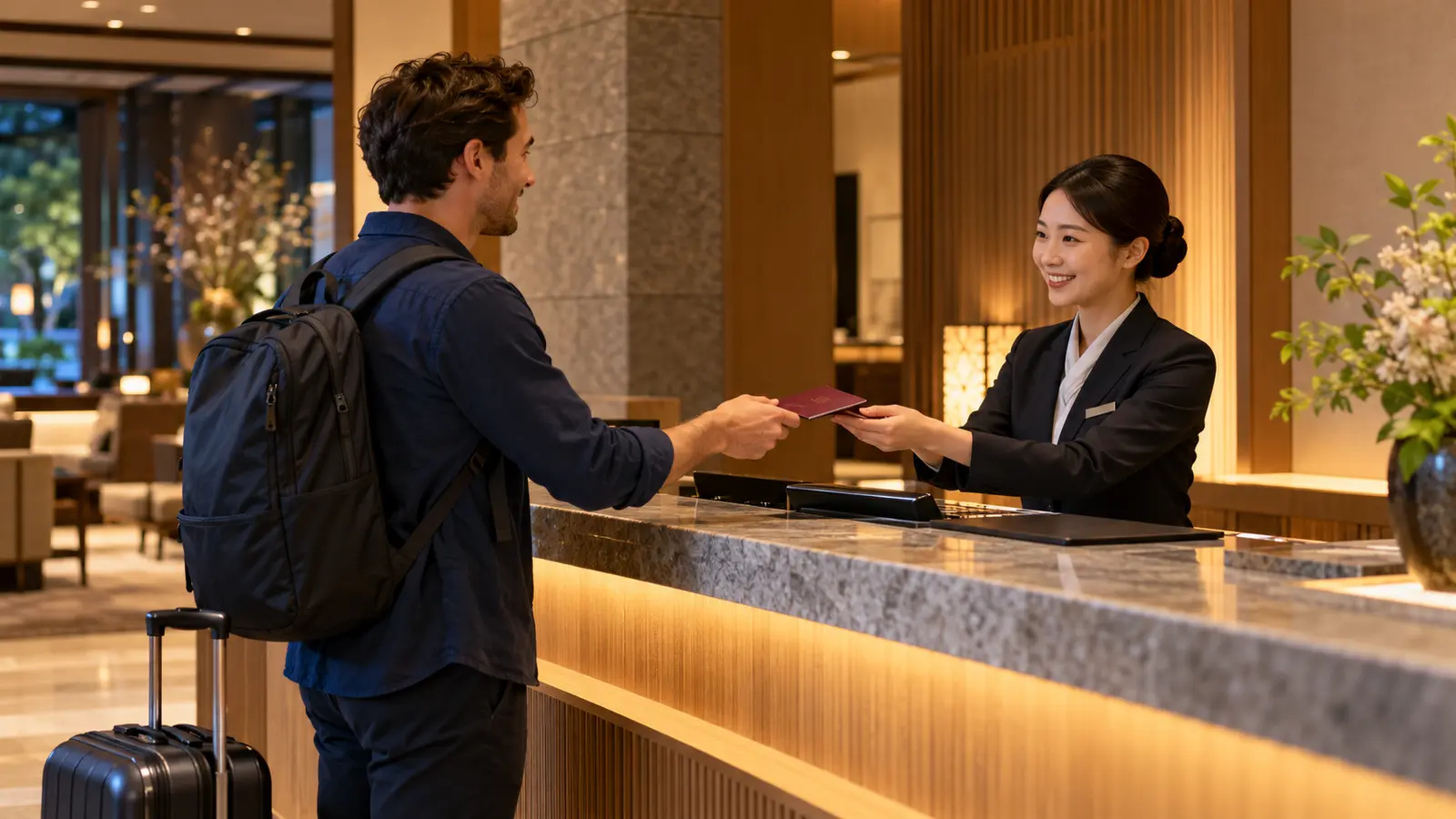
Carry each overseas visitor's original passport and any payment card or deposit required at check-in. Do not place the passport in luggage that will arrive separately.
- 08
If nobody answers and the deadline is close, contact the booking seller, preserve every attempt and identify a staffed fallback property before travelling to a locked entrance. Do not assume an unanswered message changed the contract.
What to know
There is no national last check-in time
Japan's Tourism Agency publishes model accommodation terms, but the document is a template rather than one universal deadline for every hotel, ryokan, hostel or minpaku. It asks the guest to provide an estimated arrival time and allows a property's special contract to take precedence. Your confirmation, rate conditions and the property's current rules therefore matter more than a general rule of thumb.
Official examples show the variation. Toyoko Inn says a reservation may be cancelled when the scheduled arrival time passes without notice and asks late guests to contact the hotel. Hotel New Otani Osaka says guests arriving after midnight should notify it and that a reservation may be cancelled after midnight without notice, even though its front desk and entrance operate around the clock. Tokyu Stay's accommodation terms use midnight, or two hours after a notified arrival time, as the point at which it may treat an unannounced stay as cancelled.
These examples explain why 'Japanese hotels allow check-in until midnight' is not a safe national rule. A small ryokan, hostel, unmanned apartment or dinner-inclusive inn can have an earlier operational deadline than a city hotel.
What to know
Your arrival time can function as a deadline
The Tourism Agency model terms list the estimated arrival time among the details supplied when applying for accommodation. Many properties use that time to decide whether a guest is late. If you selected 18:00 and will arrive at 22:30, waiting until 22:25 to send a message risks both a no-show decision and a closed reception.
Change the arrival time through the official booking account when that function exists, but do not rely on the screen change alone for an after-hours arrival. Ask the property to acknowledge the new time and give the access procedure. A message marked 'sent' is evidence of an attempt, not evidence that staff accepted it.
Use Japan time and an explicit date. 'After midnight' is ambiguous to travelers crossing time zones. Write 'I expect to arrive at 00:45 JST on 30 October for the booking that starts on 29 October.'
What to know
Prepaid does not mean the room is automatically held
Payment and arrival are separate obligations. A nonrefundable or prepaid rate can still have a no-show rule, identity check and reception deadline. Toyoko Inn's current English guide, for example, lists a 100% charge after noon on the check-in date or for a no-show while separately warning that an unannounced late reservation may be cancelled.
Do not assume that a full charge guarantees access to the room later. The property may have treated the booking as cancelled, secured the building or ended staffed check-in. Ask for a written 'room will be held' confirmation and the exact entrance procedure.
When the seller and property give different answers, do not create a second reservation until the conflict is documented. Ask the seller to contact the property, record the case number and state whether a replacement booking would be reimbursed.
What to know
A 24-hour front desk is not the same as 24-hour check-in
Staff can be present overnight while the booking still has a midnight or stated-arrival cutoff. Hotel New Otani Osaka's official FAQ illustrates the distinction: the front desk and entrance are open around the clock, but check-in is listed until midnight and the hotel asks late guests to notify it.
At smaller properties, the entrance may lock before reception ends. At self-check-in accommodation, the terminal or access code may work only after online identity verification and payment are complete. Ask where the entrance is, whether a doorbell or code is required, and what to do if the terminal rejects the booking.
Do not follow an access code sent from an unrelated account. Verify sensitive instructions through the property domain, the original booking message thread or the phone number published on the official site.
What to know
Contact both the property and the booking seller
The property controls the door, reception and operational decision to hold the room. The travel agency or online booking site may control changes, cancellation and payment. Hotel New Otani Osaka's FAQ, for example, says bookings made through external agencies or booking sites must be cancelled through that seller rather than directly with the hotel.
For an urgent delay, first tell the property you are still coming. Then update the seller's reservation or support case. Include the same revised time in both places so staff do not receive conflicting information.
Keep names, timestamps and screenshots. If the hotel later cannot find the reservation, the seller needs the confirmation number and property response; if the seller says the booking is active but the door is locked, the property needs the lead guest name and stay date.
What to know
Plan for flights, trains and the midnight date change
Do not use scheduled landing time as hotel arrival time. Add immigration, baggage, customs, airport transfer and the walk from the station. If the last train is uncertain, send a conservative arrival estimate before boarding and update it once you know the actual route.
If you will reach the city only the next morning, ask whether the property will hold the room until then and whether breakfast, cleaning or the next night's reservation is affected. A multi-night booking can be at risk when the first night becomes an unannounced no-show; do not assume later nights remain active.
When a public-transport delay caused the problem, save the operator's official delay notice and your ticket. It may support a fee request, but it does not automatically override the hotel's contract or promise a refund.
What to know
Complete identity, payment and meal arrangements before the desk closes
JNTO explains that foreign nationals without an address in Japan must provide nationality and passport number and present a passport for copying at accommodation check-in. Carry the original passport for every applicable traveler. A phone photo is useful as a backup but is not a guaranteed substitute.
Ask whether the property requires the physical payment card, a deposit or advance online payment. For a party arriving separately, name the first guest and ask whether that person can complete check-in for the group.
Ryokan dinner service often ends earlier than room access. A late arrival can mean losing dinner even when the room is held. Confirm the meal cutoff and whether the meal charge remains payable; do not expect staff to keep perishable food indefinitely.
What to know
What to do when nobody answers
Try the contact routes printed on the confirmation: property phone, official contact form and the booking platform message thread. Use a translation tool for a short message if needed. State that you are not cancelling, give the new time and ask for confirmation.
If the deadline passes without a response, contact the seller's emergency or same-day support. Preserve call logs and message timestamps. Do not assume silence means permission, and do not send payment or passport data to an unverified person offering to unlock the hotel.
Before a late airport or station departure, identify one nearby hotel with a staffed desk and verified same-night availability. A fallback search is not a reservation; only book it after understanding whether the original booking remains chargeable.
What to know
If the door is locked or the reservation is gone
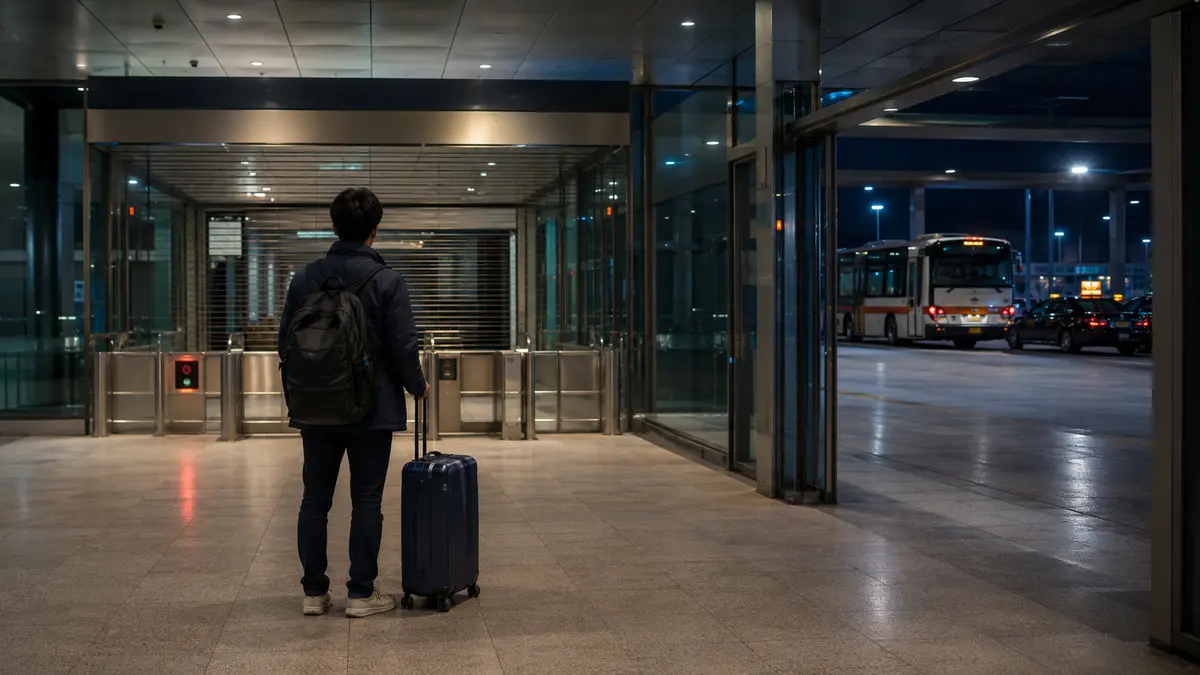
Check the saved instructions for a night entrance, intercom, lockbox or self-check-in terminal. Call the official number once from the entrance and wait in a safe, well-lit place. Do not tailgate another guest through a secure door or force access.
If staff say the booking was cancelled, ask for the reason and the exact policy applied. Contact the booking seller while evidence is fresh. A prepaid charge, transport delay or unanswered message may support a review, but none guarantees reinstatement or a refund.
If shelter is the immediate priority, book a legitimate staffed property you can reach safely and keep the receipt. Resolve the disputed booking later through the seller, insurer or card issuer using accurate records rather than a duplicate chargeback claim.
If that does not work
Use the fallback.
- If your phone cannot place a Japanese call, use the booking platform message, hotel contact form, airport or station information desk, or ask your current accommodation to call the published number. Never use an unverified number from a message.
- If the property does not reply, contact the booking seller and keep call logs and screenshots; an unanswered message does not itself amend the booking.
- If arrival moves to the next morning, ask whether the room and any later nights remain active, then get the answer in writing before skipping the first night.
- If the entrance is locked, use only the official night-access instructions or intercom and wait in a safe public place while contacting support.
- If the booking is cancelled or missing, request the policy and written status, secure safe alternative accommodation if necessary and preserve receipts for later review.
Before you need it
Save this offline.
- Booking confirmation showing lead guest, stay date, seller, payment status and rate conditions
- Property address, official phone number, last check-in time and night-entrance instructions
- Written acceptance of the revised arrival time and any access code stored securely
- Original passport for each applicable overseas visitor and the payment card or deposit method required
- Official flight or rail delay evidence and booking-seller support case number
Frequently asked questions
Late Check-In at Japanese Hotels: Midnight and No-Show Rules FAQ
Can I check in after midnight at a hotel in Japan?
Sometimes, but only the property can confirm it. Ask before the stated arrival or last check-in time and obtain the night-access instructions in writing.
Will a prepaid hotel room be held if I arrive late?
Do not assume so. Prepayment and arrival rules are separate, and a property may still apply a no-show policy or close reception. Ask the property to confirm that it will hold the room.
Does a 24-hour front desk mean I can check in at any time?
No. Staff availability, entrance hours and the contractual check-in deadline can differ. Hotel New Otani Osaka, for example, lists a 24-hour desk but asks guests arriving after midnight to notify it.
Should I contact the hotel or the booking site?
Contact both for an urgent delay. The property controls access and room holding, while the seller may control changes, cancellation and payment.
What should my late-arrival message include?
Give the exact booking name, confirmation number, original stay date, guest count, revised time in JST and a request for written confirmation that the room will be held.
What if my flight or train is delayed?
Tell the property immediately and save the operator's official delay notice. The delay can support a fee review but does not automatically change the hotel's terms or guarantee a refund.
What if I arrive the next morning?
Ask whether the first night will be treated as a no-show and whether later nights remain active. State the original stay date and the new arrival date so midnight does not create confusion.
Do I still need my passport for a late check-in?
Yes if you are a foreign national without an address in Japan. JNTO says the lodging must collect nationality and passport number and inspect and copy the passport at check-in.
What if the hotel door is locked?
Use the verified night entrance, intercom or official phone number in the property's instructions. Do not force entry or follow another guest through a secure door.
Primary evidence
Official sources used
Open these pages again before travel. External links lead to the responsible Japanese authority or transport organization.