Do this now
Follow these steps in order.
- 01
Check the venue, municipality, park, railway or other responsible manager’s official access page and current opening hours.
- 02
Read signs again at every transition from street to lane, gate, courtyard, trail, platform, garden or building interior.
- 03
Stop at explicit no-entry wording and at gates, ropes, chains, cones, fences, closed doors and staff instructions, even when the barrier is low.
- 04
Treat 私有地 or 私道 as a prompt to check the exact access rule; do not assume a mapped lane is a public shortcut.
- 05
Stay on the marked visitor route and keep out of yards, fields, crop edges, side gardens, tracks, maintenance areas and resident or staff doors.
- 06
Separate permission to enter from permission to photograph, film, livestream, use a tripod, run a commercial shoot or fly a drone.
- 07
If a manager, resident or staff member says the area is private or closed, stop, apologize and leave by the open route.
- 08
Ask staff to recover a dropped item or identify an accessible route instead of crossing a boundary yourself.
What to know
Appearance does not prove ownership or access
Paving, streetlights, a vending machine, a map label or a stream of other visitors does not prove that a route is public. A private lane can look like a city street, while public land can be closed for safety, conservation or operations.
Ownership and visitor access are different questions. A privately owned shop can welcome customers during business hours, and a publicly managed park can close a trail or facility.
Make the route decision from current signs, barriers, official access information and the responsible manager—not from how photogenic or well-used the place appears.
What to know
Learn the words that change the route
私有地, shiyūchi, means private property or privately owned land. 私道, shidō, means a private road. Do not confuse 私道 with 市道, also pronounced shidō, which means a municipal road; the first character changes the meaning.
立入禁止, tachiiri kinshi, means no entry or keep out. 関係者以外立入禁止 means authorized people only, and 無断立入禁止 means no unauthorized entry. These are boundaries, not invitations to look for a gap.
通り抜け禁止, tōrinuke kinshi, means no through passage. 撮影禁止, satsuei kinshi, means no photography or filming; it controls imaging and does not by itself explain whether ordinary entry is allowed, so read the full notice.
What to know
Traffic signs and property signs answer different questions
Japan’s official road-sign list distinguishes 通行止め, road closed, 車両進入禁止, no vehicle entry, and 歩行者通行止め, road closed to pedestrians. Read the wording and symbol rather than translating every red sign as private property.
A no-vehicle-entry sign controls vehicles and does not by itself say that pedestrians are trespassing. A local 私有地・立入禁止 or 通り抜け禁止 notice addresses property or passage instead.
If walking, cycling or driving, follow the rule for that mode and then check the property boundary separately. Permission for pedestrians does not automatically permit a bicycle, car, parking stop or photo setup.
What to know
A small barrier is still a boundary
A waist-high fence is not required. A low rope across moss, a bamboo rail, chain, cone line, planter, temporary tape, floor marking, closed half-door or staff sign can mark the end of the visitor route.
Do not step over, duck under, move or briefly open a barrier for a photo. Do not cross it to retrieve a cap, phone or bag; ask the manager or staff member for help.
If a barrier looks damaged, displaced or partly open, use the clearly marked route and ask. Its poor condition does not turn the space beyond it into a public area.
What to know
Open to visitors does not mean unrestricted property
Shops, malls, station buildings, hotels, museums, gardens, observation decks, temples and shrines can be privately owned or separately managed while welcoming visitors under stated conditions.
Opening hours, an admission ticket or a customer entrance grants access only to the current public zone and purpose. It does not open staff corridors, accommodation floors, kitchens, roofs, loading bays, side gardens or resident areas.
A door left open for ventilation or deliveries is not a public entrance. Follow visitor signs and the route staff indicate rather than continuing until somebody stops you.
What to know
Private roads and alleys need an exact route check
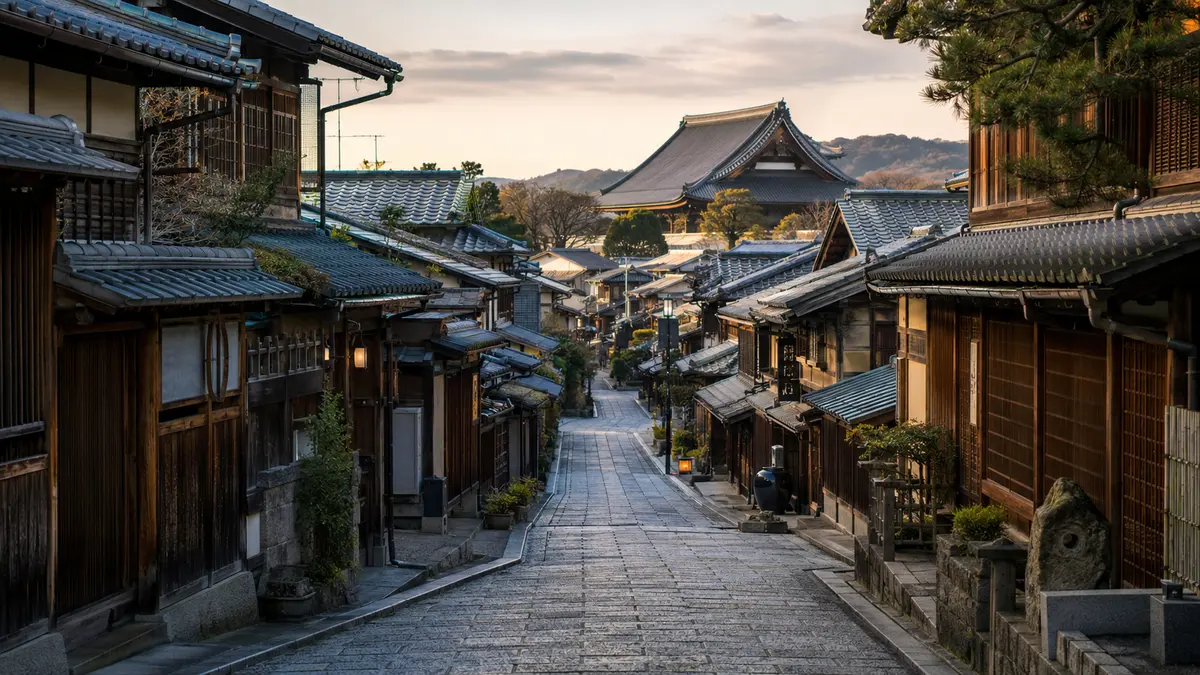
A narrow lane between homes, restaurants or machiya can be a public road, a private road open for limited passage, or a private route with no through access. Width, paving and a navigation app cannot settle that question.
A 私道 notice identifies private-road status but can be paired with different conditions. Read any no-entry, resident-only, vehicle, time or photography wording; when the permitted use is unclear, take the official visitor route or ask the manager.
A passage right that may exist for a qualifying landholder does not create a general tourist shortcut. Even on a public street, a doorway, front step, driveway, parking bay, courtyard and loading space are not automatically part of the pedestrian route.
Keep the street moving and frame the view without stepping sideways onto someone’s property. When road status truly matters, use the municipality’s road map or road office rather than guessing from the surface.
What to know
Homes, ryokan and religious places are not scenery sets
A machiya façade, house entrance, garden, parked bicycle and laundry area are part of someone’s daily life. Do not open a gate, stand on a doorstep, enter a side passage or look through a window for a more traditional image.
The Japan Tourism Agency’s official Ozu case study describes historic streets where old homes, hotels, shops and lived-in houses are mixed together, leading visitors to enter private property by mistake. Traditional architecture does not turn a neighborhood into an open-air exhibit.
At a ryokan or hotel, the lobby and booked guest areas do not make every corridor, bath, garden or event room public. At a temple or shrine, the worship route can sit beside clergy residences, offices, storehouses and closed cultural-property interiors.
Posted visitor routes and local instructions take priority over a travel blog or old photo. A ticket to one garden or hall does not grant access behind another rope or door.
What to know
Empty or abandoned-looking property stays private
An overgrown garden, dark shopfront, damaged fence, open door or apparently vacant house is not an invitation. The building can be unstable, contain hazards and remain owned or managed even when nobody appears present.
Japan’s Vacant Houses Act treats an unused building and its land as a managed property category; it does not convert an empty house into public space. Official inspection powers and owner-consent procedures for municipalities are not visitor rights.
Remain on the public route and photograph only from a lawful position where imaging is allowed. Do not enter to explore, shelter, retrieve an object or test whether the building is truly abandoned.
What to know
Rice terraces, fields and farm roads are working property
JNTO’s photography guidance specifically warns that rice terraces and farm roads can be private property. A scenic field is a workplace and crop, not an open photo studio.
Stay on the authorized viewpoint and public route. Do not step onto a field edge, irrigation bank, row, orchard, greenhouse apron or farm track, and do not move a tool, net, plant or harvest item to improve the composition.
If the official viewpoint is unclear, ask the tourism office or site manager before the visit. Do not call out across a yard or enter the field to search for the owner.
What to know
Railway and infrastructure land are hard stops
Railway tracks, trackside gravel, embankments, tunnels, maintenance stairs, signal areas and the space beyond platform or crossing barriers are not photo positions. The Railway Operation Act provides a penalty for unwarranted entry into station and other railway property, and a separate law protects Shinkansen track areas.
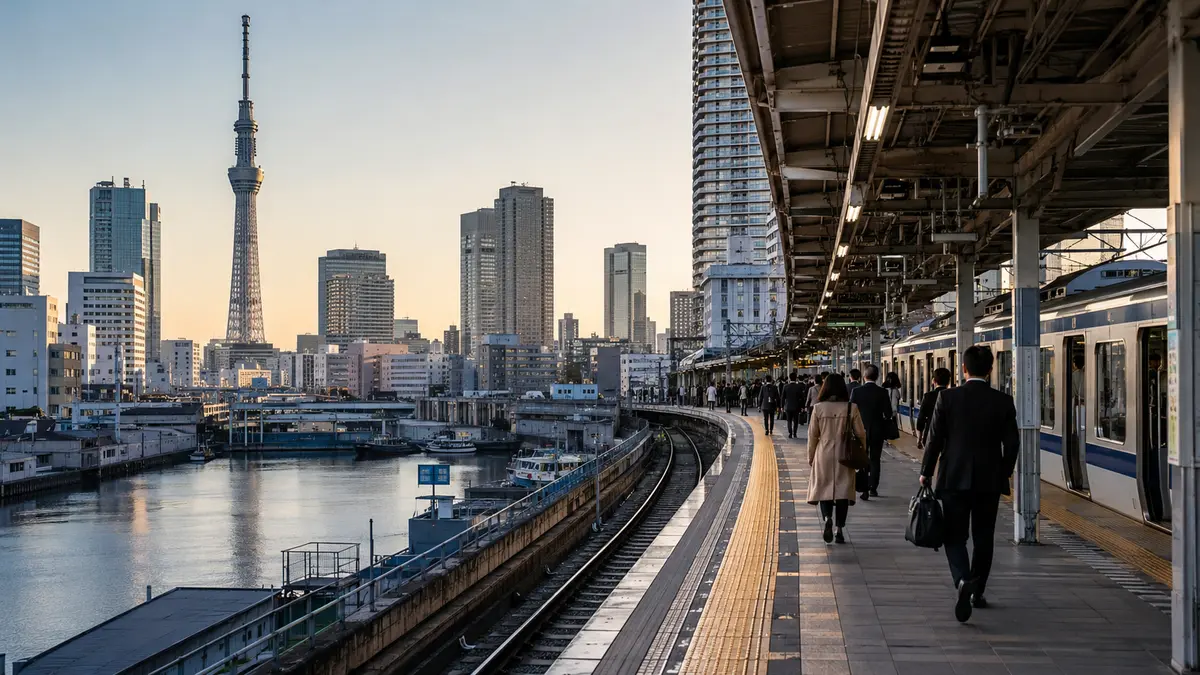
Cross only at an authorized crossing and remain behind the platform and staff boundaries. A gap in a fence, a quiet rural line or the absence of a train does not make railway land safe or open.
Use the same hard-stop approach for construction compounds, utility sites, secured wharves, cargo lanes, breakwaters, railway sidings, rooftops, flood works and disaster-control zones. If an item falls inside, tell the operator or staff rather than following it.
What to know
A waterfront can contain both open and restricted zones
A harbor or beach can combine a public promenade, park, seasonal swimming area, fishing space, private resort, working quay, secure wharf, cargo route and closed breakwater. Being able to see the water does not make every adjoining surface open.
Check the boundary for the exact activity. Permission to walk on a promenade does not automatically permit swimming, fishing, camping, fire, a vehicle, a staged shoot or a drone, and an open beach season does not open a nearby work area.
Follow port-security, fishing, lifeguard, park and municipal signs. Stay outside gates, fences, loading zones and posted no-entry areas, and use only the designated public access point.
What to know
Public land and national parks can still be closed
Japan’s national parks use a regional system that can include national, municipal and privately owned land. The words national park therefore do not prove one owner or one access rule.
A public forest, park, beach or mountain can close a trail, deck, road or zone for fire, volcanic activity, wildlife, forestry work, storm damage, vegetation recovery or seasonal management. Follow the current office notice and the physical closure.
Stay on the maintained trail and viewing deck. Do not walk around a closure through grass, shoreline, forest or a parallel social trail simply because the destination lies on public land.
What to know
Hours and temporary notices override yesterday’s route
A route can change for a ceremony, private event, maintenance, crowd control, snow, wildlife or emergency work. Check the official page on the day and read the newest notice at the entrance.
An open service gate can be for staff, residents, deliveries or event participants. A route used in an older video can now be closed, and the absence of a guard outside business hours does not extend public access.
Do not remove a temporary sign from the frame or follow somebody through a controlled door. Wait for staff or use the signed alternative.
What to know
A map pin or viral geotag is not permission
Navigation maps can show privately managed lanes, service roads or paths whose access has changed. Reviews and social posts can be stale, misplaced or created from an unauthorized viewpoint.
Use a map to reach the official entrance, then switch to the venue’s route, posted signs and staff directions. Do not assume that a line connecting two public streets is a permitted shortcut.
If reproducing a famous photo requires leaving the pavement, passing a barrier, entering a field or blocking a doorway, choose a lawful public angle instead.
What to know
Entry and photography are separate permissions
Permission to enter does not automatically permit photography, and photography permission does not automatically include video, livestreaming, tripods, lighting, models, costume shoots, commercial production or drones.
Conversely, a no-photo sign can protect an interior, artwork, ceremony or person without closing the ordinary visitor route. Follow both the access rule and the imaging rule rather than treating one as the other.
Ask again when the equipment, purpose, group size or publication plan changes. A quiet phone snapshot and a staged monetized shoot can use different venue procedures.
What to know
Ask for an accessible route instead of using a service route
A chained ramp, side gate, lift corridor or vehicle entrance may be controlled even when it looks like the easiest step-free route. Do not bypass the boundary on the assumption that it is the accessible entrance.
Ask the ticket desk, station staff or facility manager for the current step-free route and any assistance. Staff can open an authorized gate or identify an alternative that a general map does not show.
Keep companions and equipment within that route. Accessibility permission for one controlled passage does not open adjacent staff or storage areas.
What to know
If someone says the area is private, stop and leave
Stop moving farther in, lower the camera, apologize and return by the open route. Do not argue that a map showed the path, there was no English sign or another visitor entered first.
If you cannot safely retrace the route, follow the manager’s directions. For a lost item, locked exit or genuine access dispute, seek help from responsible staff, the property manager or a nearby police box rather than forcing a gate.
Do not keep recording the resident or employee during the conversation. Resolve the location first; any complaint or translation can be handled from a public place.
What to know
Legal context is not a boundary-detection shortcut
Penal Code Article 130 addresses entry without just cause into a person’s dwelling or guarded residence, building or vessel, and remaining after being required to leave. Kyoto’s official Gion guidance warns visitors that trespassing can have criminal consequences.
The Minor Offenses Act separately addresses entry without justifiable reason into another person’s field or a place where entry is prohibited. Supreme Court case law also shows that an explicit sign is not the only way non-consent can be established; the place, use, management, manager’s attitude and entrant’s purpose can matter.
That does not mean every accidental step on every privately owned road automatically becomes the same criminal offense. The exact place, conduct and facts matter, and a travel article cannot determine liability for a particular incident.
For a traveler, an explicit restriction or a manager’s request is enough reason to stop and leave. Property damage, crop damage and interference with operations can create separate consequences.
What to know
Ask about the action, not only the ownership
“Sumimasen. Kono michi wa tōremasu ka?” means, “Excuse me, may I pass along this road?” It gives a more useful answer than asking only whether the road is privately owned.
“Koko ni haitte mo ii desu ka?” asks, “May I enter here?” “Koko de shashin o totte mo ii desu ka?” separately asks, “May I take a photo here?”
A yes to passage is not a yes to stop for a shoot, and a yes to one photograph is not permission for a drone or commercial production. If the answer is uncertain, do not enter.
If that does not work
Use the fallback.
- 立入禁止, 関係者以外立入禁止 or 無断立入禁止: do not enter. 通り抜け禁止: do not continue through.
- A gate, rope, chain, cone, fence, tape, closed door or staff boundary blocks the route: do not cross it.
- The map route enters a lane, yard, field, farm road or side garden with unclear access: turn back.
- The posted hours have ended or a temporary closure is active: leave or use the signed alternative.
- The route reaches tracks, construction, utilities, a port or another operational area: stop.
- An item falls beyond a boundary: ask staff to recover it.
- A resident, employee or manager says the space is private or closed: apologize and leave.
- No responsible source can confirm access: choose another route or viewpoint.
Before you need it
Save this offline.
- 私有地 · shiyūchi = private property
- 私道 · shidō = private road; 市道 · shidō = municipal road
- 立入禁止 · tachiiri kinshi = no entry
- 関係者以外立入禁止 = authorized people only
- 無断立入禁止 = no unauthorized entry
- 通り抜け禁止 · tōrinuke kinshi = no through passage
- 撮影禁止 · satsuei kinshi = no photography or filming
- Kono michi wa tōremasu ka? = May I pass along this road?
- Koko ni haitte mo ii desu ka? = May I enter here?
Primary evidence
Official sources used
Open these pages again before travel. External links lead to the responsible Japanese authority or transport organization.