Do this now
Follow these steps in order.
- 01
Treat a geiko or maiko walking through Gion as a person going to work, not an attraction to intercept.
- 02
Do not stop, follow, touch, surround or photograph or film them without permission.
- 03
Read every no-entry and no-photography sign before entering an alley, doorway, temple, shrine, shop or venue.
- 04
Keep streets and sidewalks open; never step into traffic, walk backward or form a crowd for a shot.
- 05
Keep residents, children, customers, addresses and private interiors out of the frame.
- 06
Use an organized performance or experience when you want a reliable chance to see or photograph traditional arts.
- 07
If a resident, venue or guide objects, lower the camera, stop immediately and leave the area as directed.
What to know
In Kyoto, the usual word is geiko
Geisha is the term many international visitors know. In Kyoto’s traditional entertainment districts, the regional term is geiko, while maiko are apprentices. This guide uses geiko and maiko when describing Kyoto’s official visitor rules.
Clothing alone does not prove someone’s role. A person in kimono may be a visitor, resident, venue employee, performer, customer or someone wearing a rental outfit.
Do not inspect, quiz or photograph a stranger to decide whether they are a “real maiko.” The person’s privacy and freedom to move do not depend on your guess.
What to know
A walk to work is not a public performance
Kyoto City’s official guide says not to stop, touch, chase or take photos of geiko and maiko without permission. Southern Gionmachi’s community message also says not to follow them or take unauthorized photos or videos.
A brief sighting on Hanamikoji or another public street does not turn the person into a public exhibit. They may be traveling to an appointment on a tight schedule.
Let the person pass without calling out, stepping into the route or raising a phone toward their face. Missing the image is the correct result when consent and a safe setting are absent.
What to know
Do not interrupt someone to ask for a street portrait
Permission must be freely given, but stopping a working geiko or maiko to request it creates the very obstruction Kyoto asks visitors to avoid. Do not run ahead, wave for attention or hold a camera up while asking.
A nod to another person, a guide’s presence or someone else taking a photo is not permission for you. Silence, a polite smile or failure to object while surrounded is not a clear yes.
Ask only in a setting designed for interaction, such as an organized experience, and direct the question to the host before photographing. If the host or performer says no, put the device away without negotiation.
What to know
Do not follow for a better angle
Following someone down a street, waiting outside a doorway or repeatedly overtaking them turns a momentary sighting into pursuit. Southern Gionmachi explicitly asks visitors not to follow geiko or maiko.
Do not use zoom, burst mode or continuous video to continue the encounter from behind. Do not send a companion around the block or share a live location so a group can intercept the person.
Stay on your original route and let the distance increase. If the person turns into an alley or building, that is the end of the encounter.
What to know
Never touch clothing, hair or accessories
Do not touch a sleeve, obi, hair ornament, umbrella or bag, and never pull a hand or garment to stop someone. Southern Gionmachi identifies pulling a person’s hand or clothes as conduct that can carry a separate legal penalty.
Do not place an arm around a stranger for a selfie or direct them to pose. Traditional clothing and hairstyles can be delicate, valuable and part of someone’s professional preparation.
If your group is blocking the way, the repair is to step aside immediately—not to guide the person by touching them.
What to know
Public road does not mean public portrait
A street may be open to pedestrians while the people using it retain portrait and privacy interests. Japanese courts assess photography and publication from the full context rather than treating every public-place image as automatically permitted or prohibited.
An incidental distant person in a broad streetscape is different from making one identifiable person the subject. Reframe, wait, crop or blur unrelated faces, school emblems, name badges and house details before posting.
Kyoto’s local request is simpler and stricter for a walking geiko or maiko: do not take an unauthorized photo or video. Follow that request rather than trying to argue a minimum legal threshold on the street.
What to know
Private alleys and no-photo signs control the location
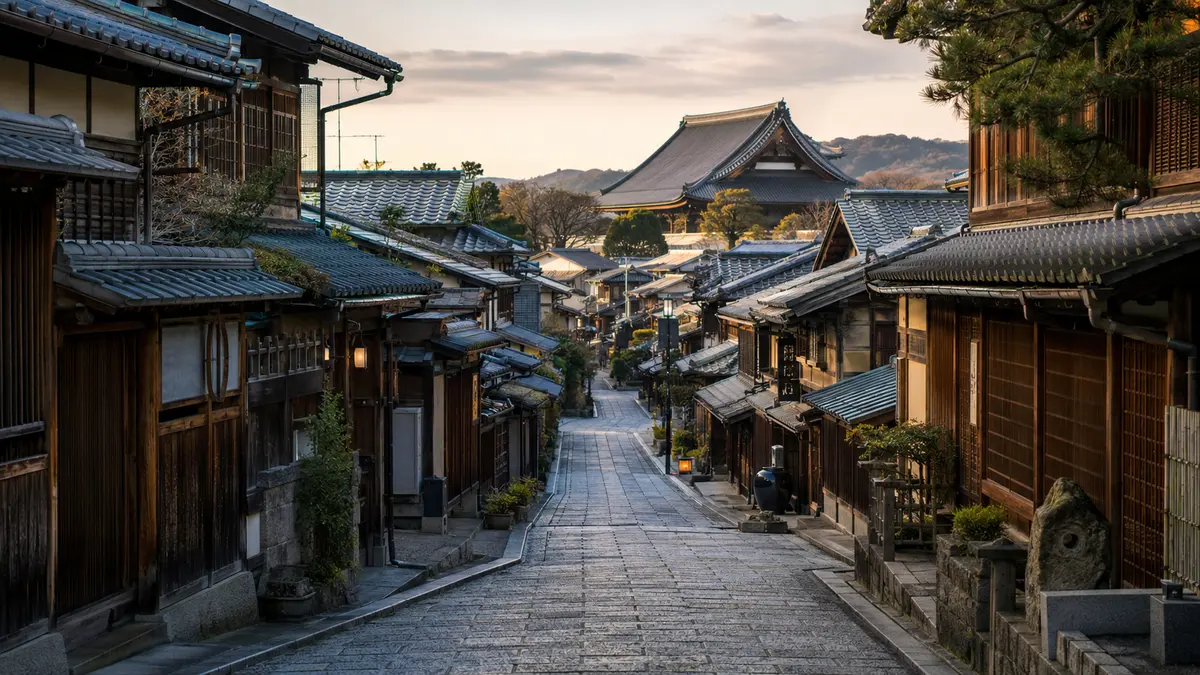
Gion contains public roads, privately managed lanes, homes, ochaya teahouses, restaurants, religious sites and businesses. A picturesque stone lane is not automatically a public photography zone.
Kyoto’s official guide says photography is prohibited in many Gion areas and in parts of temples, shrines and restaurants. Obey every no-entry, private-property and no-photography sign, rope, gate and staff instruction.
Do not step into a signed or restricted private alley for “just one photo,” shoot over a barrier or point through a doorway or window. Permission on one street or property does not carry into the next.
What to know
Do not turn a doorway into a waiting point
Waiting near an ochaya, residence, school, taxi stop or service entrance to catch arrivals can obstruct work and expose private routines. Do not stake out a doorway or repeatedly circle a block.
Keep addresses, nameplates, children, delivery labels, vehicle plates and interiors out of the frame. Kyoto’s 2026 visitor guidance notes residents’ fear about unauthorized photography of school and kindergarten children.
If a door opens, lower the camera and give the person room. Never photograph inside simply because the door is briefly open.
What to know
Keep Hanamikoji and other streets moving
Southern Gionmachi is a living district, and Hanamikoji is not a pedestrian-only photo set. The community asks visitors not to block roads or sidewalks by loitering, stopping for photos or stepping into the roadway.
Do not spread a group across the street, set up a tripod, walk backward, stop a taxi or ask traffic to wait. Keep doorways, side streets and emergency access clear.
Take an allowed streetscape from a safe stationary position only when it does not stop others. If the pavement is busy, keep walking and skip the shot.
What to know
A guide or tour does not override local rules
A walking tour can explain the culture and route, but joining one does not authorize portraits, private lanes or access to an ochaya. Ask what the tour actually includes before booking.
A guide should brief the group before entering Gion and keep it compact. Southern Gionmachi specifically asks guides to tell guests not to engage in the listed nuisance behavior.
If a tour description promises a maiko sighting on the street, do not treat that as a guaranteed photo opportunity. Prefer a provider that arranges a consensual performance or meeting.
What to know
Still photo, video and livestream all need restraint
Switching from a still image to video does not solve the consent issue. Video can record the person for longer, capture conversations and reveal a route or destination.
Do not livestream a sighting or post a real-time location. A live audience can encourage pursuit and removes the chance to check faces, children, addresses and private interiors before publication.
Do not use flash, a focus light or intrusive close-range equipment. An allowed photo at an organized venue may still have separate restrictions on video, audio, flash and commercial use.
What to know
Permission to attend is not permission to publish
A ticket to a performance, meal or cultural experience grants the service described by the organizer. It does not automatically grant photography, recording, livestreaming, advertising or a model release.
Ask the organizer what may be captured, from which seat or area, and whether personal social posting is allowed. Commercial, sponsored, press and monetized uses need an explicit route.
Keep the written rule or announcement with your booking. If the performer allows one photo at a designated time, put the camera away when that time ends.
What to know
Check the image before sharing
Permission to take a photo and permission to post it are separate decisions. Before sharing, review the subject, bystanders, audio, house details, school identifiers, tickets and live location.
Do not add a precise real-time location to a street sighting. Do not invite followers to find the person, identify a residence or speculate about a private appointment.
If the person or organizer asks you not to post, respect the request. Cropping or blurring can protect an accidental background person, but it does not convert deliberate unauthorized pursuit into acceptable conduct.
What to know
Do not invent a universal maiko photo fine
Kyoto’s official Southern Gionmachi notice says a resident report may lead to police being called. It lists possible penalties for separate conduct such as obstructing or stalking someone, pulling a hand or clothing, trespassing, property damage and traffic obstruction.
That is not one automatic citywide fine for every unauthorized shutter press. The location, conduct and applicable law or property rule matter.
Use the practical boundary instead of testing the legal minimum: no unauthorized portrait, no pursuit, no contact, no blocked route and no entry or photography where the owner prohibits it.
What to know
If someone objects, stop before explaining
Lower the device, stop recording and step away. Do not film the objection, demand proof of ownership or continue from across the street.
If you captured someone accidentally, do not publish the image. On your own device, deleting the unwanted frame is the clearest traveler response when the subject or property manager objects.
Follow a police officer’s or authorized local staff member’s directions. Resolve any later question through your tour operator, venue or official visitor-information channel, not through an argument in the lane.
What to know
Use a performance for a reliable cultural experience
Kyoto’s official guide recommends public Kyomai and other organized opportunities rather than stopping geiko or maiko in the street. Gion Corner presents Kyo-mai by maiko alongside several other traditional arts.
A theater or seasonal dance lets the performers work within a planned setting, but you must still check the current photography rule. A public performance is not automatically camera-permitted.
A reputable private cultural experience or licensed guide can explain etiquette and arrange any included photo time. Confirm exactly what the booking allows before arrival.
What to know
Use short questions with a host or property manager
“Koko wa satsuei kinshi desu ka?” asks, “Is photography prohibited here?” Use it with a host, shop or property manager—not to stop a working geiko or maiko in the street.
“Shashin o totte mo ii desu ka?” means, “May I take a photo?” Follow with “SNS ni nosete mo ii desu ka?”—“May I post it on social media?”—when an organized interaction allows you to ask.
If refused, say “Wakarimashita. Torimasen”—“Understood. I will not take a photo.” Then put the device away.
If that does not work
Use the fallback.
- A geiko or maiko walking in public: do not stop, follow, touch, photograph or film without permission.
- No clear sign or property boundary: stay on the obvious public route and skip the photo.
- A busy road or sidewalk: keep moving and leave the route clear.
- A person cannot freely consent: do not make them the subject.
- A venue allows attendance but says nothing about cameras: ask the host before raising one.
- A planned photo is important: book a performance or experience with stated photography terms.
- Any objection: lower the device, stop, move away and do not post the image.
Before you need it
Save this offline.
- Do not stop, touch, follow or take unauthorized photos or videos
- Public street is not portrait consent
- Obey no-entry, private-property and no-photography signs
- Keep roads, sidewalks, doors and alleys clear
- Koko wa satsuei kinshi desu ka? = Is photography prohibited here?
- Shashin o totte mo ii desu ka? = May I take a photo?
- SNS ni nosete mo ii desu ka? = May I post it on social media?
- Wakarimashita. Torimasen = Understood. I will not take a photo
Primary evidence
Official sources used
Open these pages again before travel. External links lead to the responsible Japanese authority or transport organization.