Do this now
Follow these steps in order.
- 01
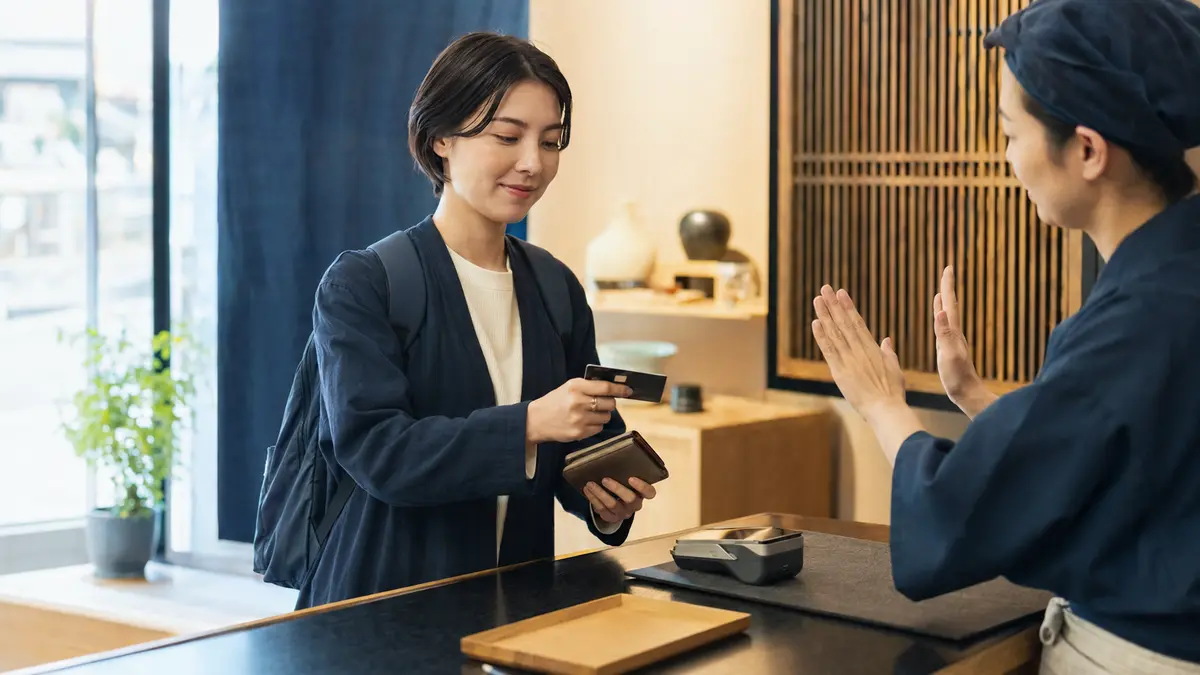
Check whether the bill is brought to the table or must be taken to the register.
- 02
Review the final total, including any clearly stated service or seating charge.
- 03
Pay that total without adding a percentage or leaving cash on the table.
- 04
Collect your receipt, card and all returned change.
- 05
Say “gochisousama deshita” when leaving if you would like to thank the staff.
- 06
Ask politely for clarification if a charge is unfamiliar instead of treating it as a tip.
What to know
The normal restaurant tip is zero
JNTO states that tipping is not customary in Japan’s bars, cafes, restaurants, taxis or hotels. GO TOKYO gives the same practical instruction: at cafes, bars and restaurants, simply pay the final amount on the bill.
There is no need to calculate 10, 15 or 20 percent. Good service does not create an unstated payment obligation, and not tipping is not a criticism of the staff.
What to know
Pay the bill shown, not a self-calculated total
The amount due may already include tax and a fixed service charge. If a restaurant discloses and adds such a charge, it is part of the bill rather than an optional gratuity.
Pay exactly through the method the restaurant provides. If the bill or menu is unclear, ask what the charge is before paying; do not subtract it because tipping is uncommon.
What to know
A seating charge or otoshi is not a tip
Many bars and izakaya apply a seating charge and serve a small dish before the ordered food. GO TOKYO identifies this as a customary feature of many establishments.
That charge belongs to the venue’s pricing system and is not money voluntarily left for an individual server. Check the menu or posted information, and ask politely if you need the charge explained.
What to know
Do not leave loose cash on the table
Because restaurant tipping is not the norm, cash left behind may be treated as forgotten property. Staff may call you back or return it rather than understand it as a reward.
Hand over payment only at the stated payment point. Take all change unless the business explicitly offers a formal gratuity option and you independently choose to use it.
What to know
The register or the table may be the payment point
GO TOKYO advises checking whether the bill is paid at the table or at the cash register. A bill folder or slip brought to the table is often meant to be carried to the register, but the restaurant’s instruction takes priority.
Keep the bill slip until payment is complete. If uncertain, show it to a staff member and ask “kaikei wa doko desu ka?”—where do I pay?
What to know
Thank the staff with words
A clear thank-you is more useful than an unexpected banknote. “Arigato gozaimasu” works anywhere; after a meal, “gochisousama deshita” expresses thanks for the food and hospitality.
You do not need perfect pronunciation or a ritual gesture. Return reusable towels or trays as directed, gather your belongings and leave the table reasonably tidy.
What to know
Private guides and interpreters are a limited exception
JNTO notes that a private guide or interpreter who often works with overseas visitors may accept a tip, although it is not expected. This is a separate service relationship, not a reason to tip restaurant staff.
If you choose to give one, JNTO recommends doing so discreetly and placing the money in an envelope. Never pressure the recipient to accept it.
What to know
When a charge looks wrong, ask for the breakdown
An unfamiliar total can come from tax presentation, a fixed service charge, a seating charge or an ordered item. Ask for the itemized bill and point to the line in question.
Keep the conversation about the specific charge. Saying that Japan has no tipping culture does not by itself invalidate a fee that the venue disclosed as part of its pricing.
If that does not work
Use the fallback.
- If staff return money you meant as a tip, accept it with thanks rather than insisting.
- If you do not know where to pay, keep the bill visible and ask a staff member before leaving.
- If a card terminal shows an unfamiliar prompt, ask the staff what it means before selecting an amount.
- If the receipt includes a service or seating charge you did not expect, request an itemized explanation.
- If a cash payment produces change, take it and count it near the register without blocking the next customer.
- If you want to recognize exceptional service, use a sincere thank-you or an official feedback channel.
Before you need it
Save this offline.
- The key rule: the normal restaurant tip is zero
- The phrase “kaikei wa doko desu ka?” for asking where to pay
- The phrase “gochisousama deshita” for thanking staff after a meal
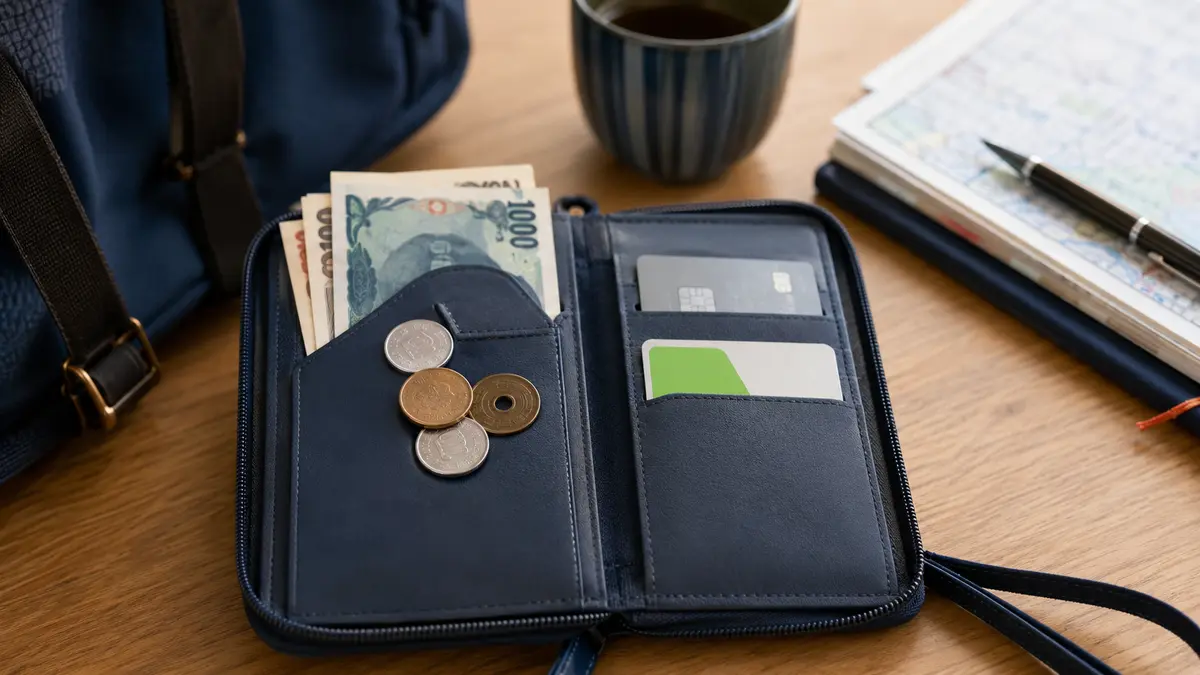
- Enough cash for businesses that do not accept your card
- A photo or copy of the menu price when a charge needs clarification
Primary evidence
Official sources used
Open these pages again before travel. External links lead to the responsible Japanese authority or transport organization.