Do this now
Follow these steps in order.
- 01
Check the entrance, menu and table for photo, video, flash and livestream notices.
- 02
When the rule is unclear, ask about your own dish before the first course or first shot.
- 03
Photograph from your seat with flash, added lighting and loud camera sounds off.
- 04
Frame only your food and table; keep diners, staff, screens, name badges and conversations out.
- 05
Do not stand in an aisle, delay service, rearrange shared dishes or place a device on a conveyor or buffet.
- 06
Ask separately before video, livestreaming, kitchen filming, social posting or any commercial use.
- 07
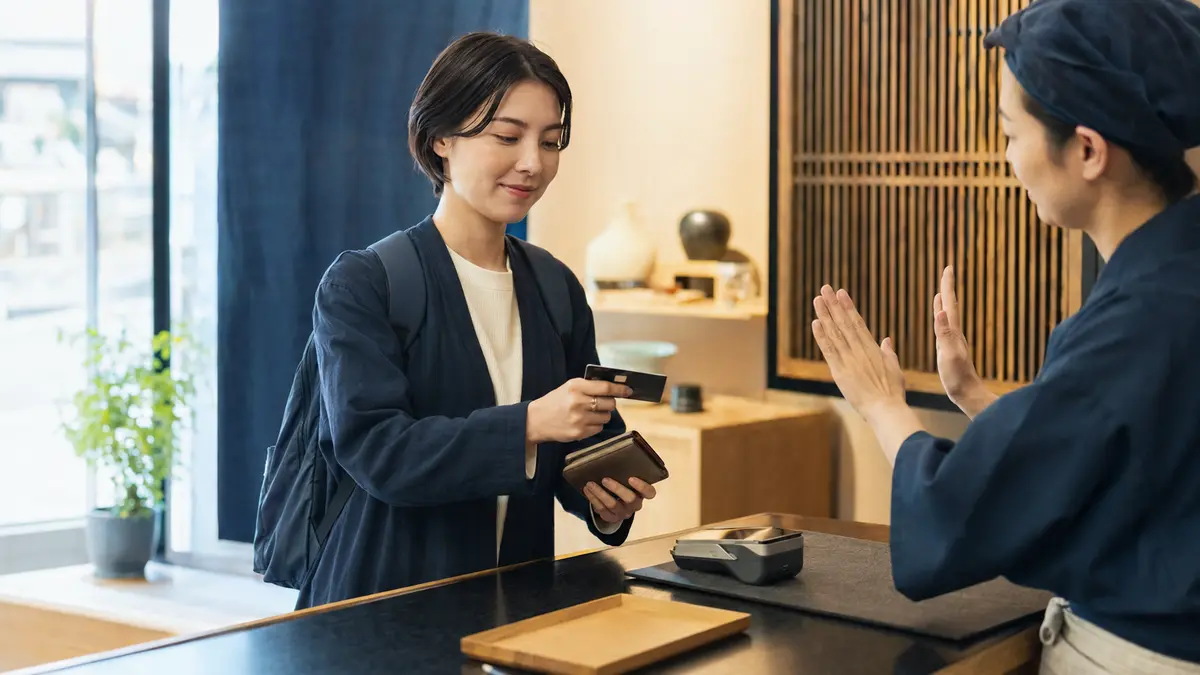
If staff object, lower the device, stop recording, apologize and follow the instruction.
What to know
A food photo is often possible, never guaranteed
JNTO’s current responsible-photography guidance says travelers can photograph sushi or ramen but should avoid surrounding diners and staff. That makes one quick dish photo a familiar visitor situation, not a national right to photograph inside every restaurant.
Current restaurant policies differ sharply. Hiday Hidaka permits ordinary photographs of food but not other subjects, while Murakami Kaishindo Restaurant asks customers to refrain from photography with cameras and smartphones. The restaurant in front of you decides which model applies.
Do not assume that casual, expensive, traditional or chain restaurants all follow one convention. Check the exact location and moment.
What to know
Ask once at the start when the rule is unclear
Look for a crossed-out camera, no-flash mark, table notice or reservation condition before shooting. If nothing answers the question, ask while the phone is down: “Ryori no shashin o totte mo ii desu ka?” means “May I take a photo of the food?”
At a counter or multi-course meal, ask before the first dish. One brief question is less disruptive than stopping the chef or server at every plate, and it lets staff explain whether certain courses, preparation steps or people must stay out.
A yes to your dish is limited to that request. It does not automatically include the dining room, another table, the kitchen, a continuous video or a public post.
What to know
Photograph your dish, not the whole room
Use a tight frame around the plate, cup or tray placed for you. Check mirrors, polished counters and windows for reflected faces, and keep another table’s food, receipt, conversation and reservation card out.
A wide interior image changes a food memory into venue photography and makes unrelated people far more likely to be identifiable. Ask the restaurant separately before photographing decor, the bar, a chef at work or the entire counter.
Imperial Hotel’s current facility policy illustrates the distinction: it asks visitors not to photograph public spaces without permission and, even when permission exists, to prevent other guests from appearing or to blur and crop them before disclosure.
What to know
Keep the shot quick, seated and flash-free
Turn off flash and any focus-assist light before opening the camera. Reduce or disable shutter sounds where the device lawfully allows it, avoid repeated bursts and do not illuminate a dark room with another phone.
Take one or two frames from your normal seat. Do not stand on a chair, lean across a stranger, block an aisle or hold a phone above a neighboring table. Kura Sushi’s current policy specifically lists shooting outside one’s seating area as conduct that can interfere with store operations.
A restaurant may set a stricter no-camera rule even when your technique would be quiet. Flash-free is courtesy, not a substitute for permission.
What to know
Food timing and service come first
A hot dish cools, noodles soften and a timed course loses its rhythm while a guest stages a shoot. Let the server finish placing and explaining the dish, take the photograph promptly and begin eating.
Do not ask staff to repeat a pour, flame, carving or presentation unless they offer. Keep your phone clear of the landing space for plates and never make a server wait with a hot or heavy tray.
At a chef’s counter, the workspace may be narrow and the intended pace precise. If photography is allowed, follow any request to shoot only after the plate is set or to skip a particular preparation.
What to know
Do not rearrange food through shared space
Do not carry a dish to another table, window, floor or doorway for better light without staff approval. Keep communal platters within your group’s service area and ask companions before moving food they are sharing.
Do not use restaurant utensils, napkins, menus or condiments as styling props if that delays other guests or makes clean items need replacement. Never touch display food or another person’s plate.
The safest composition is the dish as served, photographed briefly where it was placed.
What to know
Conveyor belts and buffets add hygiene boundaries
Never put a phone, action camera, bag or support on a sushi conveyor, delivery lane, buffet counter, sneeze guard or shared service surface. Do not pass a device over exposed food or send it around a belt.
Sushiro’s official response to a camera placed on a rotating lane emphasized both hygiene management and customer privacy and reported cleaning and disinfecting the affected store. Treat that as a clear warning about shared food systems, not a claim that every ordinary plate photo is prohibited.
At a buffet, take food to your table before photographing it. Keep the serving line moving and keep phones and camera straps away from utensils and dishes.
What to know
An open kitchen remains a workplace
Visibility does not create filming permission. Keep preparation screens, tickets, staff schedules, recipes, storage, access codes, registers and back-of-house routes out of the frame.
Torikizoku’s official filming rules prohibit capture of kitchens, registers and other shared or confidential areas and also bar information that could identify customers or staff. A chef’s visible hands plating your dish do not turn the entire workstation into a set.
Do not describe every visible technique or plate as automatically a trade secret. Japan’s statutory category requires information that is managed as secret, useful for business and not publicly known. The restaurant’s property and workplace rule can still be broader than that legal definition.
What to know
Diners and staff need a separate yes
Permission for food is not permission for people. Ask before making a chef, server, companion or diner identifiable, and keep name badges, voices and personal screens out unless both the person and the restaurant agree.
Tokyo’s official consumer guidance explains that portrait and privacy interests are assessed from the full context, including the purpose, method, place and degree of intrusion. A person working in public view does not lose those interests.
If a passerby appears incidentally at the edge, crop or blur them before posting. That is a fallback for an accidental background, not permission to target a person first and edit later.
What to know
Video and livestreaming are different requests
Video records longer, captures audio and is more likely to include people and operations. Hiday Hidaka requires head-office approval for recording intended for video sites and prohibits livestreaming regardless of content.
Kura Sushi prohibits livestreaming and live broadcasts under its current in-store photography policy. Torikizoku also prohibits live broadcasting and asks for advance contact and pre-publication review for YouTube, social video or photography outside private use.
Ask “Doga mo ii desu ka?” before video even when a still was allowed. Do not begin a live broadcast on the theory that you can remove it later; faces, conversations and restricted areas may already have been transmitted.
What to know
A private memory and a public post are not the same
A restaurant may accept a personal food snapshot but place conditions on publication. Before posting, inspect reflections, audio, receipts, reservation names, table numbers and location data, not only the plate.
Kura Sushi prohibits posts containing customers, employees or personal information and may request deletion or suspension of content it considers improper. Its policy is one operator’s rule, not an automatic nationwide takedown standard.
If the restaurant or an identifiable person agreed only to private use, keep it private. Ask “SNS ni nosete mo ii desu ka?” when public sharing was not already covered.
What to know
Commercial and monetized work needs advance approval
A sponsored post, advertisement, client assignment, press report, review production or revenue-generating video is different from a personal meal record. Contact the restaurant before arrival with the platform, crew, equipment, schedule and intended use.
Torikizoku asks customers planning YouTube, social video or photographs outside private use to contact its group in advance and may ask to review completed material. Its policy separately prohibits unapproved commercial activity.
Do not assume that a solo creator or a phone makes the project personal. If money, free goods, a brand agreement or business research is involved, disclose it and obtain the restaurant’s designated approval.
What to know
Copyright depends on what is used and how
Do not claim that every plate of food is automatically copyrighted, or that food can never involve copyright. Japan’s Copyright Act protects creative expressions that meet its definition of a work; the result depends on the material and facts.
A quick original photo of the dish served to you is different from copying the restaurant’s professional menu photograph, illustration, logo, character design, music or written description. The Government of Japan’s current copyright guide distinguishes private handling from online publication and other uses that can involve rights such as public transmission.
Store permission to take a photo does not license every promotional, merchandising or advertising use. For a commercial publication or a deliberately featured artwork or character, check the intended rights separately.
What to know
Course menus and counter seats deserve extra restraint
At omakase, kaiseki, tea service, tasting menus and small counters, the chef may serve guests in a sequence and the room may be intentionally quiet. Ask at the start and accept a rule that permits finished dishes but not preparation, people or selected courses.
Keep the device below other diners’ sightlines. Do not narrate continuously, review footage at full volume or make companions wait while you arrange every plate.
A restaurant’s official social account full of food images does not mean guests can recreate those images during service. Those photographs may have been produced in a controlled session.
What to know
Group meals need agreement inside the group too
Ask companions before photographing a shared toast, celebration plate or hands reaching into a dish. A person can decline even if the restaurant permits cameras.
Do not post a child’s face, name, school item or live location without the responsible adult’s agreement and the child’s comfort. For business dinners, assume documents, badges and conversation are off-camera.
If one person does not want to appear, take the food before people lean in, or make the frame tight enough that no identity remains.
What to know
If staff say no, stop before asking why
Lower the phone or camera, end audio and apologize. Do not record the refusal, switch to a hidden device or continue from another angle.
Ask calmly whether all photography is prohibited or only the flash, people, room, video or posting. If the answer remains no, put the device away. A rule may change with crowding, a private guest, a temporary event or the dish being served.
If staff ask you to remove a post or address an existing file, clarify what they are requesting and handle your own device. Do not imply that every employee has a general power to seize, search or erase a customer’s phone.
What to know
Leave if permission to remain is withdrawn
Taking one prohibited food photo is not automatically a distinct nationwide photography crime. It can still breach the restaurant’s conditions and lead staff to stop service or ask the guest to leave.
Japan’s Penal Code separately covers refusal to leave a managed building after a demand to depart, depending on the facts. If authorized staff withdraw permission to remain, leave promptly and contact the company later rather than escalating at the table.
What to know
Use short phrases that describe a small request
“Ryori no shashin o totte mo ii desu ka?” asks whether you may take a photo of the food. “Kono sara dake torimasu” means “I will photograph only this dish,” and “Furasshu wa tsukaimasen” means “I will not use flash.”
“Doga mo ii desu ka?” asks whether video is also allowed. “SNS ni nosete mo ii desu ka?” asks whether you may post it on social media.
If refused, say “Torimasen. Sumimasen deshita”—“I will not take it. I’m sorry.” A short, calm response protects the meal for everyone.
If that does not work
Use the fallback.
- No clear sign or staff answer means skip the shot.
- If the room is quiet or crowded, ask first and keep any permitted photo to one or two seated frames.
- If people cannot be excluded, wait, tighten the frame or put the camera away.
- If video, livestreaming, posting or commercial use was not discussed, assume it was not approved.
- Never place a device on a conveyor, buffet or shared food-service surface.
- If the dish is time-sensitive, eat it instead of delaying service for a photograph.
- When staff object, stop immediately and use the company contact route later.
Before you need it
Save this offline.
- Ryori no shashin o totte mo ii desu ka? = May I take a photo of the food?
- Kono sara dake torimasu = I will photograph only this dish
- Furasshu wa tsukaimasen = I will not use flash
- Doga mo ii desu ka? = Is video okay too?
- SNS ni nosete mo ii desu ka? = May I post it on social media?
- Torimasen. Sumimasen deshita = I will not take it. I’m sorry
- Food, room, people, video, posting and commercial use are separate checks
- No device on a conveyor, buffet or shared service surface
Primary evidence
Official sources used
Open these pages again before travel. External links lead to the responsible Japanese authority or transport organization.