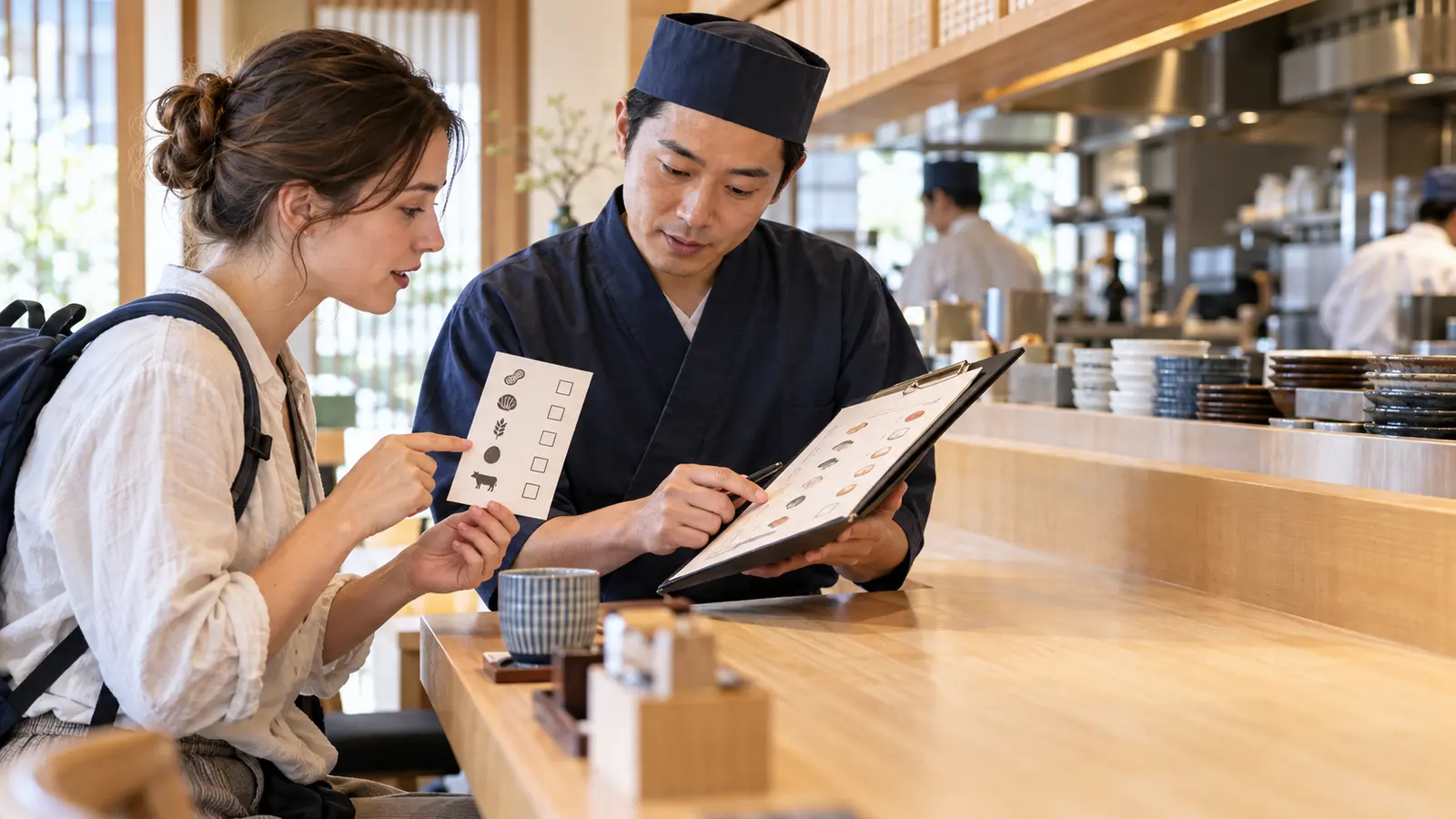

Do this now
Follow these steps in order.
- 01
List every food item before packing, including gifts, flight leftovers, homemade food and products bought at an airport or duty-free shop.
- 02
Read the full ingredient list and flag meat, meat extract, egg, dairy, fish, fresh fruit or vegetables, seeds, grains, beans, herbs, flowers, bulbs, seedlings, soil and other plant material.
- 03
Use Japan's official animal- and plant-quarantine pages to check the exact product, animal or plant, processing method and country or region of origin; a generic internet answer is not an import permit.
- 04
Do not pack a regulated item unless you have the required original government certificate and understand the arrival inspection. A shop receipt, commercial label or vacuum seal does not replace a certificate.
- 05
Keep permitted food in its original unopened packaging with a readable ingredient label, and carry every certificate where you can reach it before Customs.
- 06
Finish fruit, vegetables and other questionable airline food onboard, or leave it with the crew; do not carry it off the aircraft into Japan.
- 07
After collecting baggage, visit Animal Quarantine or Plant Quarantine before Customs, present the item and certificate, then follow the officer's decision.
- 08
Use the Customs red channel or electronic declaration route when you have restricted, dutiable or uncertain goods. Declaration does not override a prohibition or missing certificate.
What to know
Meat rules apply to ingredients, not just obvious cuts of meat
Japan's Animal Quarantine Service says most meat and animal products brought by travelers are not permitted because the required inspection certificate is difficult to obtain. The rule covers products for personal use, gifts, food bought in a shop or duty-free area, homemade food and food served on an aircraft.
The scope is wider than steaks or sausages. The official FAQ gives examples such as a meat-filled bun, gyoza, a ham sandwich, an onsen egg and food left from an in-flight meal. A small amount of meat in another food is still subject to animal quarantine. Cooking, drying, freezing, vacuum packing or commercial packaging does not create a traveler exemption.
To bring a regulated animal product, the official rule generally requires an inspection certificate issued by the exporting country's government for export to Japan, followed by inspection at Japan's Animal Quarantine counter before Customs. Some eligible products from specified countries may carry a government certificate on the package, but do not assume that an ordinary label or inspection mark qualifies. Confirm the exact product with Animal Quarantine before buying or packing it.
What to know
Fruit, vegetables and plants depend on both the item and origin
Japan's Plant Protection Station says most fruits and vegetables are prohibited from passenger baggage. Other plants—including seeds, grains, beans, cut flowers, bulbs, seedlings, herbs and some spices—may be importable only with a phytosanitary certificate issued by the exporting country's plant-protection authority and an import inspection in Japan.
The answer can change with the plant species, country or region of origin, production area and pest status. Soil and plants with soil are prohibited regardless of origin. A small quantity, a gift or food for personal consumption is not an exemption.
Use the Plant Protection Station's traveler search and import-conditions database for the exact item and origin. If the result requires a phytosanitary certificate, obtain it from the proper government authority before travel; a nursery label, shop receipt or airline declaration is not a substitute. If the result is unclear, contact the Plant Protection Station before packing.
What to know
Packaged snacks are not one legal category
A sealed or shelf-stable snack is not automatically allowed. Read the ingredients. A biscuit, instant noodle seasoning, filled pastry or ready meal can contain meat, egg or plant material that changes the quarantine rule. Marketing words such as cooked, dried, canned, retort, vacuum-sealed or souvenir do not by themselves prove eligibility.
The Plant Protection Station notes that some processed plant products no longer pose a pest risk and may not require plant inspection, but the exemption depends on the product and processing. Animal Quarantine likewise has narrow exclusions for some fully processed products, yet travelers should not infer an exclusion from appearance alone.
For an uncertain packaged food, photograph the front, ingredient list, country of manufacture and processing information and ask the relevant quarantine office before departure. If the office cannot confirm it from the available information, the low-risk choice is to leave it behind.
What to know
Cheese, fish and rice have different rules
The Animal Quarantine FAQ says dairy products such as cheese, milk, cream and butter carried in a passenger's personal baggage are not subject to animal quarantine. That does not turn every dairy-containing product into an automatic approval: meat or egg ingredients can trigger other animal-quarantine rules, and Customs or commercial-import conditions can still apply.
Dried fish products that contain no livestock meat or egg are not subject to Animal Quarantine, according to the agency. An officer may still check the ingredient list, and another law can apply to a particular species or product. Keep the original package and do not use this exception for mixed seafood-and-meat snacks.
Japan Customs lists a special rule for rice: the duty- and tax-free personal limit is 100 kilograms a year, but a traveler must first submit a Report for Import of Rice to the relevant Regional Agricultural Administration Office and present the returned copy to Customs. That is paperwork, not a blanket baggage exemption, and plant-quarantine conditions may also need checking.
What to know
Complete quarantine before the Customs channel
After immigration and baggage collection, take animal products and their certificates to Animal Quarantine and plants or plant products to Plant Quarantine. These counters are before Customs. Present the item, original certificate and packaging, and wait for the inspection result before proceeding.
A quarantine inspection and a Customs declaration answer different questions. Quarantine controls animal disease and plant pests; Customs controls prohibited and restricted goods, duty and tax. Passing one counter does not remove the need to comply with the other.
Japan Customs directs passengers with prohibited, restricted, dutiable or uncertain goods to the red channel rather than the green nothing-to-declare channel. Use the airport's current paper or electronic process, answer accurately and follow the officer's instructions.
What to know
Use the voluntary disposal route instead of concealing a mistake
If you discover prohibited meat or another animal product after landing but before inspection, do not move it into another bag, discard the label or walk through Customs. The Animal Quarantine Service says voluntary disposal boxes are available before the inspection area for travelers who accidentally carry prohibited products. You can also present the item directly to an officer.
A missing certificate normally cannot be repaired by verbally declaring that an item is safe. Plant products without the required phytosanitary certificate can be ordered destroyed, and prohibited animal products cannot be admitted simply because they are surrendered at the counter.
If you have already left the airport with an undeclared questionable item, keep it sealed, do not eat, share or mail it, and contact the nearest Animal Quarantine Service or Plant Protection Station immediately for official instructions.
What to know
Plan for strict enforcement and inspection time
Japan's agriculture ministry warns that illegal import of animal or plant products can lead to up to three years' imprisonment or a fine of up to ¥3 million for an individual; a business can face a fine of up to ¥50 million. Officers can inspect baggage and dispose of prohibited products. These are statutory maximums, not a prediction of the outcome in a particular case.
Inspection can add time after baggage claim. Do not schedule a tight onward train or domestic flight on the assumption that a certificate check will be instant. Keep the item and papers accessible instead of burying them under checked baggage.
Rules can change after an animal-disease outbreak or plant-pest finding. Recheck the official page close to departure even if you previously carried a similar product.
If that does not work
Use the fallback.
- If an ingredient list is missing or unreadable, do not guess from the product name or picture; leave the food behind or send packaging photos to the relevant quarantine office before travel.
- If a friend gives you food at the airport, recheck it as if you bought it yourself. Gift, personal-use, duty-free and small-quantity labels do not create an exemption.
- If you find prohibited animal food after landing, use an official voluntary disposal box before inspection or hand it to Animal Quarantine; never conceal it.
- If a plant item requires a phytosanitary certificate and you do not have one, do not pack it. If you discover it on arrival, present it to Plant Quarantine and be prepared for disposal.
- If an airline meal includes fresh fruit, vegetables or a meat item, finish it onboard or leave it with the crew rather than taking it into the terminal.
- If an onward connection is close, tell airport staff that you need quarantine inspection, but do not skip the counter. Use a later connection if necessary.
- If an officer refuses an item, follow the return or disposal instructions and ask for any available written record; do not argue that a shop or online post said it was allowed.
Before you need it
Save this offline.
- Front, back, ingredient list, country of manufacture and processing details for every food package
- Exact animal or plant species and country or region of origin
- Original government inspection or phytosanitary certificate when required
- Screenshot of the current official import-condition result and date checked
- Animal Quarantine Service and Plant Protection Station contact details for the arrival airport
- Customs declaration confirmation and extra time before an onward connection
Frequently asked questions
Can You Bring Food Into Japan? Meat, Fruit and Quarantine Rules FAQ
Can I bring vacuum-packed or cooked meat into Japan?
Not merely because it is cooked or vacuum-packed. Meat and products containing even a small amount of livestock meat generally need an exporting-government inspection certificate valid for Japan and Animal Quarantine inspection before Customs. Ordinary commercial packaging is not enough.
Are duty-free food and airline meals exempt?
No. Food bought duty-free, bought after airport security or served on the aircraft follows the same quarantine rules. Do not take questionable leftovers, fruit or meat off the aircraft.
Can I bring packaged snacks into Japan?
It depends on the ingredients, processing and origin. A sealed package is not an automatic exemption. Check meat, egg and plant ingredients against the official rules and keep the original label for inspection.
Can I bring cheese into Japan in my suitcase?
The Animal Quarantine Service says dairy products carried in a passenger's personal baggage are not subject to animal quarantine. Mixed foods can still be regulated because of meat or egg, and Customs or commercial-import rules can still apply.
Can I bring dried fish into Japan?
Animal Quarantine says dried fish products without livestock meat or egg are outside its scope, but an officer may inspect the ingredients and another law may apply. Keep the original packaging and verify mixed products separately.
Can I bring one apple or a small bag of fruit?
Do not assume so. Most fruits and vegetables are prohibited, and personal use or a small quantity is not an exemption. Check the exact item and origin in the Plant Protection Station database before travel.
If I declare food, does that mean Japan will allow it?
No. Declaration and inspection are required processes, not permission to override a prohibition or missing certificate. An officer can refuse or dispose of an item even when you declared it correctly.
What happens if I bring prohibited food without declaring it?
Officials may inspect baggage and dispose of the product. Japan's agriculture ministry says illegal animal- or plant-product imports can carry statutory penalties of up to three years' imprisonment or a fine of up to ¥3 million for an individual.
Primary evidence
Official sources used
Open these pages again before travel. External links lead to the responsible Japanese authority or transport organization.