Before you book
Make these decisions in order.
- 01
Ask Klook or the assigned operator for a day-by-day route with every overnight city, start time, finish time and long-distance transfer.
- 02
Get a line-item inclusion sheet covering hotels, meals, admissions, ferries, onsen, fuel, tolls, parking, insurance and overtime.
- 03
Confirm whether the selected price is per private group or per traveler, then match the vehicle to every passenger, suitcase, stroller and mobility device.
- 04
Request the legal vehicle operator’s name, licensed taxi or hire-car status, emergency contact and replacement-vehicle plan.
- 05
Compare the complete 10-day cost and pace with a rail-based or hybrid itinerary before following the paid booking link.
What to know
What Klook activity 145442 actually confirms
The public English page positions activity 145442 as a customizable ten-day private-group tour with hotel pickup and an English-speaking driver. It labels English, Hindi, Urdu and Punjabi, shows “Tokyo Station” as a location tag, and exposes one package name: “10 Day Trip.”
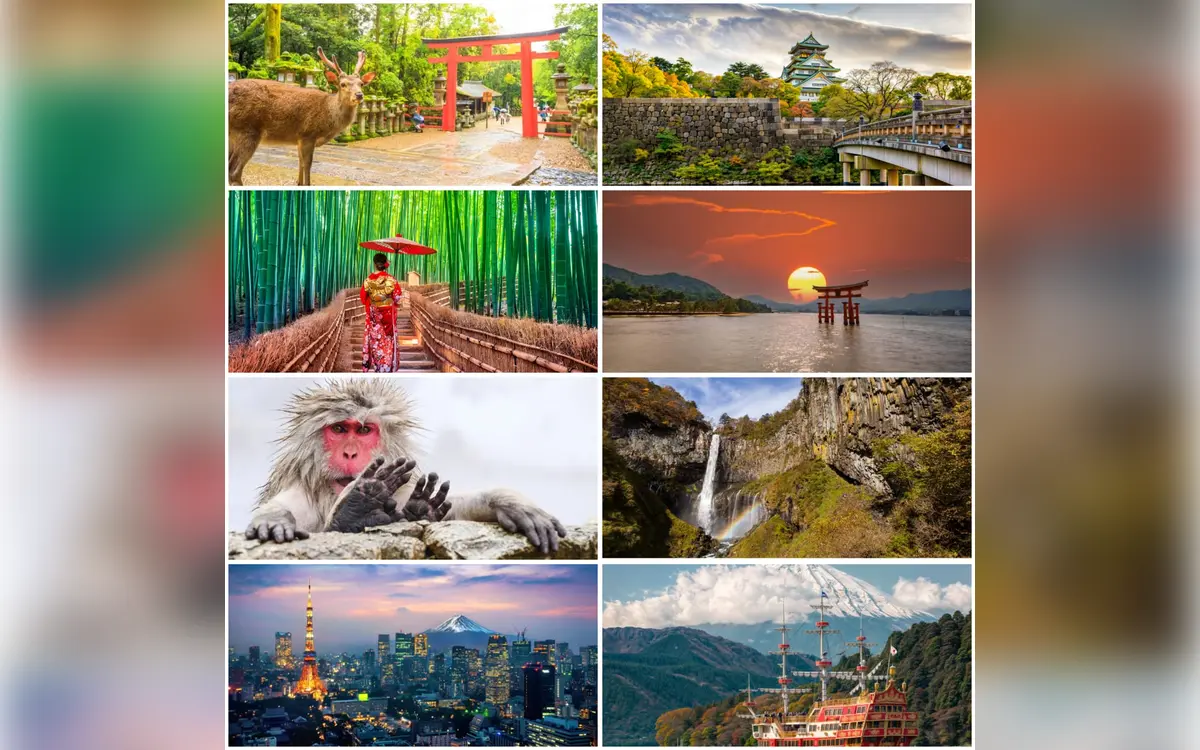
Its highlights span Tokyo’s Asakusa, Shibuya Crossing and Meiji Shrine; Lake Kawaguchi and Chureito Pagoda near Mount Fuji; Hakone hot springs and a Lake Ashi cruise; Zenko-ji and Jigokudani in Nagano; Toshogu and Kegon Falls in Nikko; Osaka Castle and Dotonbori; Todai-ji and Nara Park; Fushimi Inari and Arashiyama in Kyoto; and Hiroshima Peace Park and Miyajima.
That is an appealing route concept, not yet a complete travel contract. “Customizable” means the final order and stops can differ. The promotional collage on this page also illustrates the advertised range; it does not prove that every pictured view, seasonal condition or attraction is included on the selected date.
What to know
Why a private ten-day format can be worth considering
The strongest potential benefit is continuity. A confirmed hotel-to-hotel vehicle plan can remove repeated station navigation, reduce transfers with bags and let one group discuss rest stops and sightseeing priorities together. That can be valuable for a family, friends traveling together or first-time visitors who would otherwise avoid regional day trips.
The route also offers range: modern Tokyo, Fuji and Hakone scenery, Nagano and Nikko heritage, the Kyoto–Nara–Osaka cluster, and Hiroshima in one booking concept. Private and customizable are meaningful advantages when the operator agrees to the exact route in advance. If Klook confirms that the displayed amount covers one group, sharing the cost may improve its value; do not assume that unit until it is written on the package or voucher.
What to know
The public page does not show a usable day-by-day itinerary
Klook’s public description does not assign the destinations to specific days, state where each of the nine nights is spent, state daily pickup and finish times, or explain how the group moves between distant regions. It also does not say how much free time remains after each transfer.
Before reserving hotels, request a ten-row itinerary. Each row should name that night’s hotel city, pickup zone, planned stops, realistic time at each stop, meal window, driving or rail segment, expected arrival and fallback if weather or a closure removes an attraction.
Do not reconstruct the Klook plan from another website. Pages with the same unusual product name currently show different routes: one matching Milkyway Tours page omits Nara and places two days in Kyoto, while a Viator listing supplied by Milkyway uses a separate Tokyo–Fuji–Hakone–Nagano–Nikko–Osaka–Kyoto–Nara–Hiroshima order. Neither page changes the terms of a Klook purchase.
The matching Viator itinerary also lists Hiroshima Castle. The castle’s official site says its main tower closed on March 22, 2026; the exterior, Ninomaru buildings and other areas remain available. If a supplied itinerary still promises entry to the tower, require an updated substitute. Klook’s current public highlights instead name Peace Park and Miyajima, which is another reason to obtain the selected-date plan.
What to know
Do not read “10-day tour” as “all-inclusive vacation”
The public Klook article does not expose a complete inclusion or exclusion panel. It does not confirm hotels, meals, entrance tickets, the onsen, Hakone Ropeway, Lake Ashi cruise, Miyajima ferry, fuel, tolls, parking, bottled water, Wi-Fi, driver accommodation, travel insurance or overtime.
The similarly titled Milkyway direct page says its own private vehicle, fuel, tolls, parking and taxes are included while accommodation, meals, admission and insurance are excluded. A matching Viator product also separates accommodation, meals, attraction fees and a guide. Those are useful questions, not Klook promises.
Ask for a two-column document headed “included in activity 145442” and “paid separately.” Include taxes and service charges, then ask who buys every timed ticket. If a staff member answers only with a link to a different seller, request confirmation that the same term appears on the selected Klook package or voucher.
What to know
The price is visible, but its unit and capacity are not
Klook displayed US$5,371.19 during a July 25, 2026 check. The figure changed across Klook markets and can change with date, inventory, exchange rate or promotion. More importantly, the public selector shows “Quantity” without explaining whether one unit covers the private group, one traveler, one vehicle or another configuration.
Do not divide the headline figure among travelers until Klook confirms the unit and maximum occupancy in writing. Ask whether infants and children count toward capacity and whether a child seat reduces either passenger or luggage space.
Vehicle capacity is a practical cost condition. Request the exact vehicle class and the usable luggage plan for the whole route—not only its nominal passenger seats. List every large suitcase, cabin bag, stroller, wheelchair and camera case. Ask whether a larger vehicle, luggage forwarding or an additional vehicle creates a surcharge.
Compare the selected package
Check live packages and the total price for your date.
Use the same dates, travelers, route and included services when comparing Klook with any independently verified direct quote or seller page. Choose the better complete price, change and cancellation terms for the same itinerary.
Check the live Klook 10-day tour package↗Paid link. Commercial details checked July 25, 2026; availability and terms can change.What to know
An English-speaking driver is not automatically a private guide
Klook repeatedly says “English-speaking driver.” The public page does not promise a nationally licensed interpreter-guide, guided entry at each attraction, historical commentary, restaurant reservations, ticket purchasing or continuous interpretation away from the vehicle.
Ask whether the same person drives and explains, which of the four listed languages is available on the selected date, and whether Hindi, Urdu or Punjabi applies to the driver or another support channel. Then define whether the person walks through temples and museums, waits at the vehicle, or only helps with transport.
A driver-led tour can still remove much of the station and transfer stress. It is simply a different product from ten days with a dedicated specialist guide. Travelers seeking deeper history or complex dietary support may need local guides or reserved assistance on selected days.
Creators should not assume that “customizable” includes sunrise or sunset timing, retakes, tripod use, commercial-filming permission, charging or time to upload footage. Reduce the number of stops in writing, reserve the required light and setup window, confirm equipment and luggage capacity, and obtain each location’s permission separately. A maximum-attractions pace is a weak fit for a production day without those changes.
What to know
The hotel plan controls whether the route works
A hotel-pickup badge does not identify the accepted area. “Tokyo Station” appears as a page location tag, but it is not enough evidence of a fixed meeting point. The Klook public page does not define airport or port pickup, the daily hotel radius, the final drop-off city, or what happens if the first flight arrives late.
Confirm the exact first pickup and final drop-off before buying any flight or room. Ask for the required hotel city for all nine nights and whether each property needs vehicle access. Also ask whether the driver transports the bags on hotel-change days and whether the vehicle and driver stay with the group across the entire country.
Avoid placing a full Tokyo sightseeing day immediately after a long international arrival unless the operator approves a later start or the group arrives the previous day. Jet lag, immigration, baggage collection and a delayed flight can consume the buffer, while the public cancellation terms do not explain an arrival-day failure.
What to know
Private transport does not remove the cross-country travel load
The marketed route adds Fuji, Hakone, Nagano, Nikko and Hiroshima to the classic Tokyo–Kyoto–Osaka corridor. JNTO’s current planning guidance says around ten days to two weeks can cover the Tokyo–Kyoto–Osaka Golden Route comfortably without constant travel. Adding six more regions creates a deliberately faster sampler.
Ask for the longest door-to-door transfer and the seated hours on every day. For context only, JR Central’s published benchmark—labelled accurate as of its March 2023 timetable revision—is a fastest Tokyo–Shin-Osaka time of 2 hours 21 minutes. That train is not stated as included in activity 145442, but it is a useful benchmark when comparing a road-only plan with a rail-based alternative.
Clarify whether the group and bags travel by road all the way west, whether any train ticket or self-transfer is required, and whether a transfer day still contains sightseeing. A private vehicle reduces navigation and handling, not distance, traffic, fatigue or the need for driver breaks.
What to know
Fuji, Hakone and the snow monkeys need fallback plans
Mount Fuji visibility depends on weather, season and time of day. Treat Lake Kawaguchi and Chureito Pagoda as worthwhile places rather than a guaranteed clear mountain view. Ask which indoor or cultural stops replace viewpoints when clouds or road restrictions remove the expected scene.
Hakone Ropeway, the Lake Ashi cruise and local transport can change or suspend service. Check Hakone’s official live transport page on the day and ask whether a replacement attraction, ticket refund or route change applies when an advertised ride does not operate.
Jigokudani is not a drive-up animal display. Its official access page describes about a 30–35-minute walk from the main approaches on unpaved, uneven ground with steps and says wheelchairs and carts cannot use either approach. The monkeys are wild, may not appear on some days and do not bathe continuously or year-round. A written alternative is essential for limited-mobility travelers and useful in every season.
What to know
Families, older travelers and wheelchair users need stop-level answers
Door-to-door transport can be valuable for a multigenerational group, but the public Klook page does not disclose child-seat availability, stroller storage, wheelchair compatibility, step-free substitutions, toilet breaks or daily walking distance.
Do not accept “accessible vehicle” as proof that the itinerary is accessible. Jigokudani’s own restrictions are one clear counterexample, and shrines, garden paths, viewpoints and crowded districts each require a separate check. Send the operator the device dimensions and transfer needs, then request a revised route in writing.
Families should also define maximum uninterrupted vehicle time, meal timing, nap or rest breaks and the number of hotel changes. A customizable tour is valuable only if those changes are agreed before the cancellation deadline and do not trigger unquoted distance or overtime charges.
What to know
Verify the licensed vehicle operator and emergency chain
Japan’s Ministry of Land, Infrastructure, Transport and Tourism tells travelers to use properly licensed taxis and hired cars. It warns that paid passenger transport without the required permission or registration can lack normal driver health checks and vehicle safety inspection oversight.
This is a standard due-diligence question, not an allegation about the listed product. Ask Klook for the operating company’s legal name, phone number, licensed taxi or hire-car status, commercial insurance, vehicle plate arrangement and the name of the party responsible for all ten days.
Also request the 24-hour emergency number, breakdown and replacement-vehicle procedure, bad-weather decision maker and plan for a sick driver. A marketplace confirmation email is not the operational contact the group will need beside the road or after a missed hotel pickup.
What to know
Instant confirmation is not itinerary confirmation
Klook’s help center defines “Instant confirmation” as receiving a confirmation email or voucher within five minutes of payment. Where that badge is shown for this product, it confirms booking processing—not the missing hotels, route, vehicle, guide scope or inclusions.
The public activity page did not expose a product-specific cancellation deadline during this review. Do not import the 24-hour rule displayed by a similarly titled Viator product. Open the selected-date package and read the Klook cancellation panel, voucher and local-time cutoff before payment.
Ask how voluntary changes, partial cancellation, visa refusal, flight delay, severe weather, closed attractions and an operator substitution are treated. Save the answers inside Klook chat or email and screenshot the selected package, total and policy. A promise made after the nonrefundable deadline is too late to guide the booking decision.
What to know
Compare the complete cost with a rail or hybrid itinerary
After Klook confirms the exclusions, add any separately booked hotel nights, meals, admissions and activities, airport or onward transport, luggage handling, insurance, overtime and any excluded fuel, tolls or parking. Do not calculate a per-person result until the Klook price unit and group capacity are confirmed.
Then compare two alternatives. A rail itinerary offers fast city-to-city travel, independently chosen hotels and more free time. A hybrid plan uses trains between Tokyo, Kansai and Hiroshima, with private day tours only for Fuji, Hakone, Nikko or another difficult day. JNTO also describes luggage delivery and storage options that can reduce handling without keeping one vehicle for ten days.
The Klook product can win for a compatible group that values door-to-door continuity more than depth and is willing to fund any components confirmed as separate. Rail or hybrid planning is usually stronger for one or two travelers, people who want several nights in each city, and anyone unwilling to commit to an unresolved cross-country vehicle plan.
What to know
Send these questions before following the checkout flow
Ask for one written reply that names activity 145442, the selected date and the package. If any answer says “depends,” request the decision deadline, possible range and who pays the difference. Do not rely on a screenshot from a different marketplace.
- Is the live price for one private group, one person or one vehicle, and what is the maximum number of travelers?
- What exact vehicle will carry our stated passengers, suitcases and mobility equipment?
- What are the day-by-day route, overnight city, pickup, finish and longest transfer?
- Are all nine hotel nights excluded, and which hotel zones qualify for daily pickup?
- Are fuel, tolls, parking, driver lodging, Wi-Fi, water and overtime included?
- Which admissions, cruise, ropeway, ferry, onsen, meals and reservations are excluded?
- Is the English-speaking person a driver only, or will a guide enter attractions with us?
- What substitutions apply to clouded Fuji views, transport suspension, closures or absent monkeys?
- What are the child-seat, accessibility, step-free and rest-break arrangements?
- What are the first pickup, final drop-off, airport or port limits and flight-delay policy?
- Who is the licensed vehicle operator, and what are the emergency and replacement-vehicle contacts?
- What exact Klook cancellation, amendment and refund deadlines apply to our selected date?
A good fit
Put it on your list if...
- Private groups prioritizing door-to-door convenience and a large number of regions
- First-time visitors who dislike station navigation and accept a fast sampler pace
- Families or multigenerational groups whose vehicle, seating, luggage and rest needs are confirmed
- Travelers willing to book any excluded hotels and extras after receiving a final overnight plan
Think twice
Skip or reconsider if...
- Anyone assuming one price includes flights, nine hotel nights, food and every admission without written confirmation
- Slow travelers who want several unscheduled days in Tokyo, Kyoto or Hiroshima
- Wheelchair users unless Jigokudani and every inaccessible stop are replaced in writing
- Travelers who require a dedicated licensed guide rather than an English-speaking driver
- Creators needing sunrise, sunset, retakes or commercial filming time without a reduced written route
- Anyone unwilling to resolve the price unit, operator, itinerary and cancellation policy before payment
Booking option
Check the current tour terms before paying.
The link opens Klook’s English activity 145442 page with USD selected. Treat checkout as the final comparison step only after Klook or the assigned operator answers the itinerary, unit, inclusions, capacity, transport and cancellation questions in writing.
- The public selector shows one option named “10 Day Trip,” but does not explain its quantity unit or group capacity.
- The displayed USD total and promotion can change by market, selected date, inventory and currency.
- The public listing says private group, hotel pickup and English-speaking driver; it does not publish a complete guide scope.
- Hotels, meals, admissions, tolls, fuel, parking, vehicle type and capacity, luggage and airport or final drop-off require package-specific confirmation.
- The Tokyo Station label should not be treated as the meeting point without the final voucher.
- Use only the cancellation and refund terms shown for the selected Klook package—not a similarly titled listing elsewhere.
Evidence and commercial terms
Sources checked
Government, destination and transport pages establish safety, access and current operating facts. Booking-service and seller pages are commercial sources whose terms apply only to their own channel. Open the relevant sources again before travel.