Before you book
Make these decisions in order.
- 01
Open the official course timetable and service notices on the morning of travel; traffic restrictions can skip stops or cancel a departure.
- 02
Start early, choose one main route and limit yourself to one or two substantial hop-offs.
- 03
Keep the Klook voucher, charged phone, mobile data and wired earphones available when you board.
- 04
Carry lidded water, dress for an exposed upper deck and store suitcases elsewhere before starting.
What to know
Why the bus can show you a Tokyo the subway cannot
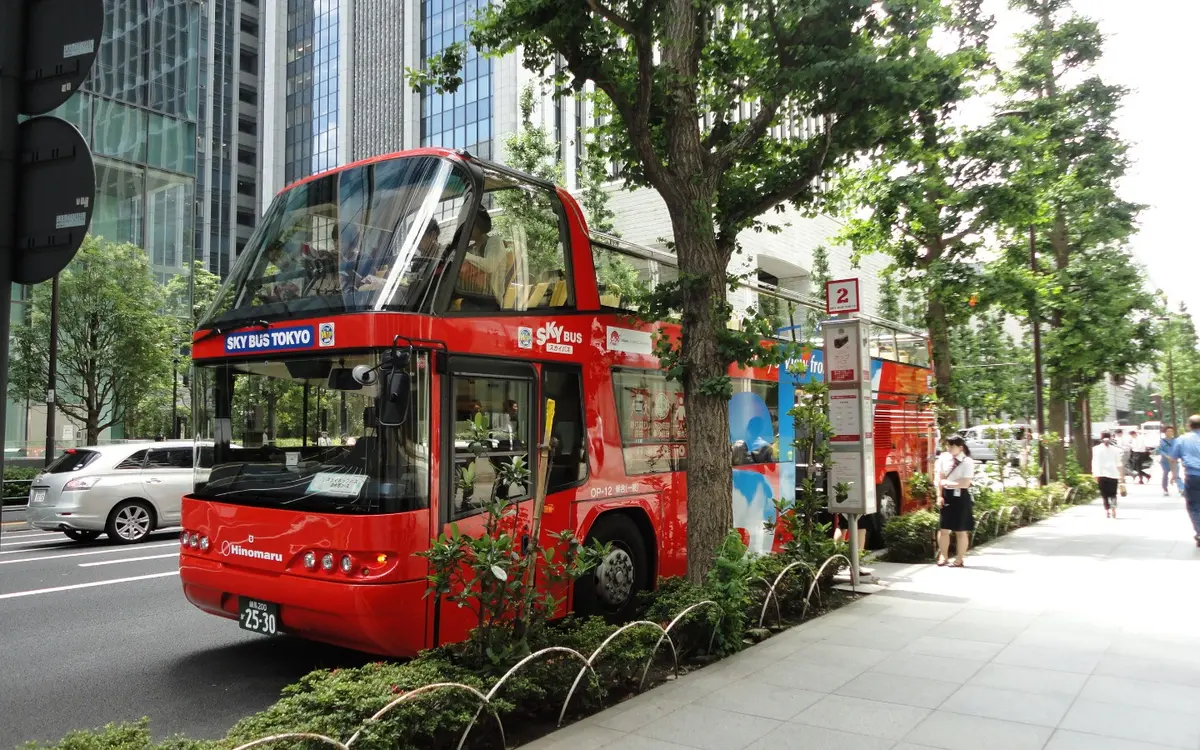
Tokyo’s rail system is faster, but most of the journey happens underground or behind station walls. An open-top double-decker turns the movement itself into sightseeing: elevated views reveal street scale, architecture, bridges and how districts connect.
The current network covers eastern Tokyo and Asakusa, Tokyo Tower and the bay, and western centers such as Shinjuku and Shibuya. You may transfer between all three routes during the pass period, so the bus can provide a useful geographic overview early in a trip.
That does not make it an unlimited replacement for JR and the subway. Departures are less frequent, traffic creates delays and a full bus can leave you waiting. Buy it for the view and simple sightseeing sequence, not for a time-critical cross-city appointment.
What to know
The 90-day Klook validity is not 90 days of bus travel
Klook currently labels the 1-day and 2-day bus vouchers as valid for 90 days from booking confirmation. That is the unused voucher’s redemption window. It does not mean you can hop on buses over a 90-day period.
After first use, the ordinary 1-day ticket is valid only until the final service on that calendar day. The official operator explicitly says it is not a 24-hour ticket. Starting at 15:00 does not extend it to 15:00 the next day.
The 2-day ticket covers the first boarding day and the immediately following calendar day. It is not a rolling 48-hour ticket. Start early on day one if you want the full value of either pass.
What to know
Choose one day for an overview and two days for real hop-offs
A 1-day pass works when you primarily want to ride a loop, photograph the city from above and make one or two planned stops. Trying to tour three large attractions and complete every route will turn the day into waiting for buses.
A 2-day pass makes more sense when your desired places fall on different routes or you want time inside Tokyo Skytree, Senso-ji, Shinjuku Gyoen, Tokyo Tower or Odaiba facilities. The second day is consecutive, so do not buy it for two separated sightseeing dates.
As checked on July 25, 2026, the operator’s direct prices are ¥4,800 adult and ¥2,400 child for one day, or ¥7,000 adult and ¥3,500 child for two days. Klook prices in USD change, so compare its final total and cancellation flexibility with the live official price rather than an old sale badge.
What to know
The three current routes serve different travel decisions
The Red Route is the eastern-city option. Its current stops connect Marunouchi with Kodenmacho, Ryogoku, Tokyo Skytree, two Asakusa stops, Ueno, Ueno Matsuzakaya, Akihabara and Shin-Nihonbashi. It is the strongest route for a first visit centered on Senso-ji, Skytree, traditional downtown and anime or electronics.
The Blue Route links Marunouchi, Tokyo Tower, Tokyo Prince Hotel and Zojo-ji, Fuji Television, Tokyo Teleport, and Tsukiji and Ginza. Choose it for the contrast between an older landmark, the bay and central shopping or food districts.
The Green Route links Marunouchi, Shinjuku-gyoemmae, Shinjuku Station South Exit, the Shinjuku Mitsui Building, Shibuya City Hall and Tokyo Tower. It offers street-level context for Tokyo’s western commercial districts, but the Shibuya stop is not directly on the Scramble Crossing.
What to know
Use the official live course page, not a copied static itinerary
Klook’s general itinerary text still contains an old Blue-route landmark reference to VenusFort. The current official route instead lists Fuji Television and Tokyo Teleport. Static summaries and brochures can lag behind the actual operating map.
The operator regularly posts detours and temporary stop suspensions for parades, road works, races and major events. A detour can also disable audio commentary on the affected segment, and traffic can move actual arrival times away from the printed table.
Open the official course page and news page on the travel morning. Save the map for each boarding stop and check the final service from the stop where you plan to reboard—not only the first departure from Marunouchi.
What to know
July 25, 2026 has a Red Route fireworks disruption
For Saturday, July 25, 2026 only, the operator says Red Route service 12—the final bus scheduled to leave the Mitsubishi Building at 16:30—is suspended because of Sumida River Fireworks Festival traffic restrictions.
The same official notice warns that congestion around Asakusa may significantly disrupt the timetable from around July 19. Travelers riding today should use an earlier Red service and avoid relying on the bus as their only return from Asakusa.
This is a date-specific alert checked July 25, 2026. For later dates, use the current service-news page rather than assuming either the suspension or the normal timetable still applies.
What to know
Instant confirmation does not reserve a bus seat
All Sky Hop seats are unreserved. Passengers cannot stand, so staff may ask you to wait for the next scheduled bus when a vehicle is full. A valid Klook voucher guarantees the ticket product, not space on your preferred departure.
This matters most after hopping off. A popular stop can have more waiting passengers than available seats, and the next bus may also be affected by traffic. Keep a rail alternative and do not plan a fixed attraction entry immediately after a hoped-for bus.
Seat belts must remain fastened while moving, and passengers may not switch seats in transit. You cannot reserve an upper-deck position or a specific side of the bus.
What to know
You can redeem the Klook voucher beyond Marunouchi
Klook currently says its mobile voucher can be exchanged at the Skybus Ticket Center on the first floor of the Marunouchi Mitsubishi Building or with the driver or staff at a route stop. The Marunouchi counter is currently listed as 9:30–18:00, while onboard exchange remains possible outside those counter hours.
A boarding-stop redemption can save an unnecessary trip to Tokyo Station, but only if a bus arrives with space and staff can process the voucher. Keep the phone charged, stay logged in and save the voucher for offline access where possible.
The operator’s standard online ticket and the Klook reseller voucher have different cancellation and support channels. Contact Klook for a Klook purchase rather than assuming the Marunouchi counter can change the reseller booking.
What to know
English audio is supported; prepare your own backup setup
The operator’s established onboard audio supports English, Japanese, Chinese, Korean, Spanish, French and German. Its current site says passengers may use wired headphones or receive a free pair when boarding.
Klook also advertises a newer phone or tablet system in ten languages, adding Thai, Vietnamese and Indonesian. It requires your own device and earphones and may use mobile data. The operator’s main information does not establish that this newer system is available on every vehicle.
For a reliable English experience, bring a charged phone, wired earphones and working data, while treating the standard English earphone guide as the baseline. The onboard Japanese attendant is not a live English tour guide.
What to know
Open-top means direct summer sun, winter wind and ordinary rain
Most services use an exposed upper deck. Some vehicles have covered or air-conditioned sections, but the operator assigns vehicle type for operational reasons and does not let passengers choose one.
Ordinary rain normally means the bus continues and ponchos are distributed. Umbrellas are unsafe on the open deck. Lightning, heavy rain or other dangerous conditions can cause a temporary suspension, a switch to limited covered seating or cancellation.
Klook specifically warns that some sightseeing buses do not have air conditioning. In summer, bring a hat, sunscreen and a lidded bottle, take breaks and do not rely on the moving air to prevent heat illness. In winter, wind at upper-deck speed makes a warm layer, gloves and wind protection important.
What to know
Do not bring a suitcase without written confirmation
The operator’s ticket page says large luggage and strollers can be placed in the trunk only while the bus is moving. Its FAQ, however, says luggage cannot be accepted because space is limited. Those official statements conflict.
The safe plan is to use a hotel, station locker or delivery service and ride with a day bag. The bus is not airport transport, and you cannot leave luggage onboard while you hop off.
Ask the operator before bringing a folded stroller, large case or other bulky item. Even when a trunk is available on one vehicle, the next bus may be a different type.
What to know
Wheelchair access depends on a vehicle you cannot choose
The operator’s Half-Open bus has a ramp that can allow a wheelchair user to board the lower deck. Other fleet types do not have the same published feature, and Sky Hop says it cannot arrange a chosen bus type because assignments change.
Do not treat the entire service as reliably step-free. Contact the operator with the date, route, chair dimensions, transfer ability and companion needs before paying. A lower-deck accessible position also provides a different experience from the open upper deck.
The official FAQ lists a possible 10% disability discount for a certificate holder and one caregiver, but it does not clearly promise that every foreign document qualifies. Confirm eligibility and compare the direct purchase with Klook before relying on the discount.
What to know
Child fares and lap seating follow age and seat use
The operator says children under six may ride free only when sitting on a guardian’s lap. A separate seat requires a child ticket. Child pricing applies from ages 6–12, while Klook says ages 13 and over pay the adult rate.
A free lap child does not create extra space on a crowded bus, and upper-deck stairs, weather exposure and long waits still matter. Families should bring only a manageable stroller and confirm storage rather than assuming it will always fit.
Select the exact Klook age category shown at checkout and carry any requested age evidence. The operator’s general family rule does not override a reseller package condition.
What to know
There is no restroom, meal service or guaranteed connection
Sky Hop buses do not have restrooms. Official stop intervals can range widely, and traffic can lengthen the ride, so use facilities before boarding a long segment.
Lidded soft drinks are permitted, but eating and alcohol are prohibited onboard. Carry water for heat safety and plan meals during a hop-off rather than on the bus.
Because traffic and full capacity affect boarding, use Tokyo Metro or JR for a timed restaurant, show, airport train or reserved observation-deck slot. The bus should enhance a sightseeing day, not control a deadline you cannot miss.
What to know
Cancellation depends on whether the voucher has been redeemed
Klook’s 1-day package currently presents free cancellation as available before redemption while the voucher remains within its 90-day validity. Recheck the selected package, because the bus-and-sumo bundle and other combinations have different date and cancellation structures.
Once a pass is redeemed or used, do not assume rain, a full bus, a detour or a missed service creates a full refund. The operator may suspend dangerous-weather operations, and handling depends on usage status and the seller that issued the ticket.
Save Klook’s final condition before payment. If the weather forecast is poor and the voucher is still unused, make a cancellation decision before redeeming instead of exchanging it speculatively at the first stop.
What to know
A realistic route plan creates more value than chasing every line
For eastern Tokyo, ride Red from Marunouchi and choose either a substantial Asakusa visit or a timed Skytree visit as the main hop-off. Add Ueno or Akihabara only after checking the remaining departures.
For the bay, use Blue and choose one anchor—Tokyo Tower, Odaiba or Tsukiji and Ginza—rather than trying to enter every attraction. For western Tokyo, Green works as an overview of Shinjuku and Shibuya, with rail available when you need a faster return.
The best-value buyer starts early, likes the open-air city view and has a simple fallback plan. A late starter, suitcase carrier or traveler with several reservations will usually get more reliable value from an IC card and normal trains.
A good fit
Put it on your list if...
- First-time visitors who want a panoramic orientation to Tokyo
- Travelers grouping one or two attractions along a single route
- Visitors who prefer fewer station transfers and can tolerate traffic
- Photographers who value an elevated street view more than a fixed schedule
Think twice
Skip or reconsider if...
- Travelers using the bus to reach a hard-timed reservation or airport connection
- Anyone requiring a guaranteed seat, covered deck, air conditioning or wheelchair-ready vehicle
- Visitors carrying large luggage without advance confirmation
- Late starters expecting a 1-day pass to remain valid for 24 hours
Booking option
Check the current ticket before paying.
The link opens Klook’s English page with USD selected. Treat its 90-day voucher validity as the redemption window, then compare the selected pass, cancellation rule and live operator timetable.
- A 1-day pass ends with the last service on the first-use calendar day; it is not valid for 24 hours.
- A 2-day pass covers two consecutive calendar days; it is not valid for 48 rolling hours.
- Seats are unreserved and a full bus requires waiting for a later service.
- Check route notices, weather and the final service before redeeming.
Evidence and commercial terms
Sources checked
Government and operator or venue pages establish rules and practical details. Booking-service pages are commercial sources for the package and checkout terms only. Open the relevant sources again before travel.