Do this now
Follow these steps in order.
- 01
Install Safety tips, enable notifications and save the JMA multilingual earthquake page.
- 02
At each hotel, locate the stairs, emergency exit and assembly instructions before sleeping.
- 03
Carry a charged phone, compact power bank, medication, water and shoes suitable for broken glass or a long wait.
- 04
Agree on a meeting point, an overseas contact and the exact wording of a short emergency status message.
What to know
Build a small travel-ready kit
Keep your passport or copy, medication, charging cable, power bank, some cash, water and a light layer together. The goal is not a large disaster stockpile; it is to remain safe and identifiable if you must wait away from your luggage.
What to know
Check the room before the first night
Confirm the nearest stairwell and an alternative exit, keep the floor path clear and place shoes and a light where you can reach them. Do not block the door with luggage. Ask reception where guests should assemble and what announcement language is available.
What to know
Make the itinerary hazard-aware
For beaches, islands, ports and coastal rail routes, identify high ground and tsunami signs. For mountain roads and hiking areas, consider landslide and rockfall routes. This does not require cancelling the activity; it gives you a first direction if shaking occurs.
What to know
Plan for separation
Choose one meeting point near the hotel and one backup outside the immediate block. Decide which overseas contact will relay updates. Children and other companions should carry the hotel name, address and a contact number even when phones are available.
If that does not work
Use the fallback.
- If an accommodation cannot explain its evacuation route, identify the marked stairs and ask again at a staffed time.
- If a companion does not have mobile data, share the offline plan and hotel card before separating.
- If travel changes after an earthquake, prioritize a verified safe place over preserving every reservation.
Before you need it
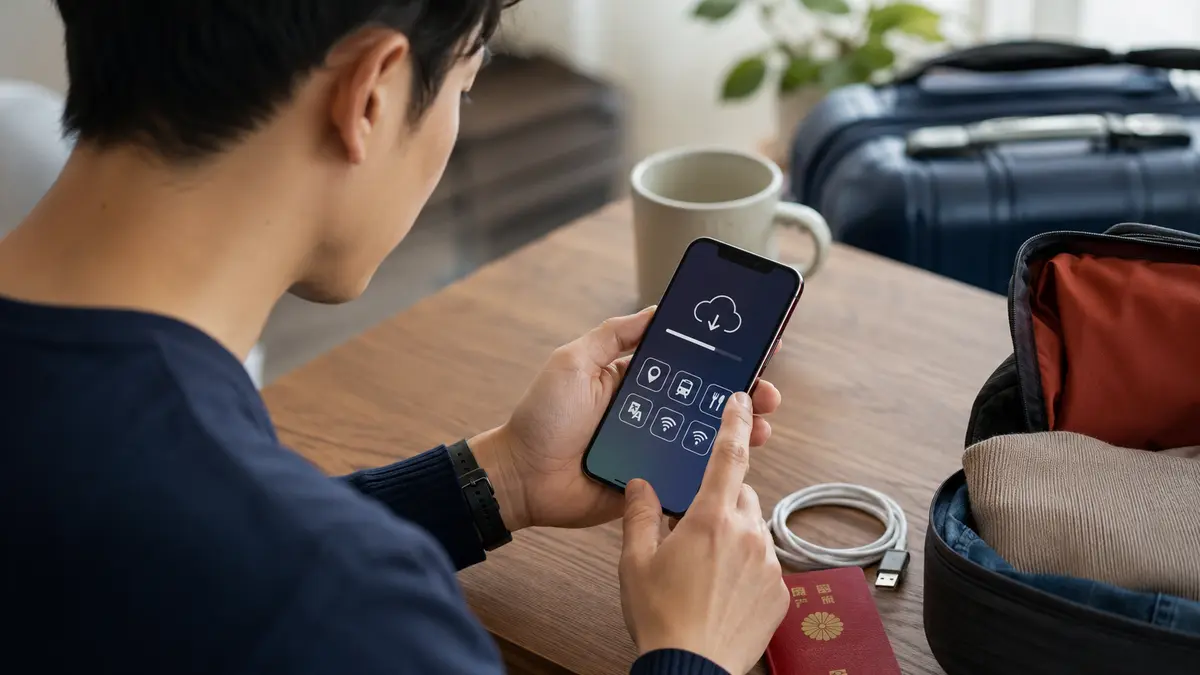
Save this offline.
- Passport copy and travel-insurance details
- Medication list and essential doses
- Hotel cards, itinerary and emergency contacts
- Earthquake, tsunami and communication action cards
Primary evidence
Official sources used
Open these pages again before travel. External links lead to the responsible Japanese authority or transport organization.