Do this now
Follow these steps in order.
- 01
Do not travel using the September 1–3 dates or 2026 transport arrangements; that edition has finished.
- 02
Wait for a newly dated organizer announcement before booking a future Owara trip.
- 03
Recheck future street hours, indoor tickets, JR capacity controls, parking, traffic restrictions and accommodation independently.
- 04
Use the archived sections below only to understand the 2026 format and the decisions a later edition may require.
What to know
Why Owara can justify a night in Toyama
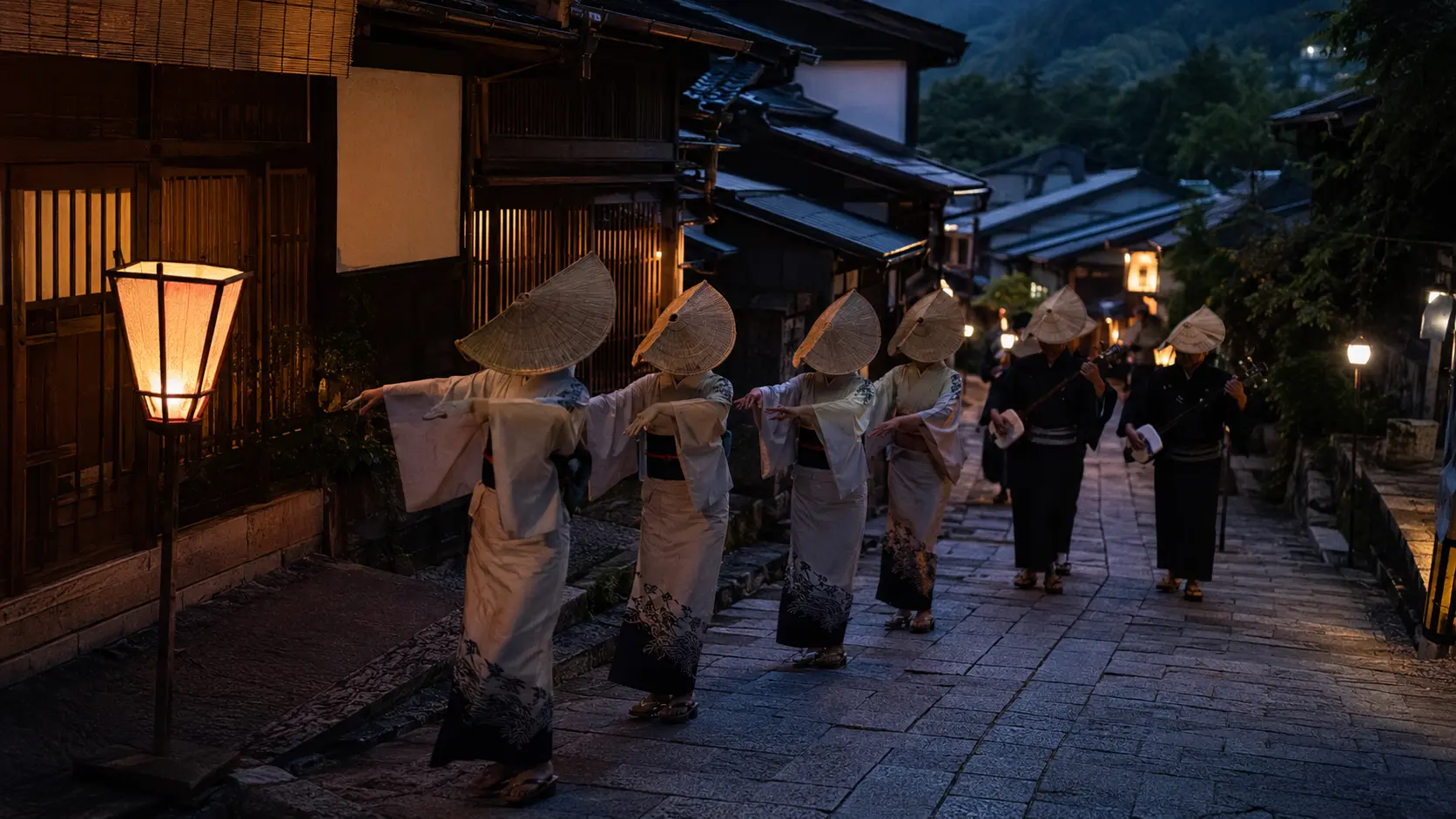
Owara Kaze no Bon is a quieter kind of Japanese festival. Lantern-lit streets, restrained choreography and the sound of shamisen and kokyu replace the fireworks, floats and shouted calls of many summer events. The preservation society traces the tradition back more than 300 years, and each of Yatsuo's eleven neighborhoods maintains its own costume details and performance character.
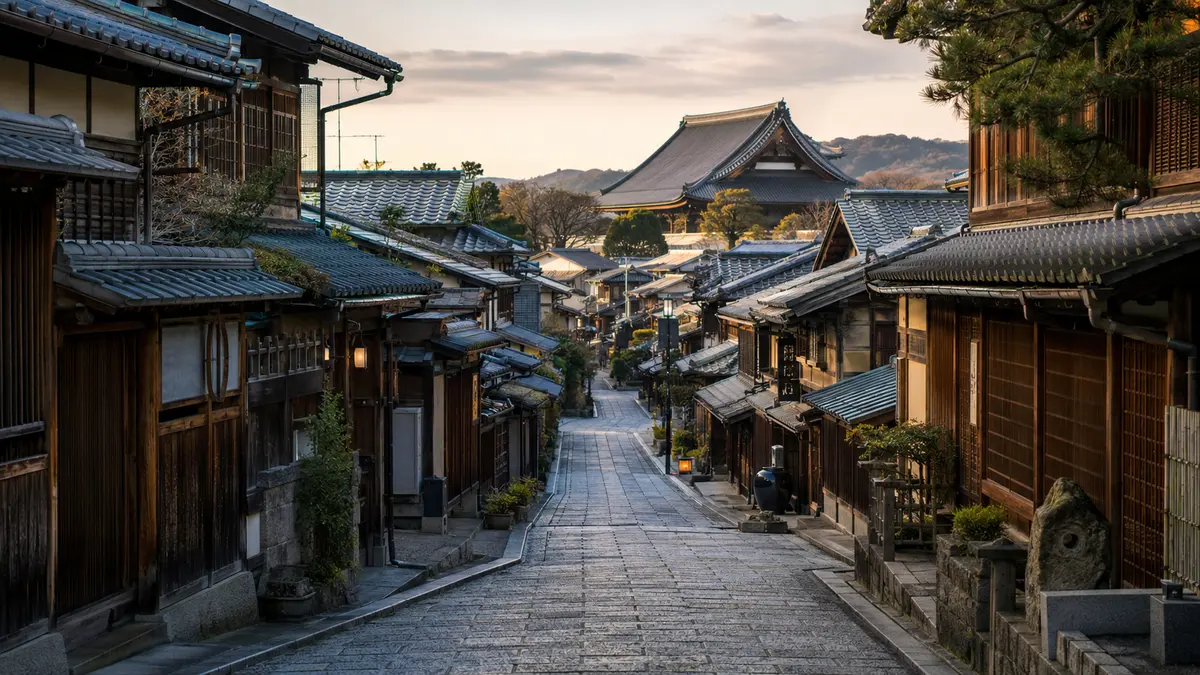
The setting matters as much as the dance. Yatsuo is a historic hillside town of narrow streets and traditional facades, not a purpose-built arena. Processions may appear, move and disappear into the night as individual neighborhoods decide. That makes Owara especially rewarding for travelers willing to walk slowly, listen and accept that the evening is not one fixed stage show.
What to know
Official 2026 dates, hours and town-wide venue
The 2026 festival is scheduled for Tuesday, September 1 through Thursday, September 3. Street performances run from 17:00 to 23:00 on September 1 and 2, and from 19:00 to 23:00 on September 3. The shorter final evening is not a separate program; the organizer says the content is broadly the same across all three days, subject to live neighborhood schedules.
There is no single main venue. Eleven traditional town areas and the Etchu-Yatsuo Station area become the festival setting, and each neighborhood publishes its own town-procession and circle-dance timing. The organizer warns that those schedules can change or pause because of weather and crowd conditions. Save the current town timetable, but treat it as a plan rather than a performance guarantee.
What to know
Free street viewing versus the ¥4,000 indoor performance
Town processions and circle dances in the streets do not require a general admission ticket. Free viewing has no assigned position, roof or guaranteed performance time: narrow streets, rain and live crowd control determine what you can see. There is no festival-wide reservation deadline or published street-viewing sellout allocation because the town itself is the viewing area.
For the 2026 edition, the Yao Hikiyama Exhibition Hall hosted two indoor performance sessions on September 1, 2 and 3: 18:00–19:00 and 19:20–20:20. Each session had 350 unreserved seats and cost ¥4,000 including tax. Individual sales for one to ten seats began June 2 through JR West's tabiwa route. Those dates and tickets are no longer current; a future edition requires a newly dated sales notice.
What to know
JR access from Toyama and the numbered-ticket rule
JR Toyama Station to Etchu-Yatsuo Station on the Takayama Line takes about 25–30 minutes. The old-town performance areas are then roughly a 30-minute walk from the station, much of it uphill. The organizer says a numbered ticket is required to use the Takayama Line during the festival and that special operating details are published separately. Confirm how to obtain it and which departure it covers before joining the station queue.
A bus alternative leaves from platform 6 at Toyama Station's south exit and takes about 50–60 minutes to the Yatsuo terminus. Neither mode guarantees a seat or a fast post-event departure. Check the current operator timetable, identify the last practical return and leave time for crowd regulation at the station; do not assume a normal weekday route planner reflects festival capacity.
What to know
Driving, temporary parking and traffic restrictions
The current organizer lists two temporary public-car sites: Yao Sports Arena and Konagaya Parking Lot. The contribution is ¥3,000 per vehicle and reception runs from 09:00 to 23:00. A shuttle operates between Yao Sports Arena and Yao Ohashi Bridge; there is no shuttle from Konagaya. Yao Clinic, used in earlier years, is not available in 2026.
Toyama City's official visitor guide lists traffic restrictions from 16:00 to 24:00 on September 1 and 2 and from 18:00 to 24:00 on September 3. Road capacity and parking are limited, and the ¥3,000 fee does not guarantee a close or congestion-free arrival. If driving, download the current restriction map and follow staff rather than an older parking pin. Public transport is the safer default for a traveler unfamiliar with the hillside streets.
What to know
Rain, heat and what the organizer actually promises
Outdoor Owara is vulnerable to rain. The organizer describes rain as an interruption rather than one automatic whole-event cancellation: each town watches for a dry interval and makes its own decision. That means one area may pause or change without a universal resumption time. The indoor performance is not weather-dependent, giving travelers a paid fallback when street viewing is the main uncertainty.
No fixed 2026 rainfall, lightning or typhoon threshold and no blanket weather-refund promise were published on the reviewed pages. Check the organizer and JMA immediately before travel. Early September can also remain hot; check Toyama's WBGT, drink before climbing and take a cooling break before symptoms begin. A raincoat is safer than opening an umbrella in a narrow performance route.
What to know
How to navigate the eleven neighborhoods respectfully
Choose two or three neighborhoods and allow time between them. The organizer specifically recommends narrowing the plan because there is no main venue, the streets are steep and performances move. Large wheeled luggage creates noise and collision risk on narrow roads, so leave it at a confirmed hotel or station-area facility before arriving. Toilets are installed at several points, but both toilets and rest spaces are limited.
Yatsuo remains a residential town throughout the festival. Keep voices low, do not enter private property or block a doorway, and avoid eating while walking through the narrow streets. Carry a small light for dark slopes, but do not shine it at performers. Some circle dances invite visitor participation; join only when the neighborhood opens the circle and follow local cues instead of stepping into a moving procession.
What to know
Photography without breaking the atmosphere
Do not use close flash. The organizer warns that flash at short distance can temporarily blind dancers and obstruct the procession, while also destroying the quiet nighttime atmosphere that visitors came to experience. Keep tripods out of sightlines and walking routes and obey any instruction to lower or move equipment.
Ask before making a close portrait, especially of children or a performer waiting outside the public route. A public street does not grant permission to block residents, doorways or other spectators for a shot. If the image requires you to step into the dance path, use bright lighting or hold a position against staff direction, do not make it.
What to know
Where to stay and how to protect the return trip
The organizer's listed Yatsuo accommodations for the September 1–3 period are already marked fully booked. Treat central Toyama as the practical base unless you have a confirmed reservation elsewhere. A Toyama hotel also gives more dining and transport alternatives, but it makes the final JR or bus departure a hard constraint.
Save the hotel address, Etchu-Yatsuo departure board and a backup taxi decision before mobile service becomes congested. Leave enough time to walk downhill, find the correct station queue and complete the numbered-ticket procedure. If the final train is uncertain, leaving one neighborhood earlier is safer than depending on an unverified late-night ride.
If that does not work
Use the fallback.
- The preferred indoor session is sold out: choose another official session if inventory exists or use free street viewing with a rain and crowd fallback.
- Rain interrupts a town procession: wait only where staff permit, check another neighborhood's official status or use the indoor performance; do not assume a restart time.
- A JR departure is full or numbered-ticket access has changed: follow station staff and protect the return journey instead of boarding an unofficial vehicle.
- Temporary parking is full or road controls tighten: follow the current restriction map and staff; do not park at a clinic, shop, roadside or residential space.
- The old town is too crowded or physically difficult: move to a lawful edge, rest near the station area or return to Toyama rather than pushing through a procession route.
Before you need it
Save this offline.
- September 1–2 17:00–23:00 or September 3 19:00–23:00 schedule
- Two or three selected neighborhoods and the current town timetable
- Indoor ticket confirmation, session time and Yao Hikiyama Exhibition Hall location
- Toyama–Etchu-Yatsuo timetable, numbered-ticket instructions and final return
- Traffic-restriction map or the Toyama Station bus alternative
- Hotel address and a meeting point outside the narrowest streets
- Toyama WBGT, JMA warnings and organizer updates
- Water, walking shoes, raincoat, portable battery and a small light
Frequently asked questions
Owara Kaze no Bon 2026: Event Ended — Archived Guide FAQ
When is Owara Kaze no Bon in 2026?
It runs September 1–3. Street programs are scheduled for 17:00–23:00 on September 1 and 2 and 19:00–23:00 on September 3.
Where is the main venue?
There is no single main venue. Eleven historic neighborhoods and the Etchu-Yatsuo Station area form the festival setting.
Is Owara Kaze no Bon free?
Street processions and circle dances are free to watch. The optional indoor performance costs ¥4,000 per unreserved seat.
Do I need to reserve the indoor performance?
Each of the two daily sessions has 350 unreserved seats. Individual tickets are sold through the official tabiwa route, and a preferred session can sell out.
How do I get to Owara from Toyama?
The JR Takayama Line takes about 25–30 minutes to Etchu-Yatsuo, followed by an approximately 30-minute uphill walk to the old town. A bus from Toyama Station south-exit platform 6 takes about 50–60 minutes.
Why do I need a numbered ticket for the train?
The organizer says Takayama Line passengers need a numbered ticket during the festival to manage limited transport capacity. Check the current JR and organizer instructions before departure.
What happens if it rains?
Outdoor processions pause and each neighborhood decides whether to resume during a dry interval. The indoor performances continue regardless of rain.
Is parking available?
Two temporary sites are listed at Yao Sports Arena and Konagaya for ¥3,000 per vehicle. Only Yao Sports Arena has a shuttle to Yao Ohashi Bridge.
Can visitors join the dance?
Visitors may join when a neighborhood opens a circle dance. Do not enter a moving town procession or join without a clear invitation.
Can I use flash or a tripod?
Do not use close flash, which can endanger dancers and disrupt the atmosphere. Keep tripods out of sightlines, narrow routes and staff-controlled areas.
Primary evidence
Official sources used
Open these pages again before travel. External links lead to the responsible Japanese authority or transport organization.