Before you book
Make these decisions in order.
- 01
List your actual stations and mark each journey as Tokyo Metro, Toei, JR or another operator before choosing a pass.
- 02
Count likely subway boardings, then compare the 24-, 48- and 72-hour price with pay-as-you-go fares.
- 03
Choose Klook’s physical or e-ticket package deliberately; the redemption and gate procedure are different.
- 04
Plan the first activation time, keep an IC card or contactless payment for uncovered rides, and save the official subway map offline.
What to know
Old ¥800, ¥1,200 and ¥1,500 prices are no longer current
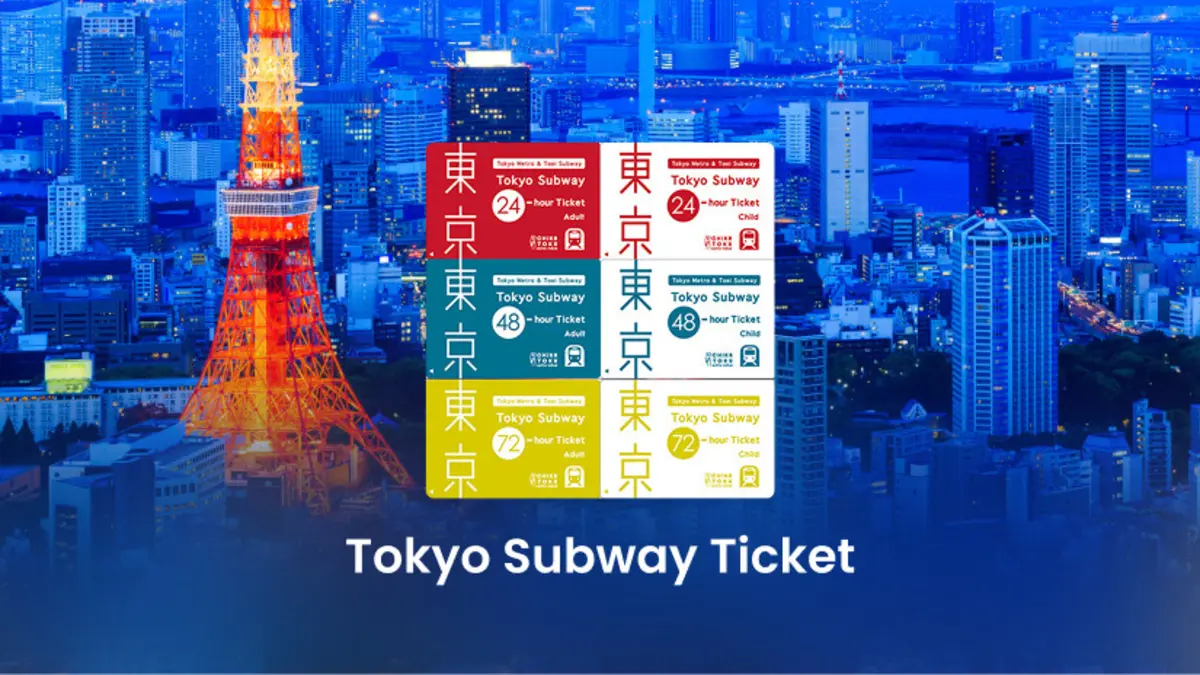
Tokyo Subway Ticket prices changed on March 14, 2026. The current adult prices are ¥1,000 for 24 hours, ¥1,500 for 48 hours and ¥2,000 for 72 hours. Child prices are ¥500, ¥750 and ¥1,000. Blog posts and videos that still quote the former ¥800, ¥1,200 and ¥1,500 adult prices are outdated.
Use the final price shown for your selected Klook package and currency. A reseller promotion can differ from the official yen price, while foreign-exchange and card fees can erase a small discount. The correct comparison is the final charge for the same duration and ticket format.
These prices and operating conditions were checked on July 26, 2026 against Tokyo Metro, Toei Transportation and the current Klook product page.
What to know
What the pass covers—and what it does not
The ticket covers all nine Tokyo Metro lines and all four Toei Subway lines. That network reaches major areas including Asakusa, Ueno, Ginza, Tokyo Station, Shinjuku, Shibuya, Roppongi, Tsukiji, Akihabara and Oshiage. Coverage is broad, but the pass is not an all-trains-in-Tokyo ticket.
JR lines are excluded, including the Yamanote Line. The Yurikamome and Rinkai Line for Odaiba, the JR trip to Maihama for Tokyo Disney Resort, and private railways used for many suburban destinations are also separate. Airport travel is not included in the basic ticket.
Some subway trains continue onto another company’s railway without making every passenger change trains. The pass covers only the Tokyo Metro or Toei section; you must pay the additional fare for the private-railway section. Keep an IC card or ask station staff how the fare will be settled before crossing the boundary.
- Included: Tokyo Metro Ginza, Marunouchi, Hibiya, Tozai, Chiyoda, Yurakucho, Hanzomon, Namboku and Fukutoshin lines.
- Included: Toei Asakusa, Mita, Shinjuku and Oedo lines.
- Not included: JR East, including Yamanote, Chuo, Sobu and Keiyo services.
- Not included: Keisei, Keikyu, Tokyu, Tobu, Seibu, Odakyu, Keio and other private-railway sections.
- Not included: buses, Shinkansen and airport transfers unless a separate package explicitly includes one.
What to know
Choose 24, 48 or 72 hours by trip pattern
The official Tokyo Subway Ticket guide gives a simple break-even reference. It says the 24-hour ticket definitely saves money from at least six boardings in 24 hours, the 48-hour ticket from about five boardings per 24 hours, and the 72-hour ticket from about four boardings per 24 hours.
The 24-hour pass is best for one dense sightseeing window: for example, Asakusa, Ueno, Ginza, Roppongi and Shinjuku with several station changes or returns. It is harder to justify on an arrival day, a shopping day in one district or an itinerary built around JR.
The 48-hour pass costs ¥750 per 24 hours for an adult. It fits two active days when both are mainly within the subway network. The 72-hour pass costs about ¥667 per 24 hours and offers the lowest daily cost, making it the strongest default for three consecutive central-Tokyo sightseeing days.
Do not count a transfer inside the paid area as a new money-saving ride. Count the times you would otherwise pay a new fare after entering a station. Also consider walking: nearby areas such as Ueno and Asakusa, or Harajuku and Shibuya, may not need another train.
- Choose 24 hours for one transport-heavy day with roughly six or more paid entries.
- Choose 48 hours for two consecutive, subway-led sightseeing days.
- Choose 72 hours for three busy central-Tokyo days and the easiest break-even point.
- Choose pay-as-you-go when the itinerary has few rides, long neighborhood walks or many JR journeys.
What to know
The validity is measured from first use, not midnight
A 24-hour ticket does not automatically expire at the end of the calendar day. Its clock starts when you first use it at the gate. A ticket activated at 15:00 remains valid until 15:00 the next day; the 48- and 72-hour versions work in the same rolling way.
This makes a late-afternoon activation useful when the next morning is also busy. It can also waste value if you activate immediately for one short ride to the hotel. Compare the cost of that first ride with the benefit of starting the pass the following morning.
Tokyo Metro states that if the validity period expires after you have already entered within the valid time, you can still exit. The physical ticket prints its validity on the back. For a QR or e-ticket, follow the time shown in the issued ticket interface and do not rely on a personal calendar calculation alone.
What to know
Physical ticket and QR e-ticket are different products
Tokyo Metro and Toei introduced QR-code use for the Tokyo Subway Ticket on March 25, 2026. The official service allows an eligible ticket to be purchased online and used at Tokyo Metro and Toei Subway gates with the issued QR code. Multiple tickets can be distributed to travelers’ devices according to the purchase system.
Klook currently displays both physical-ticket and e-ticket package filters. Choose the format before checkout. An e-ticket should be used according to the QR instructions in that selected package; a physical-ticket voucher must be exchanged at a supported ticket machine or station facility before riding.
Klook’s public page contains a generic FAQ that still says a physical exchange is required, even though the same page now lists an e-ticket option. Treat this as a reason to read the selected package and final voucher, not to assume every option works the same way. If the package label, usage instructions and FAQ conflict, ask Klook to confirm the procedure in writing before purchase.
For a QR ticket, make sure each traveler can access the correct code and keep the phone charged. Do not assume a screenshot, one code shared across several people or a printed copy will work unless the issued instructions explicitly allow it.
Compare the selected package
Check live packages and the total price for your date.
Use the same travel date, direction, departure stop, arrival stop, passenger ages and departure time when comparing Klook with the operator or official reservation channel. Choose the better complete price, change rules and cancellation terms for the identical bus.
Check Tokyo Subway Ticket options on Klook↗Compare official Tokyo Subway Ticket purchase methods ↗Non-affiliate link
Paid link. Commercial details checked July 26, 2026; availability and terms can change.What to know
Tokyo Subway Ticket versus Suica, PASMO and contactless cards
Suica and PASMO are prepaid IC cards, not unlimited passes. They are usually easier when you mix JR, subway, private railways and buses because the correct single fare is deducted automatically. They do not make a low-ride day cheaper simply because you use the same card.
The Tokyo Subway Ticket trades network flexibility for a fixed price. It works best when the itinerary is deliberately built around Tokyo Metro and Toei. The practical combination is often the pass for covered sightseeing and an IC card for JR, airport, Odaiba and through-service fares.
Tokyo Metro and Toei also support contactless bank-card riding on participating gates. That is a pay-as-you-go service at standard adult fares, not the same as a Tokyo Subway Ticket. Use the same physical card or device for entry and exit, and do not alternate between a pass, phone and bank card during one journey.
What to know
Airport travel and Tokyo Station need a separate check
The basic Tokyo Subway Ticket cannot complete a journey from Narita or Haneda Airport by itself. Klook currently offers filters that can add a Keisei Skyliner ticket, but the subway pass and airport train remain separate components with their own stations, redemption and validity.
From Narita, a Skyliner package can be convenient for Keisei Ueno or Nippori, but Nippori is a JR and Keisei station rather than a Tokyo Subway Ticket entry point. From Haneda, Keikyu and Tokyo Monorail are not covered by the basic subway pass. Compare the exact airport route to your hotel before adding a bundle.
Tokyo Station is served by the Tokyo Metro Marunouchi Line, but many trains travelers associate with Tokyo Station are JR or Shinkansen services. The pass covers only the Marunouchi Line portion. Large stations can involve long walks, so the operator logo and line symbol matter more than the station name.
What to know
A sample three-day plan that can justify 72 hours
A pass-friendly first day could link Asakusa, Ueno, Ginza and Roppongi. Day two could combine Tsukiji, Tokyo Station, Shinjuku and Shibuya. Day three could use Oshiage, Akihabara, Nihombashi and another central neighborhood. The point is not to copy every stop; it is to see whether the real route stays inside the covered network.
A pass-poor plan would spend one day at Tokyo Disney Resort, one day in Odaiba and one day traveling to Kamakura or Yokohama. Those journeys rely heavily on JR, Yurikamome, Rinkai or private railways, so an unlimited subway ticket may add cost rather than remove it.
Use the official subway map and a live route planner to test each leg. Route apps often optimize for time, not for the pass you own. If an uncovered JR route saves substantial time, paying the extra fare may be better than forcing a slow all-subway detour.
What to know
Klook booking and redemption checklist
Klook activity 1552 currently lists 24-, 48- and 72-hour choices, physical and e-ticket formats, and optional Skyliner components. The public page says the offer is unavailable to Japanese passport holders. Tokyo Metro’s official eligibility is narrower: the visitor ticket is for overseas visitors entering Japan with short-term stay status, and an actual passport is required for eligible purchases made in Japan.
Klook’s public FAQ says this activity is non-refundable and cannot be cancelled. It also states that a physical voucher can be redeemed for up to 365 days after purchase and that the exchanged physical pass then has another usage-validity period. Those statements should not be applied automatically to the e-ticket option; use the selected package and final voucher.
Before paying, verify duration, adult and child quantities, ticket format, redemption method, voucher expiry, activation process, airport add-on and cancellation rule. Save the confirmation and usage instructions offline, but access the live QR through the required method when the ticket system says to do so.
- Is the package 24, 48 or 72 hours from first use?
- Is it a gate-ready QR e-ticket or a physical-ticket exchange voucher?
- Where can the physical ticket be collected, and is that station on the first route?
- Does every traveler meet the official visitor eligibility?
- Is a Skyliner add-on one-way or round-trip, and where is each component redeemed?
- What happens if the booking is cancelled or the voucher is not used?
A good fit
Put it on your list if...
- First-time visitors with two or three busy sightseeing days in central Tokyo
- Travelers staying near a Tokyo Metro or Toei Subway station
- Visitors making at least four to six subway boardings per 24 hours
- Families who want a predictable transport budget and confirm child-ticket rules
- Travelers comfortable using a separate IC card for uncovered lines
Think twice
Skip or reconsider if...
- Itineraries centered on JR Yamanote, Chuo, Sobu or Keiyo lines
- Airport, Disney, Odaiba, Kamakura, Yokohama or suburban travel days
- Travelers taking only one return trip per day
- Anyone buying before deciding between a physical ticket and QR e-ticket
- Visitors who do not meet the official short-term-stay eligibility
Booking option
Check the current ticket before paying.
The paid link opens Klook’s English activity 1552 page with USD selected. Choose the duration, physical or e-ticket format and any Skyliner add-on before comparing the final terms with the official Tokyo Subway Ticket information.
- The current official adult prices are ¥1,000, ¥1,500 and ¥2,000 after the March 2026 price change.
- Klook currently lists both physical-ticket and e-ticket options; use the procedure for the selected package.
- The basic pass does not include JR, private railways or airport transport.
- The public Klook page says the offer is unavailable to Japanese passport holders.
- The official visitor ticket requires eligible short-term stay status.
- The current Klook FAQ says the activity is non-refundable; verify the checkout terms before payment.
Evidence and commercial terms
Sources checked
Official operator, terminal, destination and government pages establish routes, access and current operating rules. Booking-service pages are commercial sources for their own package and checkout terms only. Open the selected timetable and voucher again before travel.